Pelvic girdle pain in pregnancy and what helps is a question most readers can answer once they know the pattern: the pain comes from the joints and ligaments of the pelvis reacting to hormonal softening, weight and posture change, and it responds best to load management, targeted exercise, and sometimes hands-on care rather than rest. Some pain is common, and some pain needs a clinician this week.
This guide walks through what pelvic girdle pain actually is, what tends to drive it, which changes bring the most relief, and the symptoms that deserve a professional look. It is general information, written for readers of any trimester, and it is not a diagnosis or a personal care plan. Your midwife, obstetrician or a women’s health physiotherapist can assess your specific situation.
Table of Contents
- What Is Pelvic Girdle Pain in Pregnancy?
- What Causes Pelvic Girdle Pain During Pregnancy?
- How Do You Know It Is Pelvic Girdle Pain in Pregnancy?
- What Helps Pelvic Girdle Pain in Pregnancy?
- Which Movements and Everyday Changes Can Help?
- Should You Use a Pelvic Support Belt?
- When Should You Contact a Doctor or Pelvic Health Professional?
- Frequently Asked Questions
- Is pelvic girdle pain normal during pregnancy?
- Can pelvic girdle pain get worse if it is ignored?
- What is the difference between pelvic girdle pain and pregnancy-related back pain?
- Does a pelvic support belt help pelvic girdle pain in pregnancy?
- What exercises are usually safe with pelvic girdle pain in pregnancy?
- When is pelvic pain in pregnancy a medical emergency?
- A Simple First Step
What Is Pelvic Girdle Pain in Pregnancy?
Pelvic girdle pain is pain in or around the ring of bones that holds your trunk between your lower back and hips. Two joints carry most of it: the two sacroiliac joints at the back of the pelvis, and the pubic symphysis at the front, where the two pubic bones meet over a small pad of cartilage.
During pregnancy both joints take more load than usual. Blood and fluid volume rise, the cartilage of the symphysis softens under hormonal influence, and the growing baby moves your centre of gravity forward, which changes how you stand, walk and turn. Surveys suggest somewhere between 50% and 70% of pregnant people feel pelvic girdle pain to some degree, with around 20% to 25% describing symptoms as moderate to severe.
The older name, symphysis pubis dysfunction or SPD, is still widely used and usually points to pain at the front of the pelvis. Physiotherapists often use pelvic girdle pain as the umbrella term, because symptoms can sit at the back, the front, or both. You may also see it called pelvic instability, which misleads people more than it helps.
| Where the pain sits | What it often feels like | Typical triggers |
|---|---|---|
| Front of the pelvis, over the pubic bone | Aching, pulling, burning or grinding across the lower belly or groin | Rolling over in bed, walking, opening your legs, getting out of a car |
| Back of the pelvis, over the sacroiliac joints | Deep ache on one or both sides, sometimes into the buttock | Standing long, walking uneven ground, standing on one leg, stairs |
| Referred into the groin, hip or thigh | Sharp or electric-sensation pain that travels below the belt line | Leg position changes, hip movement, first steps after resting |
| Lower back, above the pelvic joints | Generalised ache, usually worse when tired | Standing, lifting, poor sleep |
What Causes Pelvic Girdle Pain During Pregnancy?
The honest answer is that it is rarely one thing. Most people who get it carry a mix of four contributors, and the mix differs from one pregnancy to the next.
Hormonal softening. Relaxin is released in pregnancy to loosen cartilage and ligaments so the pelvis can open slightly for birth. It does exactly that job well. The side effect is that the tissues around both joints become more sensitive to ordinary movement, so a load that felt nothing at 12 weeks can sting at 24 weeks.
A forward shift. As the abdomen grows, your ribs move back and your pelvis tips slightly to balance the weight. Your lower back, hip flexors and pelvic floor end up working in a new position, often with less efficient mechanics, for months at a time.
Muscle load and deconditioning. The deep stabilisers around the pelvis, the glutes and the pelvic floor take on bracing work they were not previously trained for. When those muscles fatigue, the joints take more of the load, and the pain arrives.
History and circumstances. Previous lower back pain, an earlier pelvic injury, a physically demanding job, several pregnancies in a row, and carrying toddlers or heavy loads all raise the likelihood. So does high stress, which is not a trivial point: persistent fear of damaging the pelvis leads people to avoid movement, and avoidance tends to make symptoms worse over time.
How Do You Know It Is Pelvic Girdle Pain in Pregnancy?
Pelvic girdle pain has a fairly recognisable signature. The pain is provoked by movement and eased by rest, it changes with the position of your legs, and it tends to build through the day rather than waking you from sleep.
Ordinary pregnancy back ache usually sits higher, in the muscular part of the lower back, and is tied more to general posture and abdominal size. Pelvic girdle pain sits lower and closer to the joints, and often flares within seconds of turning in bed, stepping onto one leg, or spreading your knees apart.
That said, the two overlap constantly, and you cannot diagnose yourself by reading a list. If the pain keeps building across weeks rather than settling, or if it wakes you at night, have it checked.
What Helps Pelvic Girdle Pain in Pregnancy?
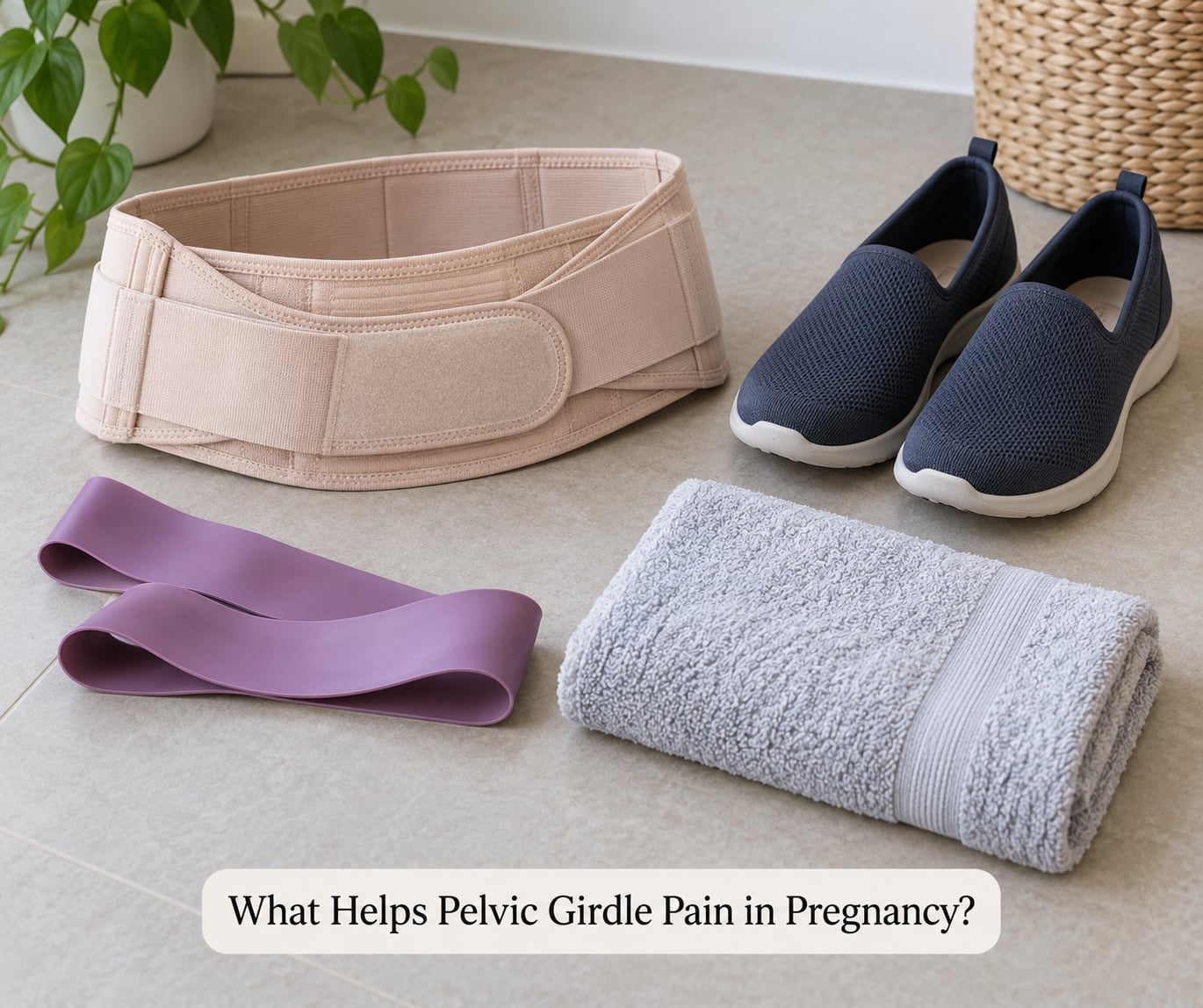
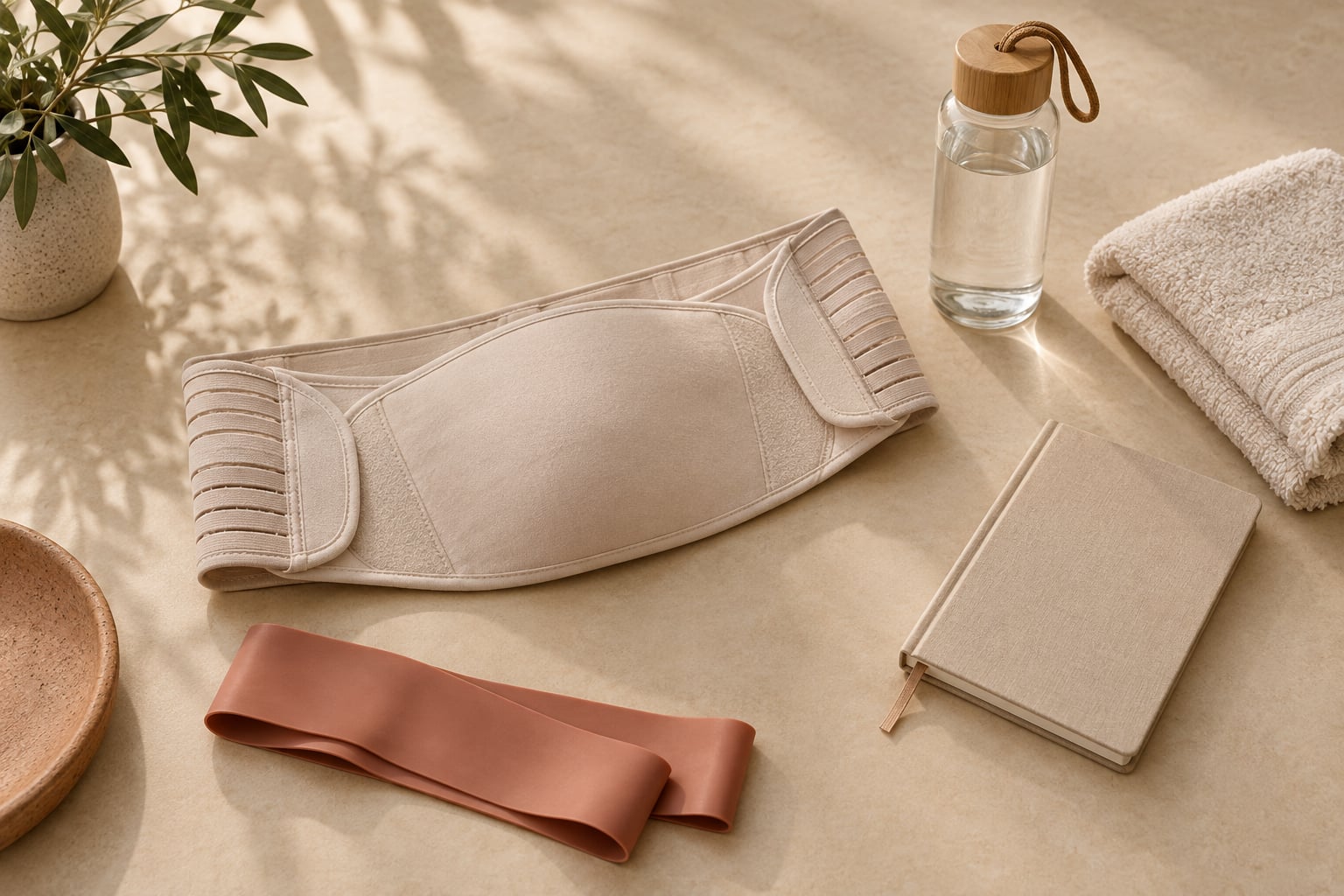
Ranked roughly by how consistently these approaches help: targeted physiotherapy comes first, then movement modification, then exercise you choose together with a clinician, then support garments, then hands-on manual techniques. Heat is a comfort measure, not a treatment, but on this list of what helps it deserves a place because so many readers report it as the thing that gets them through an evening.
| Approach | What it involves | When to start | How well it works |
|---|---|---|---|
| Physiotherapy assessment | A women’s health physio maps your pain triggers, tests joint and load tolerance, and builds a plan | At any point, ideally early | Strongest overall support; addresses the individual pattern |
| Movement modification | Changing how you get in and out of a car, turn in bed, dress and manage stairs | As soon as you notice symptoms | High, cheap, immediate |
| Graded exercise | Deep core, glute and pelvic floor work progressed by symptom response | Once a baseline is tolerable | Good over weeks, not days |
| Support belt or compression shorts | A wide belt worn over the hips or pelvis during higher-load moments | When pain interferes with specific tasks | Moderate and variable, helps some readers a lot |
| Manual therapy | Hands-on release of tender muscle tissue by a qualified practitioner | Alongside exercise | Useful for short-term relief, best as an addition |
| Heat and positioning | Warm pack, warm bath, side-lying with a pillow between the knees | Any time | Comfort and sleep, not a correction |
Sleep is where a lot of the suffering happens, so it deserves its own mention. Side-lying with a pillow between your knees and another behind your back stops the top leg crossing the midline, which is exactly the movement that provokes pubic symphysis pain. If lying flat is uncomfortable, a firm pillow under the belly takes the weight off the front of the pelvis without much fuss.
Heat helps most readers report it as the single most consistently useful thing they found, whether as a hot water bottle, an electric pad or a warm bath. Keep it warm rather than hot, and avoid it for longer than about 20 minutes at a stretch.
There is also the mindset piece, which is not soft advice. Pelvic girdle pain does not harm your baby, and the pelvis is not slipping out of place. Some people are told to rest entirely, and months of doing that typically leave them weaker and in more pain than when they started. Movement that stays within what you can tolerate is the better route.
Which Movements and Everyday Changes Can Help?
Change the way you do the movement before you stop doing it entirely. Most aggravators in pregnancy are mechanical, and mechanical problems respond to mechanical answers.
- Turning in bed: bend both knees, keep them touching, and use your arms to roll your whole body as one unit. The knees-together roll is the single most shared technique in pregnancy forums, and it exists for a reason.
- Getting in and out of a car: sit down first, then bring both legs in together, swinging both feet in as one unit. Push up with your arms rather than twisting through your lower back.
- Stairs: lead with the same leg each time, take them one at a time, and use the rail. The goal is symmetry, not speed.
- Dressing: sit on the bed for trousers and socks. Keep your knees level when putting on shoes or trousers rather than balancing on one leg.
- Sitting: firm surface, feet supported, knees roughly level with hips. A firm wedge cushion helps some people, while an exercise ball helps others find a position that relieves the front of the pelvis.
- Lifting and carrying: if you have young children, this is often the biggest aggravator. Keep loads close to your body, avoid carrying a child on one hip, and split heavy items into two trips. Many readers say that asking a partner or family member to take over the lifting was the change that helped most.
- Household work: vacuuming and mopping are the two chores pregnant readers name most. Halve the session, move slowly, lean into the work with a wide stance, and keep someone else handling the kids if you can.
- Exercise: keep going, adjusted. Modify single-leg work, keep feet hip-width apart in squats, avoid end-range lunges and deep wide-knee stretches, and check in with how you feel during and the next day.
| Movement to reduce or swap | Why it aggravates | A better option |
|---|---|---|
| Walking with legs crossing over the midline | One leg repeatedly crosses the pubic symphysis | Feet hip-width or wider, shorter steps, slower pace |
| Single-leg balance or step-ups | Full body weight through one side of the pelvis | Seated or supported work, both feet weighted |
| Deep wide-knee stretch, butterfly position | End-range opening of the front pelvic joint | Comfortable-width stretch held briefly |
| Getting up from the floor | Long single-leg lever through a sensitised joint | Roll to one side, hands and knees, then stand |
| Legs apart on the floor, wide lunges | Repeated end-range separation of the pelvis | Staggered stance, keep front knee behind the toes |
One rule covers all of it: if a change makes symptoms clearly worse during the activity or the following day, scale it back or stop and tell your clinician. Slight discomfort that settles by the next morning is usually fine to work through.
Should You Use a Pelvic Support Belt?
A pelvic support belt, often sold as a maternity belt, is a wide band of elastic that sits low across the hips and pelvis or higher across the lower back. For some readers it is genuinely useful, particularly for short, higher-load tasks such as a shopping trip, a car journey, or a house clean.
What it does is provide a mild external squeeze that reduces movement at the joint while you are moving. It does not fix alignment, it does not treat the underlying cause, and it will not help everyone. Readers who have muscle-driven pain rather than joint-driven pain sometimes feel worse in a belt, which is worth knowing before you spend money on one.
If you try it, wear it only for the activity you need it for rather than all day, sit with it adjusted so your ribs are not pushed up, and stop if the pain builds. Fit matters more than brand. If it makes you feel uneasy or unsteady, take it off and talk to a physiotherapist about alternatives, including SRC-style compression shorts, which give a smoother, less rigid kind of support.
When Should You Contact a Doctor or Pelvic Health Professional?

Book an appointment, rather than waiting, if pelvic girdle pain is moderate to severe, is building week on week, or is stopping you from walking, working, caring for other children or sleeping more than a couple of hours a night. The threshold is simple: if it is changing what you can do day to day, it deserves assessment rather than endurance.
Seek same-day or urgent care if you also have any of the following:
- Heavy vaginal bleeding, or fluid leaking from the vagina
- Regular, painful contractions, or a feeling that something is moving lower
- Fever, chills, or pain together with burning when you pass urine
- Swelling, redness or warmth in one leg, or sudden shortness of breath
- Numbness in the saddle area, or loss of bladder or bowel control
- Pain that is severe, constant and not shifting with rest or position
In a first appointment, expect questions about when the pain started, which movements provoke it, whether you have had back or pelvic problems before, and what your daily tasks look like. A women’s health physiotherapist will usually watch you walk, step, turn and lie on your side, then talk through load and exercise options. That assessment is the part worth getting right, because advice that suits a pubic-symphysis pattern can make a sacroiliac pattern worse.
One more reason not to wait: most people who are referred early improve. The longer pain goes unaddressed, the more the muscles around the pelvis decondition, and the longer recovery tends to take.
Frequently Asked Questions
Is pelvic girdle pain normal during pregnancy?
It is common, with surveys putting it at somewhere between 50% and 70% of pregnancies to some degree. Common is not the same as harmless, though. Moderate to severe pain, pain that limits walking or sleep, or pain that worsens steadily week on week is a reason to contact your midwife, doctor or a women’s health physiotherapist rather than to wait it out.
Can pelvic girdle pain get worse if it is ignored?
Often, yes. Avoiding movement weakens the muscles around the pelvis, which pushes more load onto the sensitised joints, which makes movement hurt more. That loop is the reason advice to rest completely tends backfire. Staying gently active within your tolerance, and getting an individual assessment early, generally gives a better result than doing nothing for months.
What is the difference between pelvic girdle pain and pregnancy-related back pain?
Back pain usually sits higher, in the muscular part of the lower back, and relates to posture, abdominal size and general fatigue. Pelvic girdle pain sits lower and closer to the joints, and flares fast with turning in bed, standing on one leg, opening your knees or getting out of a car. The two overlap a lot, so a clinician should tell them apart rather than you guessing.
Does a pelvic support belt help pelvic girdle pain in pregnancy?
It helps some people and not others. A wide belt gives a mild external squeeze that calms the joint during short higher-load tasks like walking far, driving or cleaning, and many readers find it makes those tasks bearable. It does not correct the cause, it works best worn for specific activities rather than all day, and readers with muscle-driven rather than joint-driven pain sometimes feel worse in one.
What exercises are usually safe with pelvic girdle pain in pregnancy?
Most gentle strengthening is safe and useful if you scale it to your symptoms. Deep core work, glute strengthening, pelvic floor training and upper body work are commonly started. Reduce single-leg balance, end-range lunges, deep wide-knee stretches and fast feet-heavy cardio. Stop or scale back anything that flares the pain during the activity or leaves you worse the following day.
When is pelvic pain in pregnancy a medical emergency?
Pelvic girdle pain itself is not an emergency. Seek urgent care if the pelvic pain comes with heavy bleeding, leaking fluid, painful contractions, fever, burning when you pass urine, one swollen or red leg, sudden shortness of breath, numbness in the saddle area, or loss of bladder or bowel control. Those symptoms point to something other than routine pelvic girdle pain and need same-day assessment.
A Simple First Step
Notice the one movement that reliably sets it off, then change that movement rather than stopping everything. Knees together when you roll over, sit before you swing your legs into the car, lead with the same leg on stairs. One adjustment often buys you a few weeks of easier days.
If the pain is persistent, severe, waking you at night, or arriving with any of the warning signs above, book an appointment with your midwife, doctor or a women’s health physiotherapist. Reviewed for accuracy in 2026, this guide is general information and does not replace individual care from your own clinician.