Handling food allergies when starting solids means introducing your baby’s most allergenic foods early, around 6 months, one food at a time, in a safe form, during a daytime feed at home, while you watch closely for two to three hours. Delaying peanut and egg to 12 months is no longer the advice; trials such as LEAP and EAT, along with the NIAID addendum and American Academy of Pediatrics guidance, support offering them early and keeping them in the diet weekly.
Here is the honest reassessment of risk first: the large majority of babies never develop a food allergy at all. Most of the anxiety parents bring to this milestone is about a reaction that is unlikely to happen, so a calm, organized plan matters more than a perfect one. A first allergen feeding takes about ten minutes. The rest of the routine is paperwork and attention.
This is general educational information about a common parenting and health question, not individual medical advice. Talk with your own pediatrician before starting solids, and use a clinician for any decision about your baby.
Table of Contents
- What You Need to Handle Food Allergies When Starting Solids
- Step-by-Step
- How to Handle Food Allergies When Starting Solids at Home
- Choose a Calm, Ready-to-Feed Time
- Offer the Allergen One at a Time
- Watch and Record the Feeding
- Know When to Seek Urgent Help
- Common Mistakes
- Tips for a Safer Starting-Solids Routine
- Frequently Asked Questions
- How do I know if my baby is allergic to a food when starting solids?
- What is the 3-day rule when introducing new foods?
- What should I do if my 6-month-old has an allergic reaction to food?
- Is a rash around my baby’s mouth an allergy or just irritation?
- Should I wait until 12 months before giving egg and peanut?
- Conclusion: Start with One Food and Keep a Record
What You Need to Handle Food Allergies When Starting Solids
Most parents can do the introduction method at home with a clear plan, no special equipment and no appointment. A few preparations turn it from stressful to routine.
- Developmental readiness. Most babies are ready around 6 months, with a floor of about 4 months. Look for sitting with support, a steady head, bringing objects to the mouth, swallowing rather than pushing food straight back out, and visible interest when you eat.
- A current pediatrician contact. Have the office number and after-hours line written down before the first allergen, not looked up mid-feed.
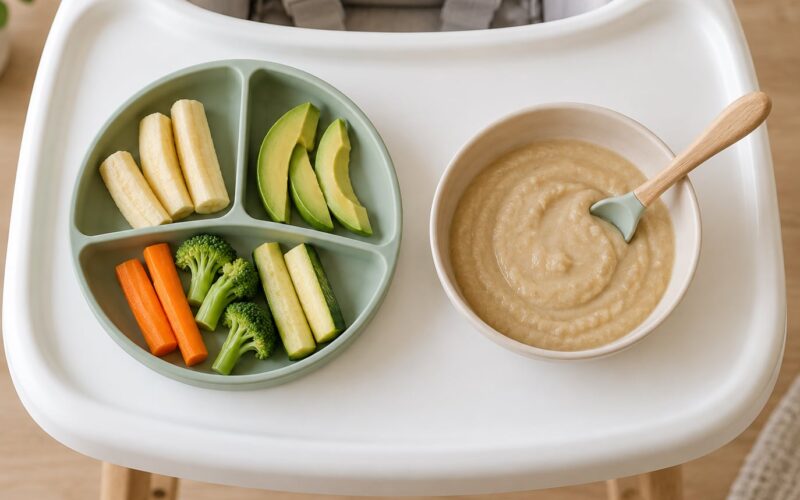
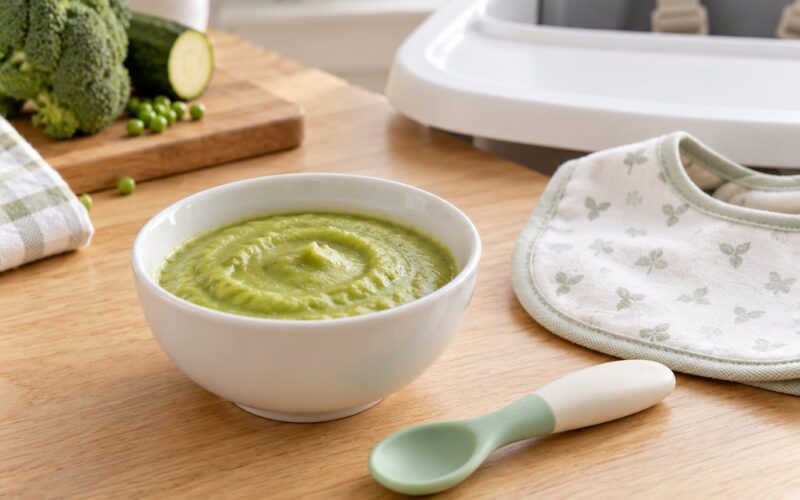
- One prepared food, one simple form. Smooth paste thinned, well-cooked and mashed, or a plain full-fat dairy food. No combinations.
- A calm feeding spot. The highchair in a quiet room, in daylight, near a clock you can see.
- A record system. A notebook or phone note with five fields: allergen, form, amount, time, and what you saw.
- Know your emergency plan. If your child has a prescribed auto-injector, it belongs within reach of the adult feeding, every time, for every caregiver.
Breastfeeding while starting solids is fine and does not require you to cut allergens from your own diet. If your baby is breastfed and reacting to something you have eaten, that is a conversation for your pediatrician rather than a reason to stop nursing.
Step-by-Step
How to Handle Food Allergies When Starting Solids at Home
The home method has four parts: one potentially allergenic food, a small age-appropriate amount, a long look at your baby, and a written note before you move to the next food. Most food allergy reactions show up within minutes to two hours of eating, and the skin is usually where you see it first, so the observation window is doing the real work.
Food allergy means the immune system reacts to a specific food, usually within minutes to a couple of hours. A food intolerance is a digestive difficulty such as gas, loose stool or fussiness, and a reaction like FPIES typically arrives two to four hours later as repeated vomiting with a pale or unwell-looking baby. That timing difference is useful, because a delayed vomiting episode after soy or a cereal is far more often FPIES or intolerance than an IgE-mediated allergy.
Choose a Calm, Ready-to-Feed Time
Feed in the morning, at home, when your baby is awake, not overly hungry and not sleepy. Illness, teething, a recent vaccine, eczema flare or an existing rash all add noise, and a reaction during a messy week is hard to read.
Do not introduce a new allergen before travel, a party, a daycare transition or a visit from someone who will feed your baby. If you cannot observe for a couple of hours afterward, wait.
Offer the Allergen One at a Time
Serve a single allergen in a simple, age-appropriate form and avoid mixing it with several new ingredients. Start with a small amount, roughly a quarter teaspoon, then offer the same food again over the next few days in slightly larger amounts if all is well.
For peanut, use smooth peanut butter thinned with warm water or breast milk until it pours, or a smooth nut paste such as tahini thinned the same way. Never offer whole nuts or pieces of hard nut. For egg, use well-cooked whole egg, mashed. For wheat, offer a smooth porridge rather than bread or a crust. For soy, a little smooth tofu or soy yogurt works. For fish and shellfish, use thoroughly cooked, deboned pieces and check for bones, and keep the first exposure small.

Texture still has to match your baby’s developmental stage, and there is no rule that says one food must always come before another. Order preference is not a medical requirement, and a caregiver who started with eggs before peanuts did nothing wrong.
Watch and Record the Feeding
Stay within sight and earshot for two to three hours. During that time, watch for hives or raised welts, swelling of the lips, tongue, face or eyes, repeated vomiting, a sudden cough, wheeze, noisy or laboured breathing, unusual pallor or floppiness, and any change in your baby’s usual behavior.
Write the note while it is fresh: the food, the exact form, roughly how much, the clock time, and what you observed. If nothing happened, write that too. “Egg, mashed, about two teaspoons, 8:40am, no reaction” is the entry that makes a later problem identifiable, and it takes fifteen seconds.
Know When to Seek Urgent Help
Mild symptoms, such as a few hives or redness only around the mouth that settles within an hour, are not an emergency, but you should contact your pediatrician the same day and stop offering that food. Offer the food again later in a supervised setting only on your clinician’s advice.
Call 911 immediately if your baby has trouble breathing, swelling of the tongue or throat, a hoarse voice, difficulty swallowing, becomes pale, limp or floppy, has a widespread rash with breathing change, or is rapidly worsening. Use an epinephrine auto-injector if one has been prescribed, following the instructions on the device, and call emergency services rather than driving yourself. A baby who has had one serious reaction should always have a written action plan from their clinician and a prescribed auto-injector.
Do not rely on antihistamines as a first move without clinician guidance, and do not offer the suspected food again to see whether the reaction repeats.
Common Mistakes
Most problems I hear about come from a well-meant shortcut, and each one has a simple fix.
- Introducing several new foods in one sitting. If something happens, you will not know which food caused it. Fix: one new food per day, and only start the next one when the previous trial is written up.
- Delaying egg and peanut to 12 months or beyond. Older advice, still circulating, and the evidence has moved. Fix: offer them once your baby is developmentally ready and tolerating initial solids.
- Testing during illness, teething or a rash flare. Fix: pick a quiet ordinary week instead.
- Rubbing food on the baby’s arm or cheek to test it. This does not test for allergy, and with eczema it can sensitise the skin. Fix: if you want to know how a food reacts, give it by mouth, one food at a time.
- Offering a piece the baby cannot manage safely. A whole nut, a hard raw carrot stick and a chunk of apple are choking hazards, not allergen tests. Fix: match texture to developmental readiness.
- Waiting to see if a serious reaction settles on its own. Fix: act in the first minutes. Call 911, use a prescribed auto-injector, and start emergency services response.
Tips for a Safer Starting-Solids Routine
Once a food is tolerated, keep it in the diet about once a week. Weekly exposure is what maintains oral tolerance, so a single trial three months ago tells you very little about your baby today.
Keep variety wide. A baby who reacts to one food still needs to be introduced to the rest, including the other common allergens, and there is no reason to hold back the whole list. If one food is confirmed as an allergy, work with an allergist and a dietitian on reintroduction, including baked egg and baked milk, and on nutritional substitutes. Worth knowing: lactose-free is not the same as milk-free, and a formula change is a decision for your pediatrician.
Read ingredient labels each time, since recipes and formulations change. Hand off a written list of introduced foods, tolerated foods and banned foods to grandparents, sitters and daycare staff, and agree on handwashing, separate utensils and where the baby eats. If a household member has a confirmed allergy, a separate face washer and a clear highchair rule cut down cross-contact.
And keep track of your own nerves. Most babies are fine. Preparing the plan in advance, at a calm time of day, is what turns a frightening subject into a ten-minute task you repeat twice a week.
Frequently Asked Questions
How do I know if my baby is allergic to a food when starting solids?
Most food allergy reactions appear on the skin within minutes to two hours of eating: hives, swelling of the lips, tongue, face or eyes, repeated vomiting, a sudden cough, wheeze or noisy breathing. Markers like these are the ones to act on. A rash only around the mouth that settles within an hour is more often irritation than allergy. Introduce one food at a time, watch for two to three hours, write down what you saw, and call your pediatrician the same day about anything that concerns you.
What is the 3-day rule when introducing new foods?
The 3-day rule means waiting a few days between new foods so that, if a reaction happens, you can identify the cause. It is a tracking tool, not a rule about how long to hold off on allergens. Once your baby is tolerating initial solids, you do not need to delay peanut or egg for three days or longer. Many families move to one new food a day, and a few batch exposures over a weekend when the schedule is busy.
What should I do if my 6-month-old has an allergic reaction to food?
Stop the food. Stay with your baby. For hives, swelling of the mouth or mild vomiting, call your pediatrician the same day and do not offer that food again. Call 911 straight away for trouble breathing, swelling of the tongue or throat, a hoarse voice, difficulty swallowing, a widespread rash with breathing change, or a baby who becomes pale, limp or floppy. Use a prescribed auto-injector if you have one, and let emergency services come rather than driving yourself.
Is a rash around my baby’s mouth an allergy or just irritation?
A red patch around the mouth that appears during a feed and fades within an hour is far more often irritant contact from the food itself, especially with tomato, citrus, berries and egg. True allergic hives tend to appear as raised welts that can move around the body, often with swelling of the lips or eyes, and they do not settle that quickly. Because the two look similar, ask your pediatrician rather than deciding on your own, and avoid unnecessary food elimination.
Should I wait until 12 months before giving egg and peanut?
No. Current guidance from the American Academy of Pediatrics and the NIAID addendum supports introducing well-cooked egg and smooth peanut products soon after a baby starts solids and tolerating them, roughly from 6 months, with a floor of about 4 months. The LEAP and EAT trials found that early introduction reduced egg and peanut allergy compared with delaying. For a baby with severe eczema or a family history, speak with your pediatrician first about testing or a supervised introduction.
Conclusion: Start with One Food and Keep a Record
Confirm readiness with your pediatrician, offer one simple food during a calm daytime feed at home, watch your baby for two to three hours, and write down exactly what you saw before trying anything new. Keep tolerated foods in the diet weekly, and contact a qualified clinician about any symptoms that worry you, with 911 straight away for breathing trouble, tongue or throat swelling, or a pale, floppy baby.