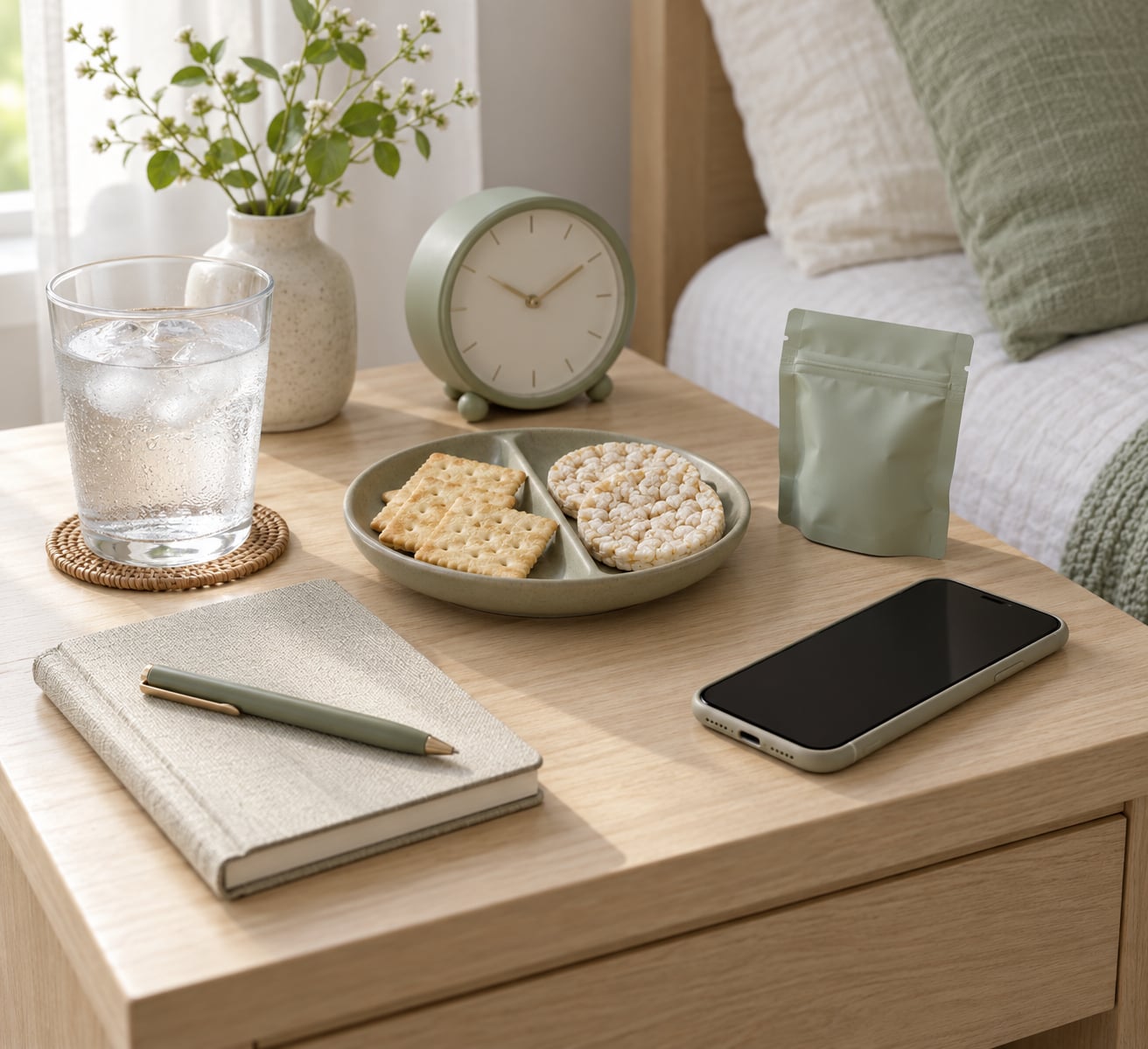
Morning sickness is easier to get through when the plan is small and repeatable: a few bites or sips before you are fully awake, something within reach every two hours or so, and a schedule built around the hours your nausea is worst. This guide lays out how to manage morning sickness day to day, from the bedside to the commute to 3am wake-ups, plus clear signs that it is time to contact your prenatal clinician.
A note on scope first: this is general information about day-to-day comfort, not personal medical advice. I am not diagnosing you or prescribing anything. Every medication, supplement and herbal product should be checked with your prenatal clinician or pharmacist, because what is safe in pregnancy is not a list anyone can guess at. Guidance below follows mainstream advice from ACOG, NICE guideline NG201, the NHS and Mayo Clinic.
One reframe before we start, because it changes how people read their own symptoms. Medically this is called nausea and vomiting of pregnancy, or NVP, and despite the name it happens at any time of day. Plenty of readers are queasy at 7pm or woken at 3am, and that is still ordinary NVP rather than something wrong with you. Rising hCG (human chorionic gonadotropin, the hormone a pregnancy test detects) and oestrogen act on the hypothalamus, the part of the brain that governs nausea, which is also why smell sensitivity and food aversions show up alongside the nausea itself.
Table of Contents
- What You Need
- Step-by-Step: How to Manage Morning Sickness Day to Day
- 1. Start With Small Amounts Before Fully Awake
- 2. Eat More Frequently, With Less Food at Once
- 3. Build a Simple Hydration Routine
- 4. Adjust Your Routine Around Your Worst Time
- 5. Use Familiar Foods, Ginger, or Acupressure With Caution
- 6. Track Symptoms, Support, and Recovery
- When to Contact a Prenatal Clinician
- Common Mistakes
- A Flexible Daily Template for How to Manage Morning Sickness Day to Day
- Frequently Asked Questions
- Does morning sickness mean my pregnancy is healthy?
- What can I eat or drink when I feel too sick to eat?
- Is ginger or a wrist-pressure band safe during pregnancy?
- How long does morning sickness usually last?
- When is morning sickness severe enough to contact a clinician?
- Conclusion
What You Need
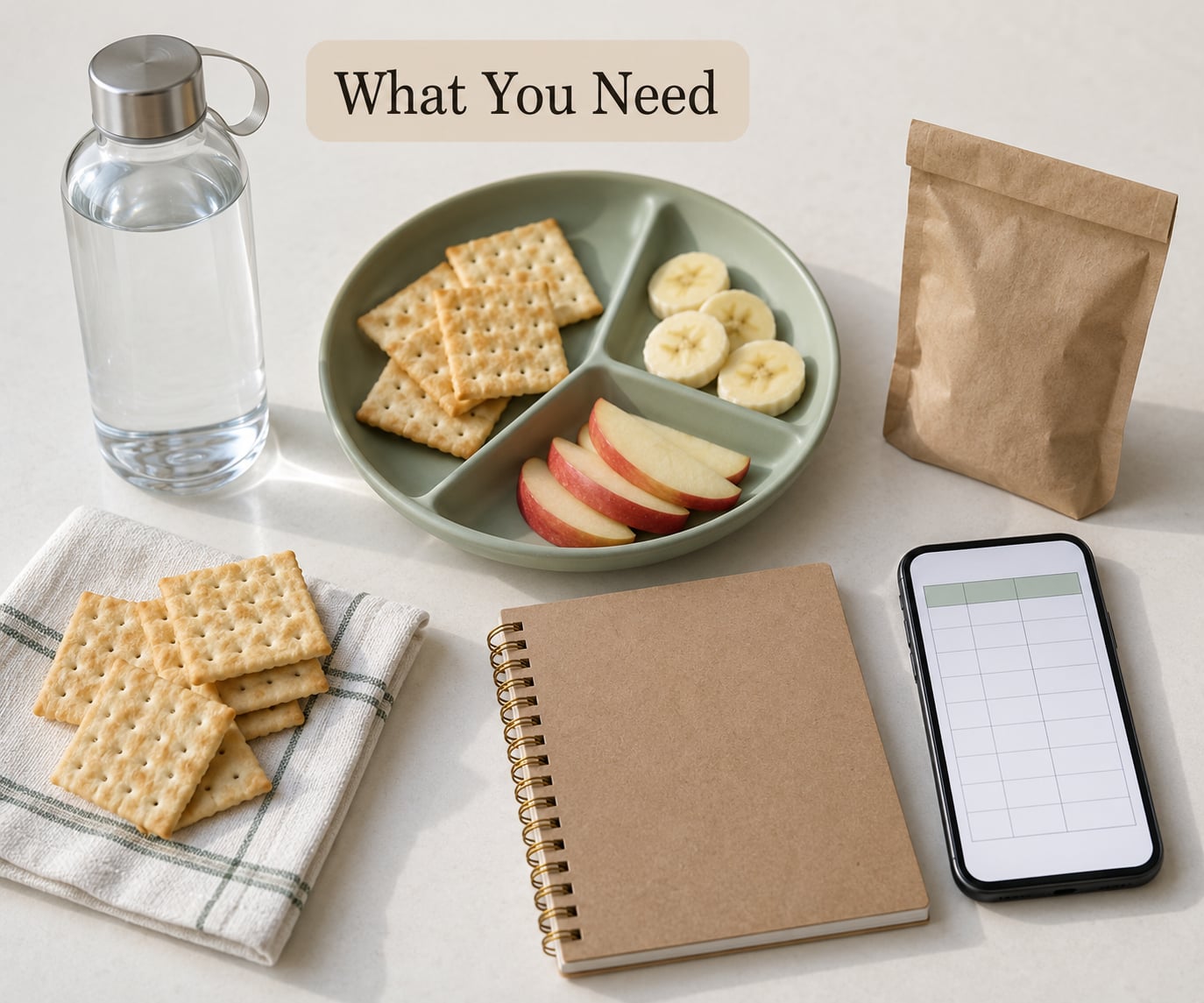
Assemble this once and it does most of the decision-making for you on the days you have no capacity left for deciding. None of it needs to be special or expensive-looking, and it can live in a drawer, a bag or the bedside table.
- Food that needs no preparation. Plain crackers, dry cereal, toast, unsalted pretzels, plain rice cakes. Whatever you currently tolerate when you can barely manage a conversation.
- Two or three drinks you can face. Water is often the hardest. Cold sparkling water, ice chips, a diluted cordial, diluted juice or an oral rehydration drink may go down when plain water will not.
- A divided plate or cup. Small compartments make a normal portion look manageable, and they stop you accidentally eating a whole meal before you realise you have had enough.
- A snack stash. Bedside, desk drawer, handbag, car glovebox. Non-food items do not survive in a handbag for long, so check yours weekly.
- Your preferred option. For many readers that is ginger in food or drink. Have it ready in a form you will actually eat, and check any supplement version with your clinician first.
- A bin or sealed pouch. Having somewhere to put it removes one of the small stresses that makes a bad morning worse, especially on a commute.
- Loose clothing. Anything that ties at the waist or presses on your stomach is worth putting away for a few weeks.
- A notebook or your phone. Short, daily, factual. It becomes the most useful thing you take to an appointment.
- Your clinician’s and pharmacy’s contact details. Somewhere you do not have to search while feeling awful. Include out-of-hours numbers.
Step-by-Step: How to Manage Morning Sickness Day to Day
These six steps are a set of options rather than a schedule. Combine them, skip the ones that make no sense on a given day, or move them to different times based on your own pattern of nausea. What follows is how to manage morning sickness day to day without turning your life into a schedule that only works on paper.
1. Start With Small Amounts Before Fully Awake
Keep something plain and dry within arm’s reach of your pillow and eat a few bites before you sit up. The logic is that an empty stomach tends to make nausea worse, and standing up from flat adds a jolt some mornings you do not need.
A realistic version: you wake at 6:40, you do not sit straight up, you eat four crackers and a sip of cold water over about ten minutes, and only then start moving. A change worth making is keeping the stash where you actually sleep rather than in the kitchen, because at 6am the kitchen is a long way to walk with an empty stomach.
How do you know it helped? Give it two or three mornings. If you are getting up with less dread and fewer minutes of hanging on to the bathroom, keep it. If nothing changes, drop it rather than forcing a habit that adds friction to a hard start.
2. Eat More Frequently, With Less Food at Once
Most people do better with small amounts every couple of hours than with three proper meals. This is often called grazing, and it means the stomach is never asked to handle a full portion at once.
Take from what you tolerate rather than from what sounds healthy. Cold foods often sit better than hot ones, and dry, salty, starchy foods are the usual first choices. Some readers manage protein more reliably than plain carbohydrate, and pairing a little protein with a carbohydrate before bed is reported often enough to be worth trying.
Separating solids from fluids by about fifteen minutes helps some readers; other people find it makes no difference at all. It is a small, cheap experiment, not a rule.
| Often easier to tolerate | Commonly makes it worse |
|---|---|
| Cold toast, crackers, plain rice cakes | Rich, greasy or fried food |
| Cold fruit, yogurt, ice chips | Strongly scented or reheated meals |
| Plain boiled rice, potatoes, pasta | Very sweet drinks on an empty stomach |
| Soups, broths, cool clear fluids | Coffee and caffeine for some readers |
| Salty dry snacks | Spicy food and strong cheese |
The right-hand column is not a banned list. It is a list of things that more often than not trigger a reaction, and triggers are personal. If coffee is the one thing that gets you through the commute, that is a different situation from coffee reliably sending you to the bathroom.
When eating feels genuinely unappealing, do not force a full meal. One of the small, dry snacks, a few sips, and a note that today was a low-intake day is a better record than a skipped day you never mention.
3. Build a Simple Hydration Routine
Dehydration makes nausea heavier, dizziness worse and exhaustion harder to push through, so fluids are a structural part of the plan rather than an afterthought. Aim for small sips on a schedule rather than large glasses.
Vary the temperature and the vessel. Cold drinks and ice chips often go down more easily, and a metal cup or a wide glass changes how a sip feels. If plain water is the problem, try diluted cordial, diluted juice, sparkling water or an oral rehydration drink. These are general fluid options, not a prescription, and if you are managing any medical condition or fluid restriction, ask your clinician first.
A practical check: urine that is very dark through the day, a dry mouth, a headache that arrives with the nausea, or passing urine much less often than usual are all signs you are behind. Carbonated drinks get recommended for morning sickness often enough to be worth explaining: sugar, cold temperature, fizz and an empty stomach can each feel settling, which is why a chilled sweet fizzy drink helps some readers. It is not a health recommendation, and the sugar load is real, so treat it as one option among many rather than a daily habit.
Repeated vomiting, or being unable to keep liquids down at all, is a different situation and belongs with your clinician rather than with this routine.
4. Adjust Your Routine Around Your Worst Time
Most people have a window. Some have it between 6am and 10am, some in the late afternoon, some in the middle of the night, and plenty have two windows. Finding yours is the single most useful thing the tracking in step six produces.
Once you know it, move the things you can control into the good hours. Meals go earlier or later. The walk to the bus happens before the peak rather than during it. If mornings are the worst hour, ask a partner to handle the early childcare drop-off, or move your start time if your workplace allows it. If evenings are worst, batch your cooking earlier, when you feel able, and reheat rather than standing over a pan at 7pm.
Symptom timing is not a character flaw and it does not have to follow a clock. Treat the pattern as data.
5. Use Familiar Foods, Ginger, or Acupressure With Caution
Familiar foods are the safest first move because they carry no learning curve when you are tired. Ginger is the remedy with the most consistent guideline support behind it for nausea in pregnancy, and many readers find a small amount in food or drink tolerable. It is not universal, and it can be just as nauseating as anything else, so keep the amount small and stop if it disagrees with you.
Cool scents get mentioned often too. Sniffing a menthol or peppermint product, or stepping into cooler air, is reported by some readers as helping within minutes. Keep scents away from the food itself and skip the stronger versions if they make you more nauseous. Diffusers in a shared room can be a problem for someone else, so ask first.
Acupressure wrist bands press on a point called the Nei Guan, a spot on the inside of each wrist about two to three finger-widths above the wrist crease. Bands are inexpensive and harmless, and evidence for them in pregnancy is weak, so treat them as something worth trying rather than something that is expected to work. Acupuncture is a separate thing and worth discussing with your clinician and a practitioner experienced in pregnancy.
Confirm every supplement, herbal product and medication with your prenatal clinician or pharmacist. Herbal products are medicines, they vary enormously in strength and content, and safety in pregnancy is not something to assume. That includes concentrated ginger capsules and anything marketed specifically for nausea. Prescribers in the UK and the US also have options such as vitamin B6 with or without doxylamine at night, and other anti-nausea medicines, but which of those is appropriate, at what dose and for how long is a decision for your prescriber rather than for an article.
6. Track Symptoms, Support, and Recovery
A short daily note takes under a minute and changes what happens at your next appointment. Keep it boring and factual: times and severity of nausea, what you ate and when, roughly how much fluid, how you slept, what you tried, and whether the day improved.
After a week the log usually answers three questions you could not have answered from memory: what the worst hours are, which strategies coincided with a better stretch, and how much you are actually managing on a normal day versus a bad one. Bring it to appointments. Clinicians rely on exactly this kind of detail, and it makes describing a hard-to-explain period much easier than trying to recall it in the room.
When to Contact a Prenatal Clinician
Contact your prenatal clinician promptly if you cannot keep liquids down repeatedly, you are passing very little urine or none, you feel faint or confused, you have pain that is severe or getting worse, you are vomiting with symptoms that worry you, or nausea is stopping you managing ordinary daily life. This is general safety guidance, not diagnosis. Repeated vomiting can lead to dehydration and electrolyte imbalance, and that is a medical matter, not a toughness test.
Some situations need same-day or urgent attention rather than a routine appointment. If you cannot keep fluids down for a sustained period, feel too weak to stand, have very reduced urine for a sustained period, or feel seriously unwell, seek urgent medical care.
Also worth raising sooner rather than later: nausea that was severe from the start, nausea still present beyond the usual first-trimester window, or nausea that stops entirely after having been constant. Those are all things a clinician wants to know about, and none of them are a reason to sit it out alone.
Common Mistakes
Most hard days come from one of a handful of predictable errors. They are worth naming because each one is easy to spot in hindsight.
Skipping all food and fluid because nausea feels worse. Eating and drinking are the two things that make the next hour easier, and avoiding them tends to make nausea heavier rather than lighter. The fix is smaller, not less: a few dry crackers and one or two sips.
Trying to follow an idealised wellness routine. Perfect hydration schedules, balanced meals at the table and a tidy morning do not exist for most first-trimester weeks. The fix is a low bar that still works on a bad day, held consistently for a fortnight rather than abandoned on a good morning.
Changing several strategies at once. Then you never know which one helped or which one made things worse. The fix is one change per few days, written down.
Assuming every supplement is pregnancy-safe. Vitamins, herbal products, concentrated oils and anything bought for nausea all need a professional check. The fix is a short conversation with your clinician or pharmacist before the first dose, not after.
Normalising severe symptoms because the label says morning sickness. The name is misleading, and being unable to function, eat or drink is not something to be tough through. The fix is contacting your clinician and describing what you cannot do, not whether you feel lucky.
Waiting for a fixed timeline to fix everything. Most cases ease by around 12 to 14 weeks as hormone levels settle, and for many people it is more gradual than that. Symptoms that do not follow that pattern deserve a conversation rather than an assumption.
A Flexible Daily Template for How to Manage Morning Sickness Day to Day
Here is one example day for a reader whose worst window is mid-morning. Use it as a starting point and edit it around your own peak rather than trying to live in it.
- Before rising: a few plain crackers and a sip of cold water, still lying down.
- First hour: move slowly, get daylight if you can, keep the next snack to hand.
- Small breakfast: something dry and cold, divided onto a small plate.
- Mid-morning: a snack roughly two hours after breakfast, plus a drink chosen from the list that works today.
- Rest or activity: a short walk or a lie-down, whichever sits outside the peak.
- Lunch: small portion, cooled before eating, fluids separated from solids if that helps.
- Afternoon check-in: note severity, what you managed, what made it worse.
- Dinner: plain, warm rather than rich, with a snack later if you can manage one.
- Before bed: a small carbohydrate and protein snack, plus the day’s note written down.
The template exists to remove decisions from a tired morning. If your worst hour is 8pm instead, shift the whole thing and protect that hour the way this version protects mid-morning.
Frequently Asked Questions
Does morning sickness mean my pregnancy is healthy?
It is commonly said, and it is not a diagnostic test either way. Some research has associated mild to moderate nausea with lower early miscarriage risk, but plenty of healthy pregnancies have no nausea at all, and some pregnancies with severe nausea go on entirely normally. Treat it as a reassuring pattern, not a guarantee, and let your clinician interpret it alongside your scan and your history.
What can I eat or drink when I feel too sick to eat?
Go smaller and drier rather than skipping everything. Plain crackers, dry cereal, toast, a few chips of plain rice or cold fruit are common starting points, eaten in small amounts every couple of hours. For fluids, cold sparkling water, ice chips, diluted cordial or an oral rehydration drink may be tolerated when plain water is not. If nothing stays down, contact your prenatal clinician rather than pushing through it.
Is ginger or a wrist-pressure band safe during pregnancy?
Ginger has the most guideline support of any self-managed option for nausea in pregnancy, and many readers tolerate a small amount in food or drink, though it is not universal and concentrated supplements should be checked with your clinician first. Acupressure wrist bands press the Nei Guan point on the inner wrist, are harmless, and carry weak evidence. Neither should ever delay contacting your clinician if you are not managing.
How long does morning sickness usually last?
For most, nausea and vomiting of pregnancy appears between weeks 4 and 12 and eases as hormone levels settle, commonly by around weeks 12 to 14. Some readers feel it well into the second trimester, and a minority have it much earlier or much longer. It also moves around the clock rather than staying in the morning. Bring it up with your clinician if it continues beyond the usual window or is severe throughout.
When is morning sickness severe enough to contact a clinician?
Contact your prenatal clinician promptly if you repeatedly cannot keep liquids down, pass very little or no urine, feel faint, dizzy or confused, have severe or worsening pain, or if nausea stops you managing ordinary daily life. Seek urgent care if you cannot keep fluids down for a sustained period, feel too weak to stand or feel seriously unwell. This is general safety guidance, not a diagnosis.
Conclusion
Start with one change rather than all six. Keep a plain snack beside the bed, take two or three sips of whatever cold drink you tolerate, and note the hour your nausea peaks. Then repeat the strategy that helped most and let the record build for a fortnight.
If you learn how to manage morning sickness day to day with those small habits and symptoms are still severe, worsening or stopping you from eating, working or caring for others, contact your prenatal clinician. That is a routine conversation they want to have, not an overreaction.