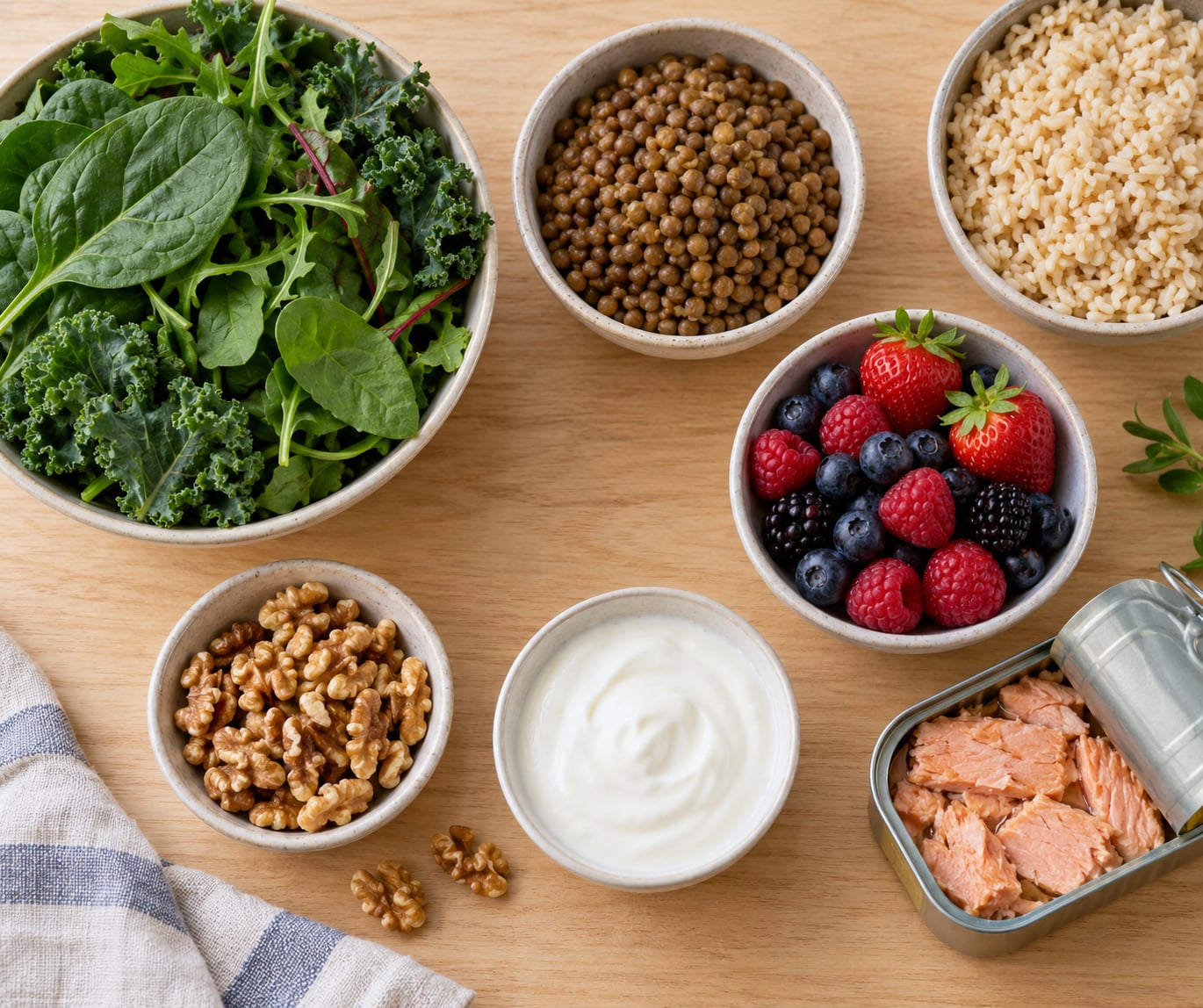
Nutrition during pregnancy what actually matters comes down to a pattern, not a perfect food: enough calories, a wide mix of vegetables, fruit, whole grains, protein and dairy, plus a prenatal vitamin that covers folate, iron, iodine, choline and DHA. Everything else, including superfoods and eating for two, matters far less than those basics.
There is a line worth drawing early. General guidance applies to nearly everyone, while anything shaped by your blood work, your weight history, your medical conditions or a specific pregnancy belongs with your obstetric clinician or a registered dietitian. This guide covers the first kind, and flags where the second one starts.
Table of Contents
- Nutrition During Pregnancy: What Actually Matters
- The Key Nutrients to Prioritize
- Nutrition during pregnancy what actually matters most, tier by tier
- What to Eat for a Balanced Pregnancy Diet
- Prenatal Vitamins, Supplements, and What They Cannot Replace
- Nutrition During Pregnancy What Actually Matters Most by Trimester
- Food Safety, Allergies, and Common Dietary Myths
- When Personal Nutrition Advice Is Important
- Frequently Asked Questions
- What is the most important nutrition during pregnancy what actually matters for most people?
- Do I need a prenatal vitamin if I eat a varied diet?
- How much weight should I gain during pregnancy?
- What can I eat when pregnancy nausea makes meals difficult?
- Is caffeine completely unsafe during pregnancy?
- Can a vegetarian or vegan diet provide enough nutrients during pregnancy?
- Conclusion
Nutrition During Pregnancy: What Actually Matters
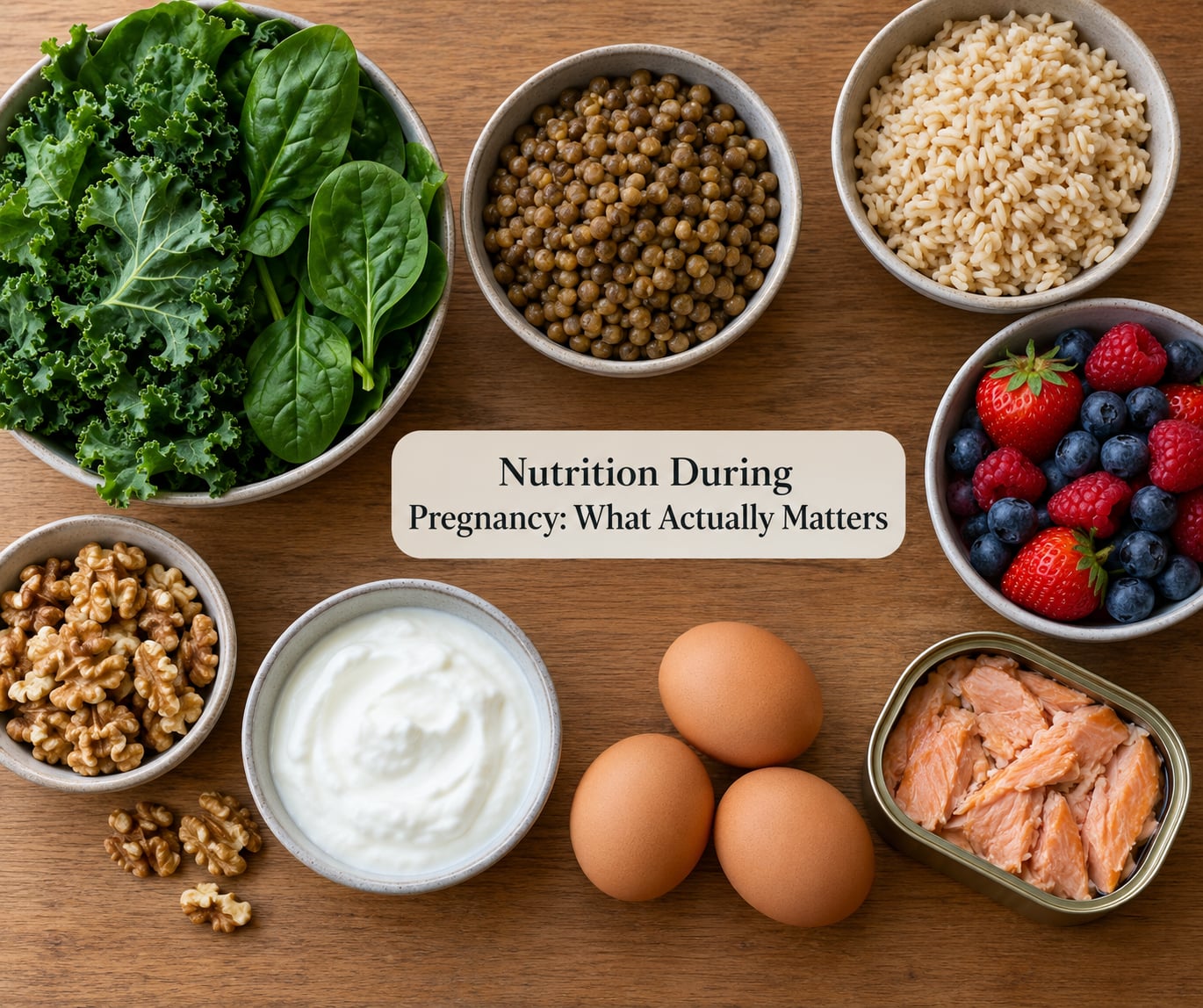
Nutrition during pregnancy is important because it changes measurable outcomes, not because food is the only thing that does. Getting enough folate, iron, iodine, choline, vitamin D and omega-3 fats is tied to lower rates of neural tube defects, iron deficiency anemia, preterm birth, low birth weight, preeclampsia and gestational diabetes, and those links come from ACOG, CDC and NIH Office of Dietary Supplements guidance rather than from opinion.
The timing is the part that surprises people. The neural tube closes within roughly 28 days of conception, often before a home test turns positive, so folic acid started before pregnancy does more work than the same capsule started at ten weeks. Requirements climb within weeks, which is why the useful habits are built before conception rather than during.
Most people are not looking for a perfect diet, and the search results that promise one are the reason so many readers feel behind. A varied pattern built from ordinary food, adjusted for nausea, budget, culture and appetite, is the realistic target. What you ate last week does not determine how this pregnancy goes.
If you ate raw fish, unpasteurized cheese or alcohol before a pregnancy test turned positive, that is an extremely common experience and rarely a reason for panic. Bring it up at your next appointment so your clinician can decide whether anything is worth monitoring, then move on.
The Key Nutrients to Prioritize
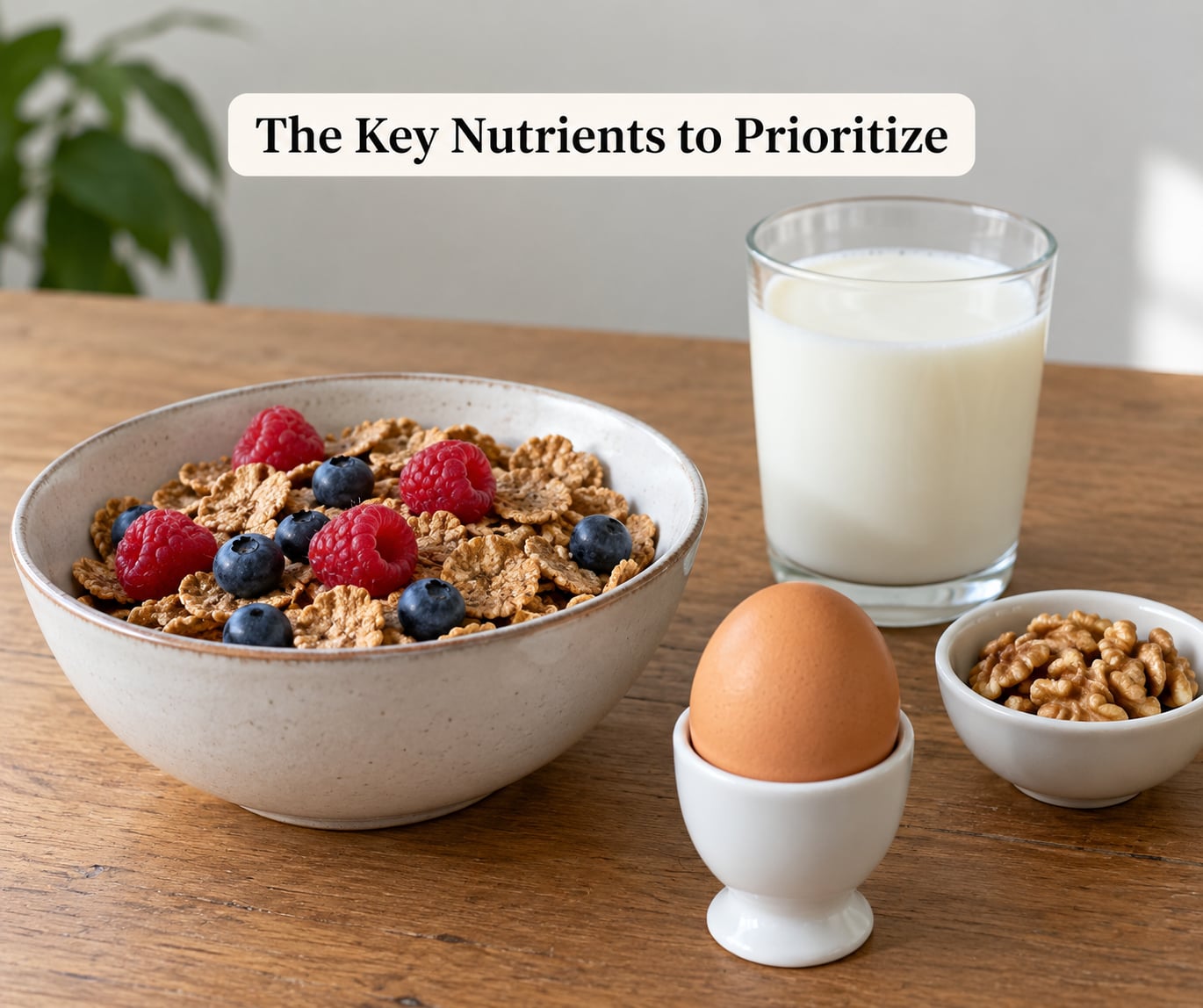
Nutrition during pregnancy what actually matters most, tier by tier
Most lists treat every nutrient as equally urgent, which is why they overwhelm people. A more useful ordering puts the five that change outcomes highest, and treats the rest as matters of fine tuning.
- Folate and folic acid. Neural tube and brain development, especially in the first 28 days after conception. Target: 600 mcg of folate daily in pregnancy, with 400 mcg recommended before conception.
- Iron. Builds the extra blood volume pregnancy requires and helps prevent iron deficiency anemia. Target: 27 mg daily, up from 18 mg for most adults.
- Iodine. Drives fetal thyroid hormone, which governs brain and bone development. Target: 220 mcg daily.
- Choline. Supports fetal brain and neural development, and most prenatal labels under-dose it or omit it. Target: 450 mg daily.
- DHA. Docosahexaenoic acid for brain and eye development. Target: around 200 mg daily, usually from fatty fish or an algae-derived supplement.
Calcium, vitamin D, protein, vitamin B12 and vitamin A matter too, and there is a difference between mattering and being scarce. Where you have plenty, extra effort changes nothing. Where you have none, it matters a great deal, which is why intake is a question about your diet rather than about a universal rule.
| Nutrient | Why it matters | Typical daily amount | Food sources |
|---|---|---|---|
| Folate (folic acid) | Neural tube and brain development | 600 mcg | Lentils, chickpeas, asparagus, spinach, fortified cereal, black beans |
| Iron | Extra blood volume, anemia prevention | 27 mg | Beef, liver, lentils, tofu, fortified cereal, pumpkin seeds |
| Iodine | Fetal thyroid hormone, brain and bone | 220 mcg | Iodized salt, dairy, eggs, a small portion of seaweed |
| Choline | Fetal brain and neural development | 450 mg | Eggs, beef, soy, milk, chicken |
| DHA (omega-3) | Brain and eye development | About 200 mg | Salmon, sardines, trout, shrimp, algae-based supplements |
| Calcium | Bones and teeth | 1,000 mg, or 1,300 mg under 19 | Milk, yogurt, fortified plant milk, tofu, canned sardines with bones |
| Vitamin D | Bone strength and immune function | 600 IU (15 mcg) | Fortified milk, salmon, eggs; often taken as a supplement |
| Protein | Growth, tissue and blood expansion | About 71 g, or roughly half your pre-pregnancy weight in pounds | Eggs, Greek yogurt, poultry, fish, beans, lentils, cottage cheese |
| Vitamin B12 | Nerve function and red blood cells | 2.6 mcg | Meat, dairy, eggs, fortified plant milk and nutritional yeast |
| Vitamin A | Vision and immune development | 770 mcg RAE, mostly as beta-carotene | Carrots, sweet potatoes, spinach, squash |
Two absorption details are worth knowing because they cost nothing to apply. Iron from meat absorbs more easily than iron from plants, and pairing either with vitamin C at the same meal improves uptake, while calcium taken at the same time works against it. Skip the calcium-fortified juice when your iron pill is the priority, and keep them at different meals.
What to Eat for a Balanced Pregnancy Diet
Think of a plate rather than a list of rules. Half vegetables and fruit, a quarter whole grains, a quarter protein foods, plus a dairy or fortified alternative and a source of healthy fat, repeated across your meals, covers almost everything the table above asks for.
Breakfast does not have to be elaborate. Fortified cereal with berries and a handful of walnuts, or toast with peanut butter and a glass of milk, gets you folate, iron, calcium, vitamin D and choline in about four minutes.
Lunch and dinner follow the same shape with different ingredients: lentil soup with whole-grain bread, black beans and rice with salsa and cheese, grilled chicken with quinoa and roasted vegetables, or baked salmon with sweet potato and broccoli. Two servings of low-mercury fish a week covers DHA without supplements.
For snacks, yogurt with fruit, cottage cheese with berries, a boiled egg with crackers, or roasted chickpeas work better than a granola bar because they carry protein, which keeps you satisfied between meals.
Budget and culture are not obstacles to a good pattern, they are just variables. Dried beans, lentils, canned salmon with bones, frozen vegetables, fortified cereal and eggs deliver folate, iron, DHA and protein at a fraction of the cost of specialty items, and every cuisine has a version of this plate if you build it from what you already cook at home.
Hydration counts too. Aim for water through the day, and keep a glass near you at night, since thirst often arrives late.
Prenatal Vitamins, Supplements, and What They Cannot Replace
A prenatal vitamin fills the gaps that food alone usually cannot cover in early pregnancy, mainly folate, iron, iodine, vitamin D and sometimes choline and DHA. It is insurance, not a substitute for eating, and it is one of the few items most clinicians recommend starting before conception rather than after a positive test.
Reading the label takes five minutes and prevents the most common disappointment. Here is the checklist:
- Look for iodine. Many labels list none at all, and it is the nutrient most often missing.
- Check choline. Frequently absent, and when present it is often well below 450 mg.
- Confirm DHA specifically. A label saying only fish oil or omega-3 may contain mostly EPA, which does not substitute for DHA.
- Note the folate form. Folic acid and methylfolate both appear; either can be appropriate, and your clinician can advise if you have a family history of neural tube defects.
- Look at vitamin A. Preformed retinol has an upper limit, while beta-carotene from food does not, so food sources are the safer route for this one.
- Count the caffeine. Some supplements add it, which matters against a 200 mg daily cap.
Extra iron is worth discussing before you add it, because the 27 mg daily target already assumes a supplement, and unnecessary iron causes constipation without benefit. Herbal products, standalone vitamin A, and high-dose single nutrients fall into the same category of talk-to-your-clinician-first, as does anything taken alongside a prescription medication. Vegetarian, vegan and restrictive eating patterns usually need more deliberate planning, particularly for B12, iron and vitamin D, and a registered dietitian is the right person for that plan.
Nutrition During Pregnancy What Actually Matters Most by Trimester
The priorities barely move. What changes is appetite, fetal growth, symptoms and the amount of energy you are moving through the day, which is why the same nutrient list looks different in practice from month to month.
In the first trimester, nausea shapes everything and intake usually drops. Many people lose weight without trying and worry about it. Food over volume matters more here, and a folate-rich diet matters most because this is the window when the neural tube closes.
Calories rise modestly after that, which surprises almost everyone.
| Stage | Additional daily energy | Notes |
|---|---|---|
| First trimester | None required | Nausea and fatigue drive intake down; quality over volume |
| Second trimester | About 340 calories | Appetite usually returns; appetite for iron-rich food often rises |
| Third trimester | About 450 calories | Hunger increases as fetal growth accelerates; reflux may limit volume |
| Twins | About 300 extra calories per additional fetus | Ask your clinician for the range specific to your pregnancy |
| Pre-pregnancy BMI | Total weight gain range | Average per week, second and third trimesters |
|---|---|---|
| Under 18.5 | 28 to 40 pounds | About 1.1 to 1.3 pounds |
| 18.5 to 24.9 | 25 to 35 pounds | About 0.8 to 1 pound |
| 25.0 to 29.9 | 15 to 25 pounds | About 0.5 to 0.7 pounds |
| 30.0 or above | 11 to 20 pounds | About 0.4 to 0.6 pounds |
These ranges come from the National Academies and are guidelines, not grades. Weight in pregnancy also depends on where you started, and tracking numbers can be genuinely triggering for people with a history of disordered eating. If that is you, tell your clinician and ask to keep weight conversations out of the room.
Matching food to symptoms is more useful than any meal plan.
| Symptom | What helps | Foods to try |
|---|---|---|
| Nausea | Small, frequent meals; dry food before getting up; bland and salty over rich | Toast, crackers, plain yogurt, pretzels, cold fruit, potatoes |
| Constipation | Fiber, fluids and movement; iron moved to a different time of day | Prunes, pears, beans, oatmeal, chia, kefir |
| Heartburn | Smaller volumes, eat slowly, stay upright after eating | Oatmeal, bananas, melon, ginger, lean proteins over fried food |
| Diarrhea or stomach upset | Simple foods temporarily, then rebuild; keep fluids and electrolytes up | Rice, bananas, applesauce, toast, broth, well-cooked lentils |
Food Safety, Allergies, and Common Dietary Myths
Food safety during pregnancy is not arbitrary caution. Listeriosis is far more dangerous in pregnancy than at other times, so the rules exist for a specific reason rather than to frighten anyone.
The practical framework is clean, separate, cook and chill. Cook to these minimum internal temperatures: poultry to 165°F (74°C), ground meat to 160°F (71°C), and whole cuts of meat and fish to 145°F (63°C). Refrigerate perishable food within two hours.
Sushi is not banned. Cooked seafood, including shrimp tempura and vegetable rolls, is fine; the concern is raw or undercooked fish because of mercury and listeria. Frozen sushi made with cooked ingredients is also fine. High-mercury fish such as shark, swordfish, king mackerel, tilefish, bluefish, marlin and pike should be avoided, while salmon, cod, pollock, sardines, trout and shrimp are low-mercury choices. Albacore tuna is a middle case, generally capped at about 6 ounces a week.
Alcohol has no known safe amount in pregnancy, so the guidance is zero. Caffeine is a limit rather than a ban: 200 mg daily for most people, roughly one 12-ounce coffee. Herbal teas and supplements deserve a conversation with your clinician, because some are not well studied in pregnancy.
Food allergies, including shellfish and tree nut allergies, are not added back by pregnancy, and most people can continue eating the foods they already tolerate. A true allergy is different from the intense cravings people describe, and craving non-food items is worth mentioning at your next visit, since that pattern has a name and can signal low iron.
A few myths deserve to be retired outright.
- Do you need to eat for two? No. Second-trimester needs rise by roughly 340 calories, which is a snack, not a second meal.
- Is there a perfect pregnancy diet? No. A varied pattern matters; perfection is not achievable and not required.
- Are packaged and convenience foods off limits? No. They count as food, and shame about them costs more than the food does. Fortified cereal and canned beans are useful pregnancy foods.
- Does drinking decaf coffee count? It contains a small amount of caffeine, so it counts toward the same 200 mg daily total.
- Do you need to eat differently for a boy than a girl? No evidence supports sex-specific diets.
- Do spicy food or cold food cause miscarriage? No. There is no evidence that either causes miscarriage.
When Personal Nutrition Advice Is Important
Some pregnancies have nutritional requirements that no general guide can address, and guessing is the wrong tool. Book time with an obstetric clinician, a midwife or a registered dietitian when you have diabetes or gestational diabetes in a current or previous pregnancy, anemia or a low ferritin result, severe nausea that prevents eating, celiac disease, kidney disease, a food allergy, a restrictive eating pattern, or a twin or higher-order pregnancy.
The same applies if you are carrying through IVF, egg donation or surrogacy, where the nutritional timeline starts earlier and the medication schedule changes what is safe.
Seek medical attention promptly rather than adjusting food yourself if you cannot keep fluids down, pass very little urine, feel faint, have bleeding, a fever, severe abdominal pain, or vomiting that starts late in pregnancy. Those are warning signs, not dietary questions.
Frequently Asked Questions
What is the most important nutrition during pregnancy what actually matters for most people?
For most people it is a pattern, not a single food. Folate, iron, iodine, choline and DHA are the five that change outcomes, and a prenatal vitamin covers the ones food struggles to deliver early. Everything else, including superfoods and perfect diets, is refinement. If you only changed three things, they would be starting a prenatal before conception, eating two servings of low-mercury fish most weeks, and pairing vitamin C with iron-rich meals.
Do I need a prenatal vitamin if I eat a varied diet?
Most clinicians recommend one anyway, because a good diet and a prenatal solve different problems. Folate needs in the first 28 days after conception outrun what most people eat without thinking about it, and iodine, choline and vitamin D are the nutrients most often under-dosed in food. A prenatal is insurance against gaps, not a replacement for meals, and your clinician may adjust the dose or add iron, B12 or vitamin D based on your blood work.
How much weight should I gain during pregnancy?
The range depends on your pre-pregnancy BMI, not on how you feel about it. The National Academies ranges run from 28 to 40 pounds if you started underweight, 25 to 35 at a normal BMI, 15 to 25 if you started overweight, and 11 to 20 above a BMI of 30. About half of that comes in the second trimester and half in the third. Treat it as a guideline, and tell your clinician if tracking numbers is difficult for you.
What can I eat when pregnancy nausea makes meals difficult?
Small and boring beats large and nutritious right now. Dry crackers, toast, plain yogurt, pretzels, cold fruit and potatoes tend to sit well, and eating something before you get out of bed helps some people. Ginger, sour foods and smaller sips of fluid between meals work for others. Keep the prenatal by the bed with whatever you can keep down, and tell your clinician if you cannot keep fluids or any solid food down at all.
Is caffeine completely unsafe during pregnancy?
No, it is limited rather than banned. Most guidance sets 200 mg per day for a typical pregnant person, which is about one 12-ounce brewed coffee or two small cups. Decaf still counts, and energy drinks and some prenatal supplements add caffeine quietly. Tea and chocolate count too, just in smaller amounts. Some studies look at higher intakes and see associations, which is why the recommendation stays at the lower number rather than at zero.
Can a vegetarian or vegan diet provide enough nutrients during pregnancy?
Yes, with planning. Plant-based diets can supply folate, vitamin C, calcium and DHA, and many of the strongest pregnancy foods are plants. The nutrients that need more attention are B12, iron, iodine, zinc, vitamin D and choline, and non-heme iron absorbs less readily than iron from meat. A registered dietitian can build you a plan, and a supplement is usually part of it. Vegan prenatal supplements differ from standard ones, so check the label or ask your pharmacist.
Conclusion
Start with three things, not thirty. Take a prenatal that lists folate, iron, iodine, choline and DHA, eat two servings of low-mercury fish most weeks, and keep iron-rich meals paired with something high in vitamin C. Bring your blood work, your symptoms and your questions to your next appointment, because that conversation is where your own plan gets written.