To sleep better in the third trimester, focus on three things: supporting your bump so you can settle into a side position, cutting the physical reasons you wake, and giving your brain a predictable wind-down. It rarely means eight unbroken hours. For most people it means fewer wake-ups, less pain while you are awake, and getting back to sleep faster when something interrupts you.
Here is the honest version. The last trimester is the hardest stretch of the pregnancy to sleep through, mostly because of physical pressure and reflux, and no amount of pillows removes that. What pillows and routine changes do is make the uncomfortable stretches shorter and less frustrating. Most of what follows can be tried tonight without buying anything.
A note before you start: this is general information, not personal medical advice. Anything about your own pregnancy, including supplements, sleep aids and medications, belongs in a conversation with your midwife, doctor or another qualified clinician.
Table of Contents
- What You Need
- Step-by-Step: How to Sleep Better in the Third Trimester
- 1. Set a Realistic Sleep Routine
- 2. Find Sleeping Positions That Work in the Third Trimester
- 3. Create a Cool, Supportive Sleep Environment
- 4. Manage Discomfort Before Bed
- 5. Build a Plan for Nighttime Wakeups
- Common Mistakes
- Frequently Asked Questions
- How many hours of sleep do I need in the third trimester?
- Is insomnia normal in the third trimester, or is something wrong with me?
- Can I nap during the day without ruining my night sleep?
- How do I stop waking up to urinate four or five times a night?
- When does poor sleep in the third trimester need medical attention?
- Conclusion
What You Need
Nothing on this list is required. Some people get comfortable with three ordinary pillows and a glass of water by the bed, and never buy a thing. Use whatever is already in your house.
- Two or three firm pillows. Enough to build a stack, wedge and backstop. Household pillows work fine for the first weeks of the third trimester.
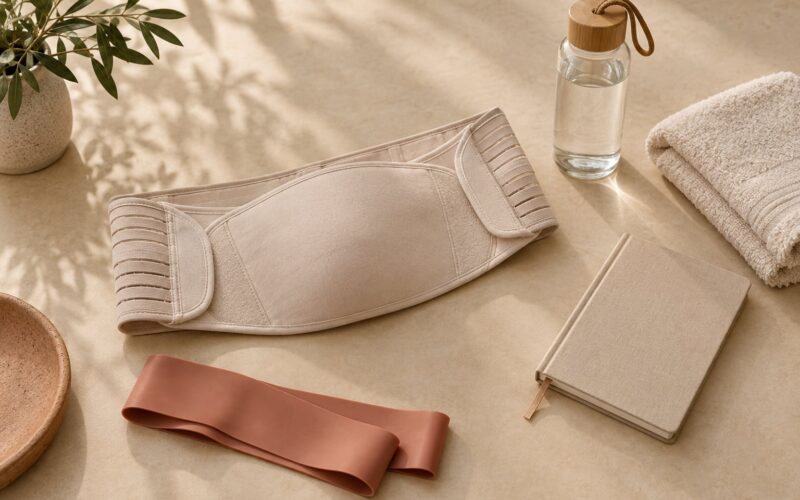
- A pillow or cushion for under your bump. A body pillow, a firm roll or even a folded sleeping bag works. This is the placement that tends to matter most once the bump is visibly high.
- Something to wedge under your back and behind your knees. A firm cushion or a rolled blanket stops you rolling flat onto your back and takes the strain off your hips.
- A filled water bottle and a glass. You will wake thirsty and you will wake needing the bathroom. Having both within reach turns a 3am trip into a two-minute one.
- A dim or warm night light. Bright light wakes you up more thoroughly than you would think, and a dim bathroom light is kinder than a full overhead one.
- A long phone charger cord. You may be up at 4am looking up pregnancy symptoms at 4am. This is not a recommendation, just a fact.
- A supportive mattress setup. A firm mattress on a firm base, or a thin topper if yours has gone soft, reduces how far the pelvis sinks when you roll over.
One honest warning from people in late pregnancy: props can stop working around 35 to 37 weeks. Some people find they roll over the pillow they put behind their back and wake up worse than before. If that happens, the answer is not more pillows, it is a different arrangement or a different piece of furniture.
Step-by-Step: How to Sleep Better in the Third Trimester
The steps below are in the order that tends to help most. Change one or two things at a time, give each a few nights, and keep what works. If you change everything on the same evening, you will not know what did it.
1. Set a Realistic Sleep Routine
Consistency matters more than duration. Pick a wake time and hold it steady, including at weekends, and set your bedtime backward from it. A rhythm that repeats daily trains your circadian rhythm, and yours is already being pulled around by hormones and a growing body.
Build a 30 to 45 minute wind-down that is dull on purpose: dim lights, phone out of the bedroom, something slow and repetitive such as stretching, a shower or reading a few pages of something undemanding. Keep the same order every night so the sequence itself becomes the cue.
What to skip is the effort to fall asleep. Lying there trying to force sleep makes the bed feel like a problem rather than rest, and that pattern tends to persist for the rest of the pregnancy. If you are awake and becoming irritated, get up, sit somewhere else, do something quiet until you feel sleepy, and go back. That is standard cognitive behavioural guidance for insomnia and it is useful here too.
One reassurance worth having: fragmented sleep in the third trimester is common and is not, by itself, a sign that something is wrong. Plenty of people report sleeping well in one trimester and badly in another for no clear reason. Insomnia across the whole pregnancy is also common, though it tends to quiet down for many people in the middle months before returning in the final weeks.
2. Find Sleeping Positions That Work in the Third Trimester
The left side is the position most often recommended, and the reason is mechanical. When you lie flat on your back, the weight of the uterus and baby presses against the inferior vena cava, the large vein running along your spine that returns blood to your heart. Compressing it can lower blood pressure, reduce cardiac output and send less blood through the placenta. Side sleeping relieves that pressure. Either side is better than your back.
What to avoid is lying flat on your back late in pregnancy, and lying on your stomach, which stops being possible fairly early anyway. If you wake on your back, do not panic. Bodies are not sculptures. Simply roll onto your side and go back to sleep, which is the standard reassurance to hear from a midwife.
Then the part most guides skip: sleeping semi-reclined is a legitimate option, not a failure. If heartburn, breathlessness or pelvic pressure makes flat positions miserable, sleeping propped up at an incline, in a recliner, or on a couch with cushions under your head and knees is a reasonable choice. It is not ideal sleep, but comfortable sleep beats perfect sleep you never get.
The specific pillow arrangement most people land on, and one you can build in five minutes:
- One pillow under your bump, filling the gap between your knees and your belly.
- One pillow between your bent knees. This keeps your hips level and takes pressure off the lower back.
- One long pillow or firm cushion behind your back, angled so rolling onto your stomach is uncomfortable.
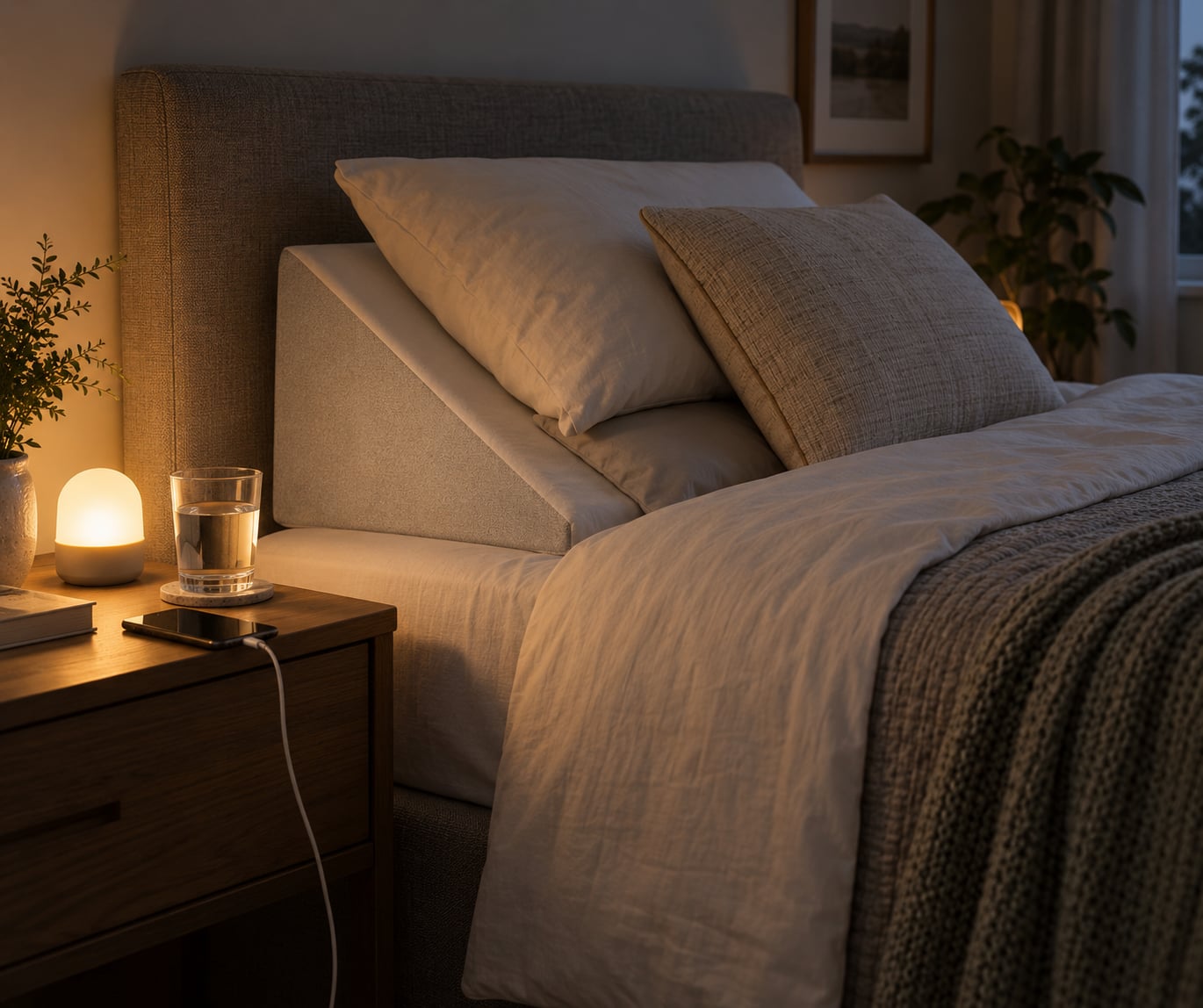
- For reflux, an extra pillow or a wedge lifting your head and shoulders rather than your neck. Raising the head of the bed by a few inches does more for night-time reflux than an extra pillow does.
- For back pain, roll onto your side with both knees drawn up rather than letting the top leg fall forward. That single change usually does more than any pillow.
Wedge pillows are the first thing people buy once the bump is unmistakable, and they work well for supporting the bump and for incline. If your issue is reflux, a wedge under the head end of the bed is the version you want. A wedge under your back at the shoulder-blade level is what keeps you from rolling onto your back. Using one every night is fine.
Ask your provider about discomfort rather than pushing through it if pain is severe or persistent, if you feel numbness or tingling in your legs, if getting in and out of bed is becoming difficult, or if the position problem is making you avoid sleep for days at a time. Those are treatable things, and they are worth raising.
3. Create a Cool, Supportive Sleep Environment
Pregnancy raises your body temperature and makes you sweat, particularly in the last trimester. A room that felt right at 24 weeks feels stuffy at 36. Aim for cool, and use breathable bedding rather than piling on weight. Cotton or bamboo sheets and a lighter comforter usually beat a heavy quilt.
Keep the room dark. If you need to get up, a night light is kinder than the overhead. Noise matters more than most people expect, and a fan, a white noise machine or earplugs is often the difference between a wake-up and a broken hour.
Clear a path to the bathroom before you get in bed. That sounds trivial and it is not. Also keep the phone out of arm’s reach, because scrolling in the dark at 3am is a reliable way to lose another hour.
A short pre-bed checklist, run in order: room cool and dark, phone charging across the room, water and glass on your side of the bed, night light on low, blanket within reach, back door locked. Five items, under two minutes, and it removes the small frictions that cause most of the 2am wakings.
4. Manage Discomfort Before Bed
Most late-pregnancy sleep problems are physical and fall into a short list. Match your symptom to something to try tonight.
- Heartburn or acid reflux lying flat. A relaxed sphincter, raised progesterone and pressure on the stomach combine. Eat dinner three to four hours before bed, keep the head of the bed elevated, sleep semi-reclined, and avoid lying down right after eating.
- Restless legs at bedtime. A common pregnancy-associated sleep condition, usually worse at night and with fatigue. Move and stretch earlier in the day, take a warm bath or shower, work on the calves and hamstrings, and keep caffeine low.
- Leg cramps at night. Fatigue, pressure on the leg nerves and circulation, and sometimes low magnesium. Stretch your calves before bed, stay hydrated through the day, and point and flex the foot when a cramp starts.
- Lower back or hip pain. Growing weight pulling on the pelvis, with ligaments loosening. Sleep on your side with a pillow between the knees and one under the bump, and avoid standing for long stretches.
- Shortness of breath when lying down. The uterus pushes the diaphragm up and compresses the chest. Sleep propped up at an incline with knees raised, cut the hours spent lying completely flat, and rest on your side between attempts.
- Waking to urinate four or five times a night. Pressure on the bladder, plus the uterus dropping lower late in the pregnancy. Drink steadily across the day then taper in the last two hours, empty before you settle, and limit bladder-irritating evening fluids.
- Racing thoughts about labour. Anxiety, disrupted sleep and a body not comfortable enough to switch off. Write worries down with a next step for each, set a worry time earlier in the evening, breathe and stretch, and talk to your provider about the fear itself.
- Blocked nose at night. Pregnancy rhinitis, driven by hormone-related swelling of the nasal lining. Saline nasal spray or a rinse, humidified air and extra hydration.
Nonmedical habits that tend to help: gentle daily movement such as walking or swimming, stretching in the evening, a warm bath an hour or two before bed, a smaller earlier dinner, and caffeine limited to the first part of the day. If you are drinking coffee in the afternoon and wondering why you cannot settle, that is often the first thing to change.
Two things people ask about directly. Magnesium and melatonin are both commonly used in pregnancy, and so are over-the-counter sleep aids including doxylamine, which is sold as a sleep aid in some countries and as a nausea remedy in others. Do not start any of them, including herbal preparations, without asking your midwife, doctor or pharmacist first. Your provider can weigh what is appropriate for your pregnancy and your history. This matters more in the third trimester than earlier, because the list of things that are simply assumed to be fine is shorter now.
Pain that is severe, persistent or unlike your usual aches is not something to manage with pillows. Same for a headache that will not settle, visual changes, sudden swelling in your face or hands, or a general feeling that something is off. Those belong in a phone call to your provider today, not in a night-time troubleshooting list.
5. Build a Plan for Nighttime Wakeups
The single most useful thing you can do for a 3am waking is decide in advance what waking looks like, so you are not improvising at half attention. Keep water and a glass on your side, a night light on low, and your phone charging far enough away that reaching for it is effort.
After a bathroom trip, give yourself a short, boring, low-light route back to bed. No phone, no fridge, no starting a thought you will be carrying at dawn.
On naps: a 20 to 30 minute nap before mid-afternoon is useful and unlikely to affect night sleep. Napping for two hours at 4pm, or napping because you are exhausted, usually ends with you waking at 11pm unable to sleep. If the nap is what gets you through the day, take it and accept slightly worse nights for a few weeks.
On the household question nobody asks: if other children are waking you, that is logistics, not sleep hygiene, and no amount of pillow arrangement fixes it. Splitting the night, taking a feed or settling duty early, going to bed earlier on the days you know will be hard, and asking for help with the 6am shift are all legitimate. So is sleeping somewhere other than the bed when the bed is not where the wake-ups happen.
Finally, the worry underneath most late-pregnancy insomnia: does not sleeping mean labour is close? Restless legs, leg cramps, broken sleep, sleeping a lot, sleeping badly. None of these reliably tell you when labour will start. Some people feel terrible sleep for three weeks, and some who sleep well the night before. It is a poor signal, and counting on it is one of the more reliable ways to lose sleep.
Common Mistakes
Treating occasional poor sleep as a diagnosis. Fragmented sleep is the normal state of the third trimester, not a disorder. Worrying about it reliably makes it worse, because the anxiety about sleeping is itself a reason you cannot. The version of this that deserves attention is sustained insomnia that leaves you unable to function during the day, or snoring with pauses in breathing, which can point to sleep disordered breathing and obstructive sleep apnea in pregnancy. That deserves a conversation with your provider rather than self-diagnosis.
Staying flat on the back out of habit. Uncomfortable at 32 weeks, and less comfortable still at 38. Use the back-blocking pillow, and if you wake on your back, just roll over.
Using screens to wind down. The light suppresses melatonin and the content keeps the mind active. Put the phone in another room for the last half hour.
Leaving caffeine in the afternoon. Caffeine crosses the placenta and its half-life is longer in pregnancy. Move your last coffee to midday and see what a week does.
Treating anything over the counter or in the supplement aisle as automatically safe. Doxylamine, melatonin, magnesium, herbal sleep blends, all of it. Ask first, every time.
Eating dinner late and then lying down. Three to four hours between your last food and lying down is the simplest reflux fix there is, and it costs nothing.
Staying in a position that hurts all night because it is the correct one. Position matters for circulation. It does not need to be the one and only position. Rotate, prop up, and move to the couch when the bed is unusable.
Frequently Asked Questions
How many hours of sleep do I need in the third trimester?
Most guidance points to seven to nine hours a night, but nobody reaches it consistently at 36 weeks and that is not a problem in itself. What matters more is that your sleep is broken into enough pieces that you can still manage your day. If you are functioning, driving safely and not falling asleep standing up, you are getting enough. Persistent exhaustion that does not improve with rest is worth raising with your midwife or doctor.
Is insomnia normal in the third trimester, or is something wrong with me?
Insomnia and frequent waking are among the most common complaints of the third trimester, driven by pressure on the bladder and diaphragm, reflux, nasal congestion and restless legs. The experience is genuinely miserable, but it is expected. What is not expected is insomnia that has been going on since early pregnancy, insomnia alongside low mood or anxiety, or loud snoring with pauses in breathing. Those are reasons to contact your provider rather than to wait it out.
Can I nap during the day without ruining my night sleep?
Yes, if you keep naps short and early. Around 20 to 30 minutes before mid-afternoon gives you real rest with minimal effect on bedtime. Longer naps, and naps taken in the late afternoon or evening, usually mean you wake at 11pm unable to sleep and start the next day behind. If a longer nap is the only thing that gets you through the day, take it and accept slightly worse nights in the short term.
How do I stop waking up to urinate four or five times a night?
You can reduce it somewhat, not eliminate it, because the growing uterus sits on your bladder and drops lower in the final weeks. Drink steadily across the day rather than in large amounts at once, then taper your fluids in the last two hours before bed, and empty just before you settle. Going straight back to bed in dim light instead of starting a wake-up routine also limits the losses.
When does poor sleep in the third trimester need medical attention?
Contact your midwife, doctor or midwife-led clinic if poor sleep comes with loud snoring, witnessed pauses in breathing or waking gasping, since untreated obstructive sleep apnea in pregnancy is associated with hypertension and preeclampsia. Also reach out for severe or persistent pain, a headache that will not settle, visual changes, sudden swelling of the face or hands, reduced fetal movement, or anxiety about labour that is not easing. That last one is a legitimate clinical conversation, not a passing mood.
Conclusion
Start tonight with one thing: build the pillow arrangement, bump supported, pillow between the knees, cushion behind your back. It is the change with the shortest path to a more comfortable hour, and it costs nothing. Then move a layer at a time through the routine, the room, the evening habits and the plan for waking up.
Hold a realistic line on what counts as success. Better sleep in the third trimester usually means less pain, fewer wake-ups and less time awake at 4am, not a full unbroken night. And if you want the insomnia checked properly, that is a conversation worth having, since a midwife or doctor can look at causes you cannot assess yourself, including restless legs, reflux and sleep disordered breathing.