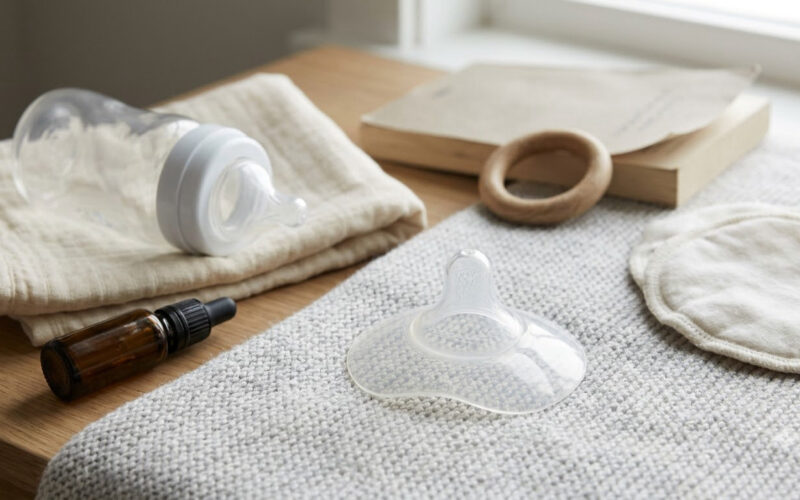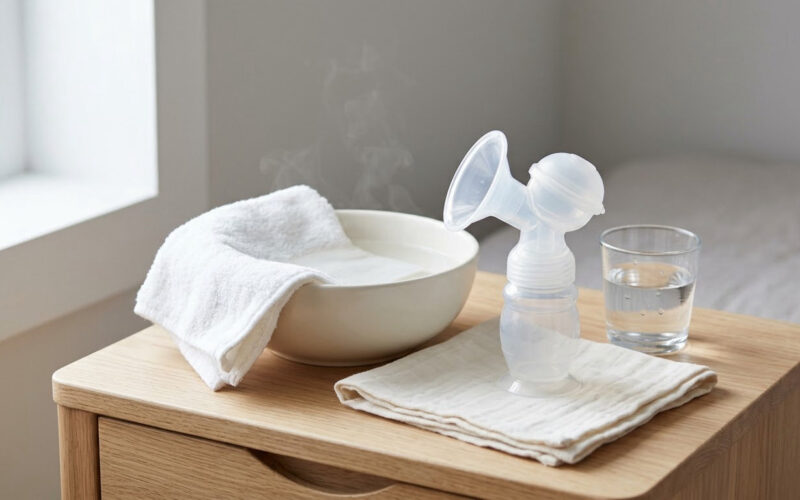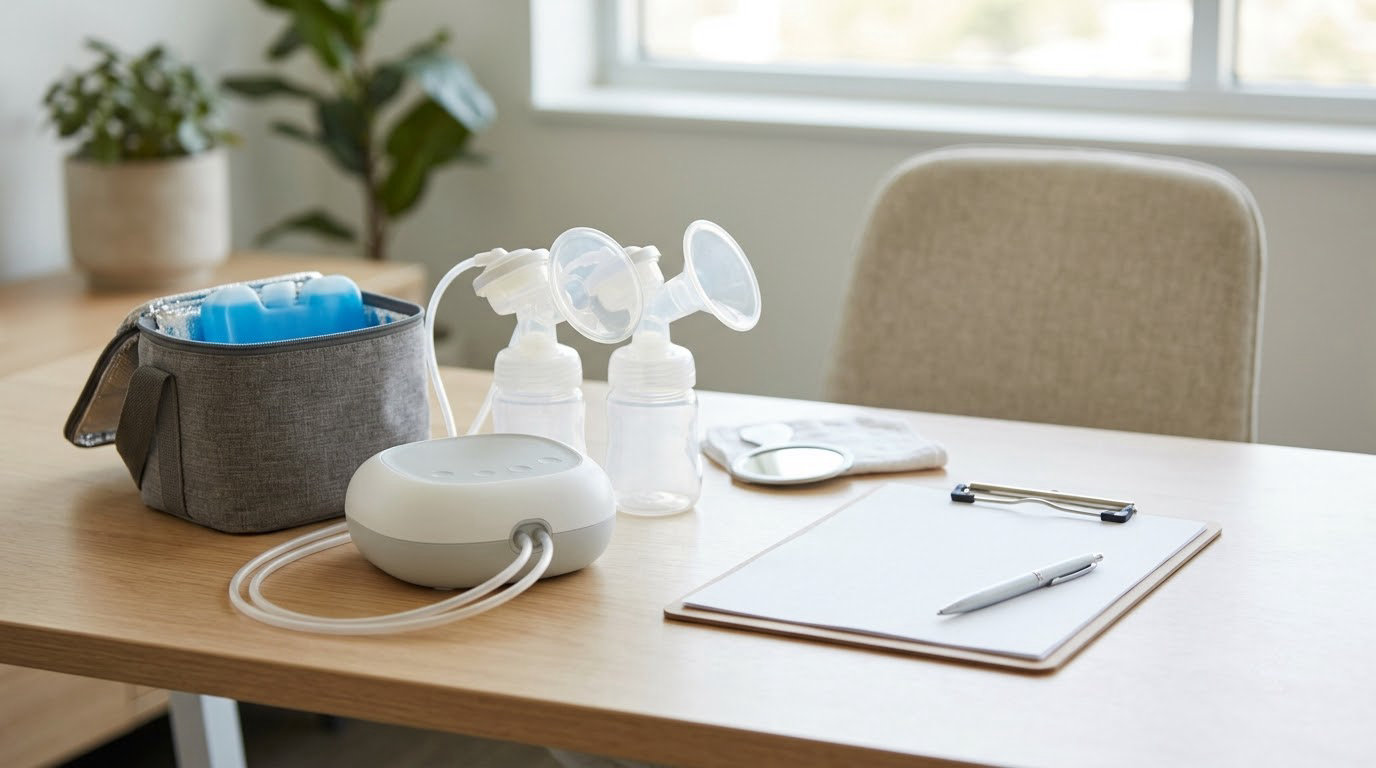
Pumping at work goes a lot better when you treat it as a system instead of a series of favors you are quietly asking your manager for. The practical side is straightforward: pick a rhythm, gather your supplies, request a protected break in writing, and keep a record of what happened. The rights side matters just as much, because federal law already requires covered employers to give you reasonable break time and a private place other than a bathroom to express milk for up to one year after your child’s birth.
Below is how to pump at work and know your rights, in order: what to gather, how to run a workday of pumping, how to make your request, and how to document it. State law can add protections on top of the federal floor, and the rules change, so confirm what applies where you work before you assume you are owed nothing.
Table of Contents
- What You Need
- Step-by-Step: How to Pump at Work and Know Your Rights
- Step 1: Check Your Federal and State Protections
- Step 2: Build a Pumping and Storage Plan
- Step 3: Request the Break and Get Space to Pump at Work
- Step 4: Protect Your Milk and Your Boundaries
- Step 5: Keep Records and Follow Up
- Common Mistakes
- Frequently Asked Questions
- How often should I pump at work?
- Does my employer have to provide a private place to pump?
- What if I need to pump more often than my scheduled break time?
- Can my employer require me to make up pumping time?
- What should I do if my workplace refuses pumping accommodations?
- Do state laws give me more rights than the federal PUMP Act?
- Conclusion
What You Need
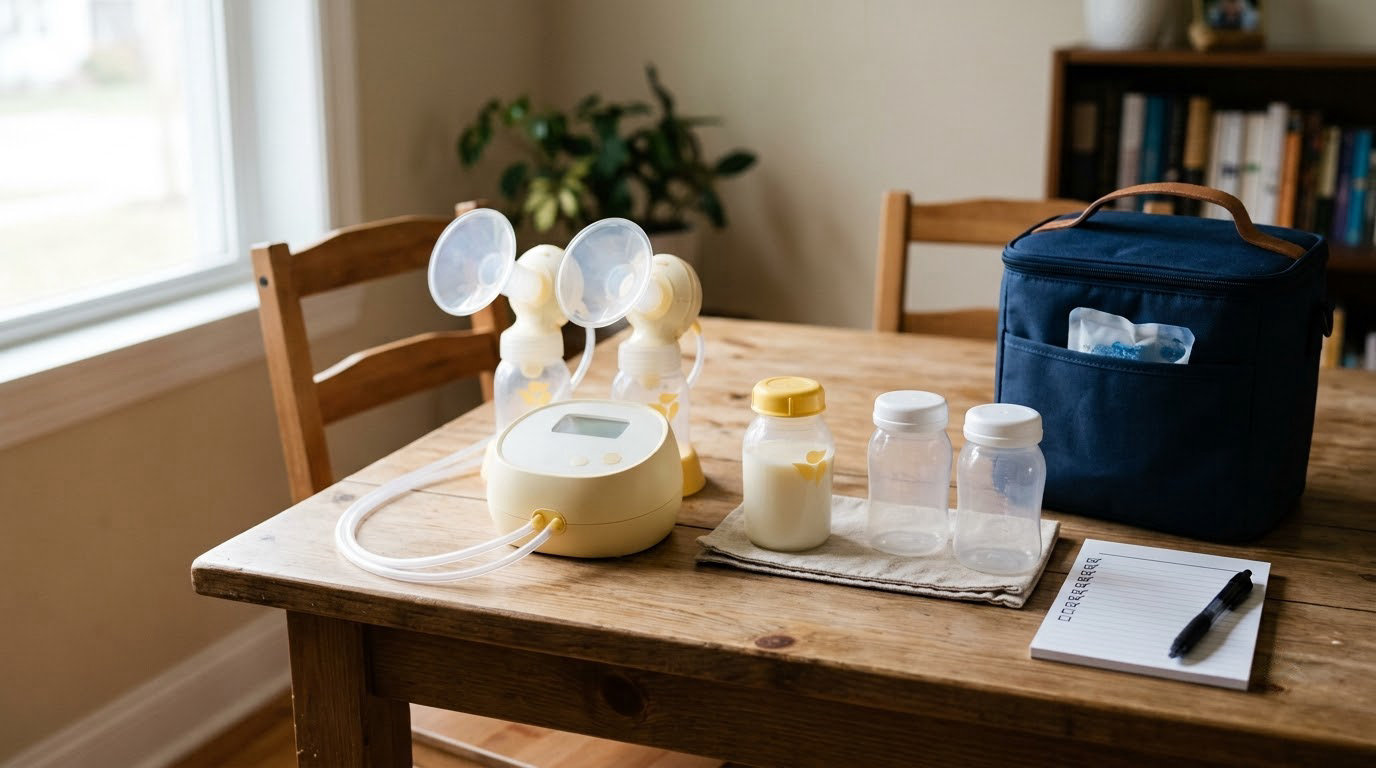
Gather these before your first session, not the night before.
- A pump you have used twice already. Familiarity beats novelty on a work morning. If you are choosing between types, a wearable in-bra pump suits meetings and travel, while a traditional double electric pump empties faster in a stationary room.
- Storage containers and bags. Bring enough for a full day, plus two extra. Sealed breast milk storage bags slide flat into a small cooler.
- A clean surface and a bag of ice packs. A wipeable folding mat, a hand soap travel size, and a dedicated spot away from a shared kitchen sink.
- A timer and your employer’s written lactation policy. Ask HR for the policy before you need it, not during a deadline week.
- The state or local rule that covers you. Your state labor department website is the source; a general summary can go out of date.
People who have pumped at work tend to agree on one thing: the bag gets packed the night before and parked by the door. Searching for a valve at seven in the morning is how sessions get skipped.
Step-by-Step: How to Pump at Work and Know Your Rights
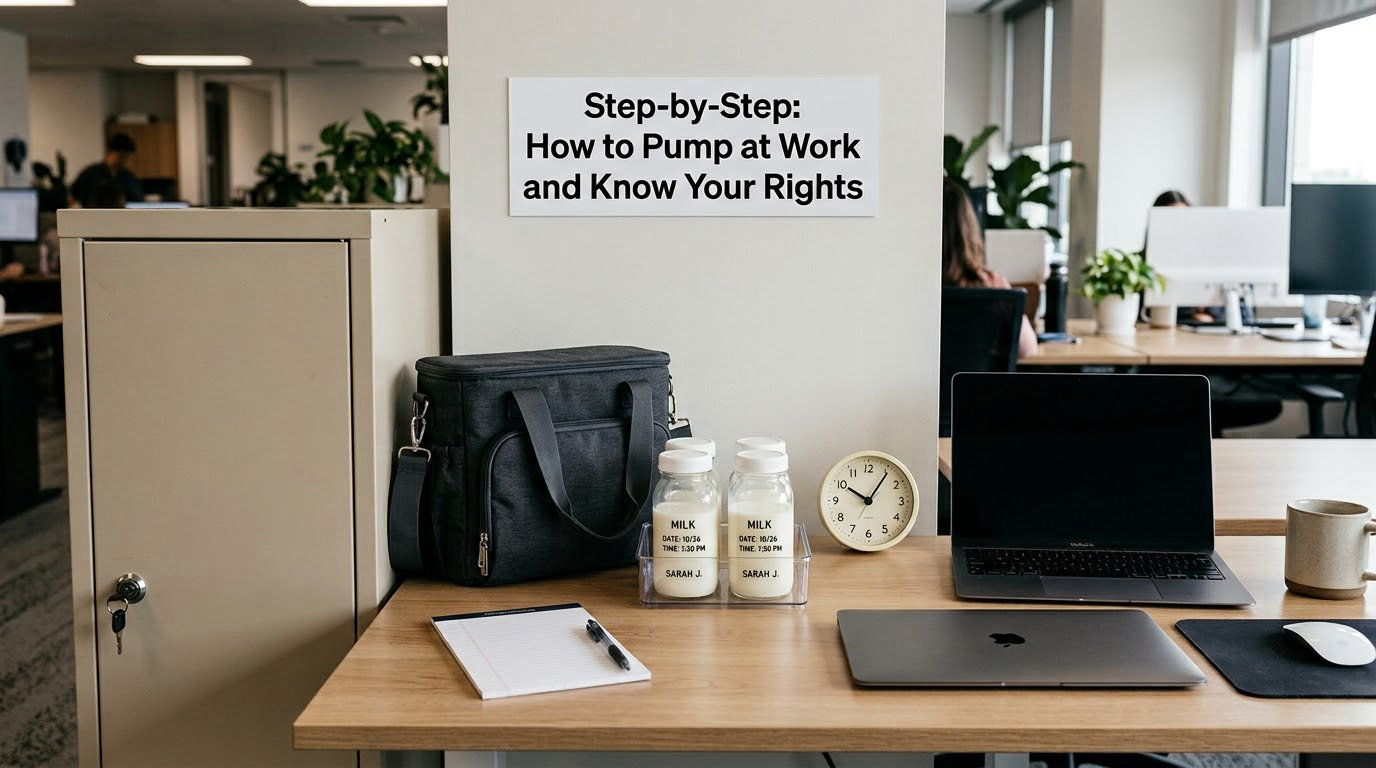
Step 1: Check Your Federal and State Protections
Federal law is the baseline you can rely on. The PUMP for Nursing Mothers Act amended the Fair Labor Standards Act and took effect in 2023. Under it, an employer must provide reasonable break time each time an employee needs to express milk, for up to one year after the birth of a child, and must provide a place other than a bathroom that is shielded from view and free from intrusion. Retaliating against an employee for pumping is prohibited.
Two details get missed constantly. First, the break time is unpaid under the FLSA, so your employer is generally not required to pay you for it, though many states handle this differently. Second, the requirement applies to employers with 50 or more employees, and an employer with fewer can argue an undue hardship. That exemption is a defense, not a default.
State and local laws often go further. Some grant breaks to smaller employers, protect pumping beyond one year, or treat pump time as paid. When a state provision is more generous than the federal rule, the state rule generally applies. This is general information, not legal advice, so check your state labor department’s site or ask a local attorney what covers your specific employer.
Step 2: Build a Pumping and Storage Plan
Write the schedule down before you need it. Most working parents land on three sessions in an eight-hour day, roughly every three hours, with 15 to 20 minutes of pumping plus 5 to 10 minutes of cleanup. Put those blocks on your calendar as recurring appointments labeled wellness break. A visible hold is much harder to move than a vague expectation of availability.
Set the storage side in the same pass. Freshly expressed milk is generally good at room temperature for up to 4 hours, in a refrigerator for about 4 days, and in a freezer for 6 to 12 months, following CDC guidance. Without a fridge, an insulated cooler with frozen ice packs holds it roughly 24 hours. Label every container with the date, the time, and the amount, and use one bag per pumping session so nobody has to guess.
Then build the backup. A delayed session, a supply dip, or a room that is occupied should degrade the plan, not end it. Pack a second set of flanges, a hand expression plan, and a written note about the best alternative room you are allowed to use.
Step 3: Request the Break and Get Space to Pump at Work
Make the request in writing, short and factual, before you return if at all possible. Something like: “I am returning on the fourth and plan to express milk three times daily, around 10:00, 1:00, and 4:00. Under the PUMP Act, I need a break of 20 to 30 minutes each time and a private space that is not a bathroom. Could you confirm where that space is and whether an outlet is available? I am glad to work around coverage needs for specific times.”
Ask for four concrete things: a room that locks, a location that is not a bathroom, an outlet if your pump needs power, and a refrigerator or a cooler space for storage. Teachers, nurses, and shift workers should name their coverage problem in the same message, since a specific coverage plan is easier to approve than a general request.
Ask which administrator handles accommodations, because many large employers keep a designated contact outside HR. If a space is unavailable, a locked empty office, a wellness room, or a small private room you reserve like a conference room can work, provided it is shielded from view and free from intrusion for the whole session. If you travel, agree on a hotel and a location for pumping before the first trip.
Step 4: Protect Your Milk and Your Boundaries
Cleanliness decides how long milk stays good. Wash your hands before expressing, keep pump parts clean between uses, and use the refrigerator storage method between sessions rather than rinsing parts in a shared break room sink, where a colleague is likely washing dishes. Pack a dedicated cleaning supply in your bag.
Handle milk discreetly in common areas. A cooler inside a larger tote avoids questions, and dumping into a sink invites comment. If a colleague walks in on a session, a lock, a sign, or simply a closed door prevents a repeat.
If something unsafe or discriminatory happens, write down the time and place, tell your manager or HR, and note how they responded. Serious retaliation or harassment is worth raising with your state labor department, a local attorney, or a workplace advocate group. Breastfeeding itself is protected in public in every US state, which is useful context if a coworker is treating pumping as something shameful.
Step 5: Keep Records and Follow Up
Maintain a simple log, because memory is a poor record six months later. Note the date, the time of each request, who you spoke with, what was decided, and any interruption or denied accommodation. Copy your own email threads to a personal folder, and use the same message thread rather than starting a fresh one each time, so the history reads clearly.
Bring the log to HR, your manager, or an accommodation office if a problem repeats. If you believe a federal or state rule has been violated, the Department of Labor’s Wage and Hour Division handles complaints, and a filing can be made online or by calling 1-866-4US-WAGE. Choose that route knowing your state’s law may have a separate agency with a shorter deadline.
Common Mistakes
These are the problems that come up again and again, and each has a simple fix.
- Assuming federal rules cover every situation. Fix: check your state and city rules, and note whether your employer falls under the 50-employee threshold at all.
- Using a shared or unsanitary space. Fix: a bathroom is explicitly excluded by federal law. Ask for a locking room and confirm the door latches before your first session.
- Leaving containers unlabeled. Fix: write the date, time and amount on every bag the moment you seal it, while you are still at the table.
- Letting a problem escalate to your final week. Fix: raise the first denial by email the same week, while the schedule is still flexible.
- Losing the details. Fix: log every request on the day it happens, with the date and the name of the person you spoke to.
- Skipping sessions silently. Fix: if a session is missed, shorten the gap later rather than doubling up, and ask an IBCLC about supply dips rather than guessing.
Frequently Asked Questions
How often should I pump at work?
Most working parents settle on three sessions in an eight-hour day, about every three hours, with 15 to 20 minutes of pumping plus a few minutes to clean and store parts. The federal PUMP Act sets a frequency limit tied to need rather than a fixed number of sessions, so your provider’s guidance and your baby’s feeding pattern matter more than a formula. Track what you actually produce and adjust from there.
Does my employer have to provide a private place to pump?
Yes, for covered employers. The PUMP Act requires a space other than a bathroom that is shielded from view and free from intrusion, for up to one year after your child’s birth. Ask in writing before you return, and get the room confirmed. A small reservable room works as long as it locks and you are not interrupted. State laws may require a dedicated lactation room.
What if I need to pump more often than my scheduled break time?
Federal law ties break time to how often you actually need to express milk, not to your posted break schedule. Ask your employer to adjust the arrangement rather than skipping sessions, and put the new times in writing so the calendar and the record match. If frequent sessions are medically necessary, your provider’s written guidance helps make the request concrete.
Can my employer require me to make up pumping time?
No. Department of Labor guidance states that employers may not deduct time used to express milk and may not require an employee to make up that time. Break time is generally unpaid under federal law, which is a separate matter from being forced to work extra hours later. Several states treat pump time differently, so check your state rule before you concede the point.
What should I do if my workplace refuses pumping accommodations?
Document the date, time, who you spoke with and what was decided, then send a short written follow-up referencing the PUMP Act by name and your state rule. Escalate to HR, an accommodation coordinator, or your manager’s manager. A federal complaint goes to the Department of Labor’s Wage and Hour Division, which takes complaints online or at 1-866-4US-WAGE. Many parents also contact a local nursing or advocacy group for support.
Do state laws give me more rights than the federal PUMP Act?
Often, yes. Many states require breaks for smaller employers, extend protection past one year, or treat pumping time as paid, and cities sometimes add rules of their own. Where a state provision is more generous than the federal standard, the state rule generally applies. Rules differ and change, so read your state labor department’s current page rather than relying on an older summary.
Conclusion
Knowing how to pump at work and know your rights comes down to five things: confirm which federal and state rules cover you, gather your supplies and pack the bag the night before, make one clear written request for a protected break and a suitable space, document every exchange the same week, and bring in qualified help if the answer is no. People who follow through on the first four items usually get a workable plan. The ones who struggle are almost always the ones who waited until the first conflict to raise it.