A nipple shield is a thin silicone cover that sits over your nipple during a feed, and for some babies it is the single thing that makes breastfeeding work. For others it hides the actual problem, slows milk removal, and turns one hard feeding into a long hard feeding.
That is the whole question behind the phrase nipple shields when they help and when they do not. A shield works on shape and grip. It does not work on latch mechanics, milk supply, tongue movement, or a baby who is not gaining weight, and treating it as the answer to those problems is how a temporary tool quietly becomes a two-year plan.
This guide covers what shields are for, the situations a lactation professional might consider one in, the ones they routinely do not, and how to tell in the first week whether yours is a bridge or a detour. If you are here at two in the morning with a baby who will not latch, skip to the last section first.
Table of Contents
- What Are Nipple Shields Used For in Breastfeeding?
- When Nipple Shields May Help
- When Nipple Shields Do Not Solve the Problem
- How Nipple Shields Are Supposed to Be Used
- Choosing the Right Size and Type
- How to Clean and Store Nipple Shields
- How to Tell Whether a Nipple Shield Is Helping
- When to Stop Using One and Ask for Help
- Frequently Asked Questions
- Do nipple shields help with flat or inverted nipples?
- Can a baby get enough milk through a nipple shield?
- Are nipple shields better than pumping for bottle feeding?
- How long should I use a nipple shield before getting help?
- Can nipple shields cause nipple pain or lower milk supply?
- What to Do First
What Are Nipple Shields Used For in Breastfeeding?
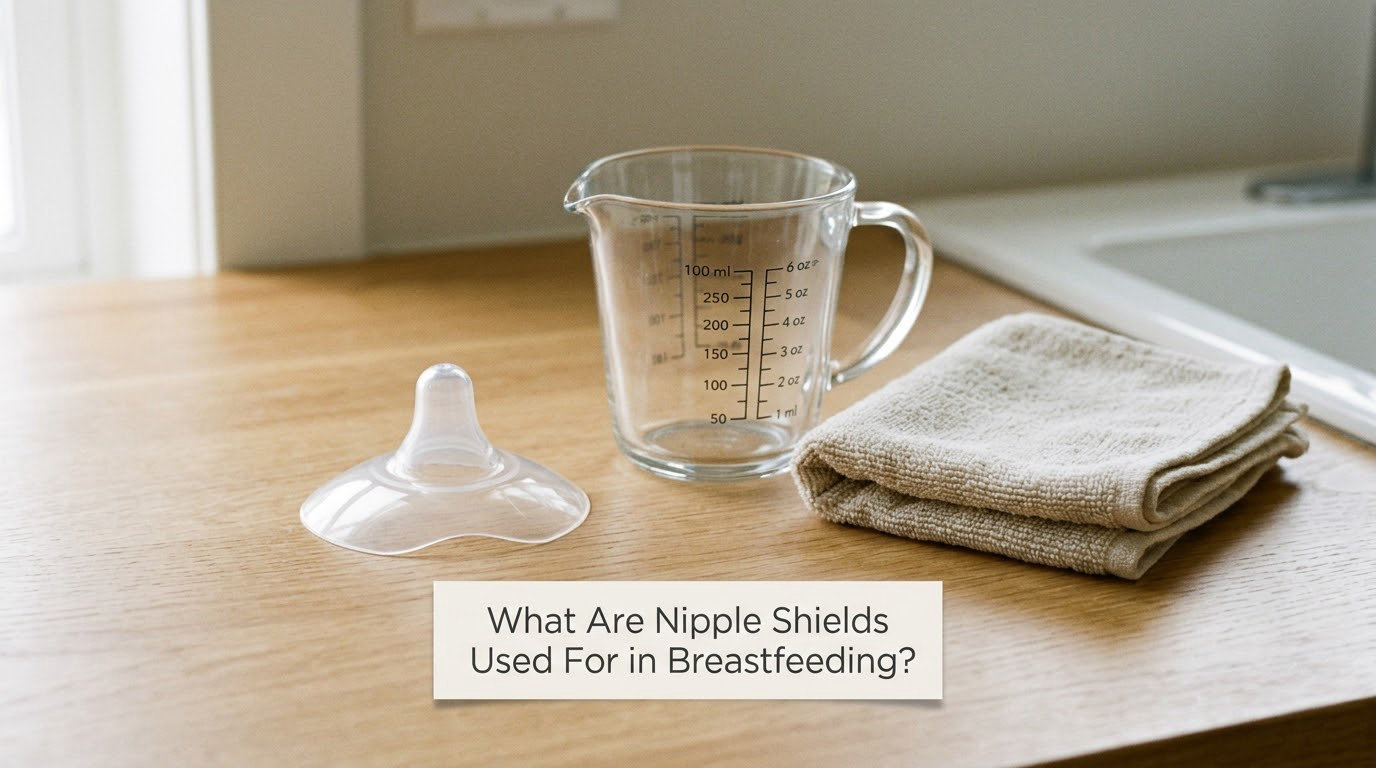
Nipple shields are thin, flexible discs of medical-grade silicone that a baby latches onto instead of bare skin. The shield has a wide base that sits against the areola and a narrow cone, or crown, that your nipple fills, with small holes at the tip for milk to pass through.
The logic is simple. A very thin breast, a premature infant, or a nipple that sits flat against the areola does not give the mouth a shape to grip. The shield changes what the baby feels, so the tongue can cup, compress, and draw the nipple back far enough to trigger an effective suck rather than a lot of chewing and clicking.
Most shields are between 0.5 mm and 3 mm thick, and base diameters are sold in millimetres, usually running from the mid teens up into the mid twenties depending on the brand. A softer one sits close to the skin and is often chosen for premature babies, while a firmer or thicker cone is chosen when the breast is soft and needs a longer shape to grasp.
There is a second, different product people call a nipple shield, and it is worth naming so you buy the right one. Breast pump flanges are sometimes nicknamed nipple shields, and they are worn while pumping rather than during a feed. This guide is about the breastfeeding aid worn by the baby.
Silver caps are also a different category again. They are smooth metal domes with no holes, worn over the nipple mainly to protect damaged skin, and milk is removed by nursing with the cap in place or by pumping. If your nipple is cracked and bleeding, a silver cap is a conversation to have with your clinician, not a thing to order on your own.
Here is the framing to keep: a shield is a bridge to a working latch, not a replacement for one. Someone who fits it should also be working on the thing that made you need it, with a plan for stepping down.
When Nipple Shields May Help
Shields earn their place in a small number of specific situations, and a lactation professional is the right person to decide which one you are in. The common thread is that the problem sits in the shape of the nipple or in the strength of the suck, not in how the baby is positioned or how much milk there is.
The clearest case is a premature infant. A baby born early often has a weak, uncoordinated suck and tires easily, and a very thin ultra-thin silicone shield can lower the effort needed to extract milk. In a neonatal unit this is a managed decision with weighing and supplementation plans attached to it, and if you are at home with a preemie, ask the team that discharged you before you experiment.
A second case is a nipple that is flat, inverted, or very short in a soft breast. A shield can give the mouth something to take hold of where there is very little projecting tissue. It often works best as a short-term measure while the breast is firmer, or alongside shaping and positioning techniques, rather than as a permanent answer on its own.
Third is anatomy on the baby side, particularly a very small mouth or a chin that sits well back. When the lower jaw is recessed, which clinicians sometimes describe as mandibular retrognathia, the tongue and lower lip cannot get under the breast the way they need to. A thin shield bridges that gap because the baby can draw the cone instead of the areola.
Fourth is temporary protection while damaged skin heals, but only once the underlying latch problem has been corrected. A shield keeps a baby from gripping an open crack, which gives you time to fix the latch, treat the wound, and get ahead of infection. Used without fixing the latch, it is simply a lid on a leaking bucket.
Fifth is a bridge during a transition, for example moving from bottle to breast after a neonatal stay, or from supplemental nursing devices back to the breast. A shield can bridge weeks of that gap for some babies, and parents describe it as the tool that made a bottle-fed baby willing to return to the breast at all.
Two more conditions apply to every case above: a time limit set by someone qualified, and a plan for reviewing it. The typical trial is measured in hours to days, and parents report successful use anywhere from a few weeks for flat nipples to several months for a very premature baby. Open-ended use with no review is the situation to push back on.
Not sure where you fall? Ask this question and the answer usually becomes obvious: is the baby getting milk out? If the shield is doing the work that a latch should be doing, it is probably earning its place. If milk is not moving, more shield will not fix it.
When Nipple Shields Do Not Solve the Problem
A shield does not fix a shallow latch, low milk transfer, a tongue restriction, engorgement, or a baby who is not gaining weight. Each of those keeps happening underneath the shield, and in several cases they get harder to spot and harder to treat while it is on.
Shallow latch is the big one. If the baby takes only the tip of the shield and never pulls enough areola and breast tissue into the mouth, the shield becomes a teat they suck on rather than a tool that helps them take the breast. Many feeds look calmer and produce less milk, which is the pattern that worries lactation professionals most.
Reduced milk transfer then feeds a supply drop, because supply tracks how completely the breast is emptied. Parents on parenting forums describe the loop plainly: the shield went on, feeds got shorter and less productive, and supply felt lower, so they added the shield to more feeds. The correct response is to protect supply by pumping or hand expressing, not to widen shield use.
Engorgement is a separate problem with a separate fix. A shield does not drain a breast that is too full, and if the breast is engorged the nipple itself may be swollen and harder for a baby to draw in, so the shield may not even stay seated. Engorgement needs frequent effective milk removal, and mastitis needs a clinician the same day.
Tongue and lip ties are the case that most often gets delayed, because a thin shield can genuinely make feeds feel better for a short time. A restricted tongue still cannot stay forward, cup, and sweep the breast, so if a shield makes things easier, the tie is worth having assessed rather than treating the shield as the answer.
Long-term use without review is its own risk. Parents ask in forums whether shields can be used indefinitely, and the honest answer is that they can be used for a long time, but the goal is not there. Every month of shield-only feeding keeps the original problem in place, keeps the breast unassessed, and can leave a baby who will not take a bare breast without a transition plan.
Preterm and medically fragile babies carry their own caution. A shield used in hospital is paired with strict intake monitoring. At home, the same baby without that monitoring is a different situation entirely, and a weight and diaper plan should come with the shield, not after it.
The real measure is not how easy the feed looks. Look at whether milk is transferred, whether diapers and weight trend are on track, and whether your nipples are getting better or worse. A shield that makes feeds quieter but output flat is a problem wearing a helpful disguise.
How Nipple Shields Are Supposed to Be Used
Use is general rather than prescriptive, because your baby’s size, mouth, and the shape of your breast all change the details. A qualified lactation professional should choose the material and size with you, and the sequence below is the general shape of what they will set up.
Before anything else, your hands, nipple, and the shield should be clean and completely dry. A damp shield slides off, and a wet nipple inside a shield is a warm, enclosed skin surface that does not like staying that way.
Next, the shield is placed with the cone centred on your nipple and the base resting against the areola, not floating above the breast. Many parents find it easier to turn the shield inside out, roll it on from the base to the tip, and then pinch or smooth it into position so the air is out and the material is close to the skin.
Then the baby comes to the breast, not the other way round. You support your breast and bring the baby in mouth-to-breast with the shield on, aiming for the same wide mouth and deep latch you would aim for without it. If the baby is on the breast rather than on the shield, you are partway to not needing it.
Watch one feed through instead of assuming. Coordinated sucking with swallowing from the first minute, rounded cheeks, a jaw moving in a steady rhythm, and no slipping toward the tip all read better than a fast but silent feed.
At the end, peel the shield off from the base rather than pulling the cone straight off, which pulls on the nipple. Clean it according to the maker’s instructions, and keep to any duration limits your lactation professional set rather than extending them on your own.
Choosing the Right Size and Type
Fit matters more than the label on the box. Two shields with the same number on them can behave completely differently depending on the thickness, the hole size, and the width of the base against your areola.
The common types are ultra-thin silicone at the very thin end for premature or sensitive babies, standard silicone for everyday use, thicker or firmer silicone for a soft breast needing a longer shape, one-handed and cut-out designs for parents managing a small baby or limited hand use, and silver caps for protection during healing rather than for milk delivery.
Sizing is based on two measurements, not one. Measure the diameter of your nipple at its base, gently, with a ruler or a piece of paper marked in millimetres. Then judge the width of the baby’s mouth against the base of the shield.
The base should be a little wider than your nipple so the shield cannot pull inward, and wide enough that the baby’s chin and lips end up down on breast tissue rather than parked on the edge of the plastic. If the lips land on the shield edge, the baby is on the shield and not on you.
Base diameters are commonly sold from about 15 mm up to the mid twenties, which is why the number on your nipple and the number on the shield are not the same measurement. Where a shield has a cut-out rather than a full base, that changes how it sits and it is worth a professional fitting rather than a guess.
What not to do is improvise. Cut bottle teats, silicone rings, and household items are not the same product, and some are not made for a baby’s mouth at all. If a shield is going to be used, use one designed for feeding and sized by someone who does this work.
How to Clean and Store Nipple Shields
Care follows the manufacturer’s directions first, because materials and hole sizes differ and heat can warp some of them. The general routine is straightforward: wash with dish soap after use, rinse thoroughly, and let it air dry on a clean surface kept away from splashes, raw food, and bathroom humidity.
Drying matters more than people expect. A shield that goes back on damp holds moisture against the nipple through a whole feed, which is the sort of thing that turns into a cracked nipple or a blocked duct rather than staying harmless.
Store unused shields in a clean, covered container so they do not pick up dust or cabinet smells, and replace any shield that becomes torn, cloudy, pitted, or sticky. A damaged surface is both a hygiene problem and a shape problem.
Boiling, steam sterilising, or a sterilising bag is a separate question. Some hospitals and neonatal units steam-sterilise shields, some advise washing only, and recommendations change with the baby’s age and condition. Ask your baby’s clinician or the unit you were given by which method applies to your situation, and follow that over general advice found online.
How to Tell Whether a Nipple Shield Is Helping
You can judge a shield at the feed, in the first minute, without any equipment. The useful signals are all about how the baby is transferring milk and how the latch survives, not about how comfortable the shield looks sitting there.
Look for a coordinated suck with a steady jaw, rounded cheeks rather than dimpled ones, and swallowing you can hear. A feed that produces swallowing early is a feed with transfer. A feed that is all sucking, clicking, and slipping is not, however much milk you can squeeze out afterwards.
Check whether the latch holds. If the baby settles deep and stays there for the whole feed without working back up toward the tip of the shield, the shield is doing what it should. If you have to keep reseating it, the fit or the fit-and-position is wrong and the latch is where the problem is.
Check your nipples afterward. A shield that is doing its job should not make the feed hurt more as it goes, and a crack that is healing should be healing. A shield that protects a nipple while the underlying latch goes unfixed will leave you in exactly the same place a week later.
Check the breast afterward too. Effective removal leaves the breast noticeably softer and less full than it was before the feed. A breast that is still rock hard after twenty minutes of feeding is telling you the milk did not come out.
Now separate what you can read from what needs a professional. Baby’s cues at the breast, latch quality, and your own pain are yours to observe. Wet diaper counts over days, stool changes, and weight gain are patterns that a clinician or lactation consultant should interpret, and a single day of output is far too noisy to judge on its own.
A simple written log helps more than memory. Note the time of each feed, roughly how long, and how many wet diapers across the day. Parents on breastfeeding forums say the same thing over and over: numbers they wrote down settle arguments that feelings could not.
When to Stop Using One and Ask for Help
Contact your pediatric clinician promptly if your baby feeds less often, sleeps so much that waking for feeds is hard, has fewer wet diapers than expected, or is not gaining weight as checked. Those are the signals that a shield may be sitting on top of a transfer problem, and they are not the kind of thing to wait out.
Call the same day if your nipple pain is worsening instead of easing, if the skin is cracking, bleeding, or developing blisters, or if a breast becomes red, hard, hot, or lumpy, particularly with fever or flu-like feelings. Those symptoms need a clinician, and a shield will not change any of them.
Seek urgent help for breathing difficulty, a change in colour, or any sign your baby is struggling during or after a feed. Then call a lactation professional, ideally an IBCLC, for a full feeding and latch assessment. The point of the visit is to find out what the shield is covering, not to get a second opinion on the shield itself.
When the time comes to step down, go slowly and in a way your baby can tolerate. Many families find the calmest entry point is starting one feed a day without the shield, at a moment when the baby is slightly sleepy and not at their most frantic.
One workable sequence looks like this. Start with a laid-back or side-lying position, which lets a baby use their own reflexes and makes it easier to slip off and back on. Attempt one feed, and if the baby becomes upset, put the shield back on without a fight.
Then try it when the baby is not starving, and keep the shield within reach. Parents describe the successful moments as ordinary ones: the shield slipped off mid-feed and nobody made a fuss, or a feed started without it while the baby was calm. Those are the moments worth building on.
Expect weeks rather than days, and expect that some feeds go badly. Parents report shield use ranging from a couple of weeks to several months, and a baby born early may need it for a much longer stretch than a term baby with flat nipples. A slow weaning is working; a fast one that ends in distress is not.
One more thing worth saying plainly, because it comes up more than any sizing question: using a shield does not make you a failure. Guilt is common, and it is not a clinical measure. If the plan is being run by a qualified person, the baby’s intake is being watched, and there is a date to review it, then you are using a tool rather than hiding behind one.
Frequently Asked Questions
Do nipple shields help with flat or inverted nipples?
Sometimes, yes. A shield gives the mouth a firmer, longer shape to grip when there is very little projecting tissue, and it can work well as a short-term measure while the breast is firmer or shaping techniques are practised. It does not change the nipple itself, so if the latch is otherwise shallow, the shield alone will not fix it. Ask a lactation consultant to size and fit it, and set a date to review whether it is still needed.
Can a baby get enough milk through a nipple shield?
A baby can, but transfer is often less complete than with a direct latch, and that is the central risk. If the baby sucks only the tip of the shield, the breast is not emptied well, and supply can fall in response. Watch for coordinated sucking with swallowing from the first minute, a latch that holds, and a breast that is softer afterward. Wet diapers and weight gain are the measures that matter, and a clinician should interpret them.
Are nipple shields better than pumping for bottle feeding?
They solve different problems and are often used together. A shield is worn by the baby at the breast, while pumping removes milk from the breast directly and then delivers it by bottle, cup, or syringe. Pumping is the tool for protecting supply while a latch is being worked on; a shield is the tool for helping a baby take the breast. Pumping also gives a measurable volume, which a shield never does.
How long should I use a nipple shield before getting help?
Ask for a feeding and latch assessment early rather than waiting for a set number of weeks. A shield that is not producing coordinated sucking with swallowing, or that leaves the breast full after feeds, is signalling a problem within days, not months. Some babies legitimately need a shield for several months, especially if born early, so the useful question is not how long but whether intake and weight are being tracked by someone qualified.
Can nipple shields cause nipple pain or lower milk supply?
They can contribute to both, though rarely as the only cause. Milk that is not removed well lowers supply, and a lower supply leaves the breast soft and harder to latch, which can increase pain; damp skin trapped under a shield can also contribute to cracking. Keep the nipple clean and completely dry, fit the shield correctly so the lips are on breast rather than plastic, and have persistent or worsening pain assessed by a clinician.
What to Do First
Book a feeding and latch assessment with a qualified lactation professional before experimenting with a shield on your own. That single appointment tells you whether your situation is one where a shield genuinely helps, which size and material to use, and what the plan is for stepping down, and it takes far less time than a month of guessing.
Until then, keep your baby’s intake safe. If feeds are painful or transfer looks poor, protect your supply by pumping or hand expressing, and write down your wet diapers so the appointment starts with numbers rather than a memory.
A nipple shield is a good tool in a small number of situations, and a poor substitute in most others. Used with a plan and a review date, it keeps breastfeeding going. Used without one, it can quietly keep the problem exactly where it was.