Learning how to use a breast pump for the first time takes about 20 minutes of setup and your first session, and almost nobody gets it right on attempt one. Wash your hands, assemble clean, dry parts, center your nipple in the flange, and start on the lowest suction setting. The rest is adjusting until it feels comfortable.
The part nobody tells you is that pumping should not hurt. A gentle pulling sensation is normal. Sharp pinching means something needs changing, usually the flange size or the suction level, and stopping to fix it is the correct response, not giving up.
This guide walks through a first session from unboxing to cleanup, including how long to pump, how much milk to expect, and how to store what you collect. Breastfeeding and pumping carry real health implications, so treat this as general information and bring any questions about your own situation to a qualified healthcare professional or a lactation consultant.
Table of Contents
- What You Need
- How to Use a Breast Pump for the First Time
- How to use a breast pump for the first time: Set up the pump
- How to use a breast pump for the first time: Get comfortable
- How to use a breast pump for the first time: Start at a low setting
- How to use a breast pump for the first time: Pump and check the milk
- How to use a breast pump for the first time: Clean and maintain the parts
- Common Mistakes
- Frequently Asked Questions
- How long does it take to pump for the first time?
- Should a breast pump hurt the first time I use it?
- How do I know if my flange is the right size?
- Can I use a breast pump instead of hand expressing?
- When should I call a doctor or lactation professional for help?
- Conclusion
What You Need
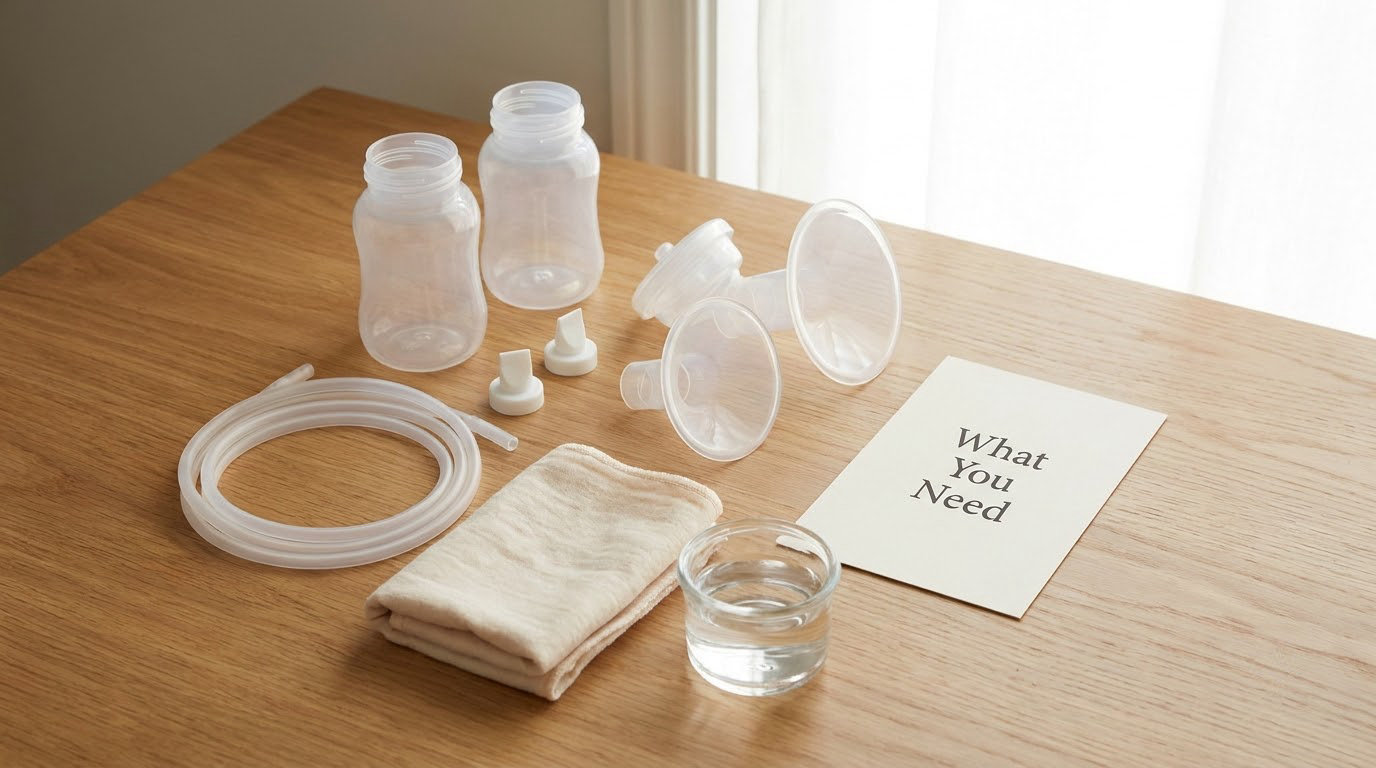
Most first-time pumpers spread every part across the kitchen counter and then find the manual is a fold-out diagram with no labels. Setting up a dedicated spot ahead of time makes the difference between a calm 20 minutes and a frustrating hour.
Gather these before you start:
- Clean hands and clean, dry pump parts. Parts need to be fully dry before assembly, because moisture trapped in tubing or under a flange invites bacterial growth.
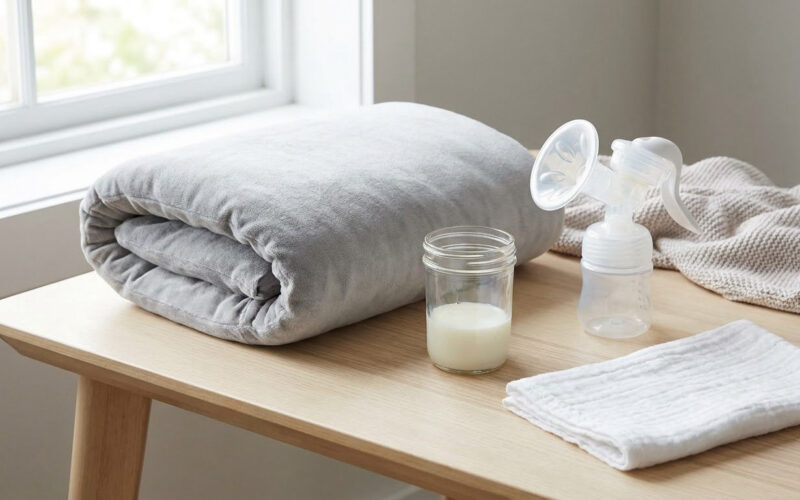
- A clean towel or burp cloth to catch drips, plus a small bowl of water for rinsing.
- Something to write with, for labeling milk containers with the date and time.
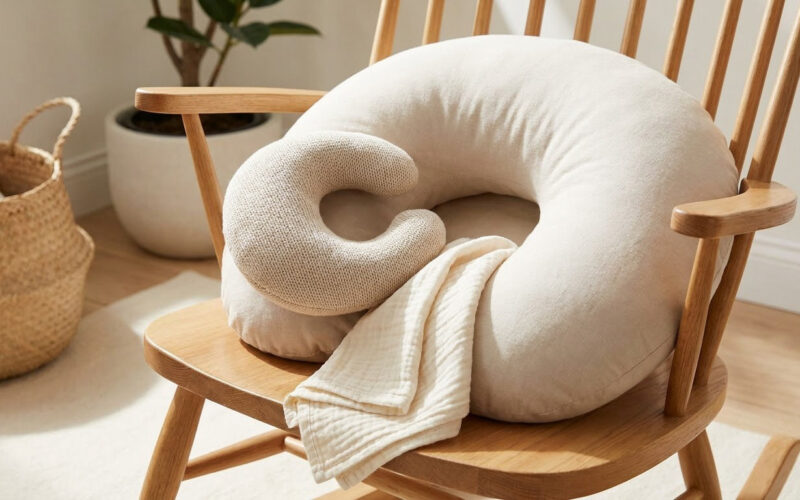
- A comfortable chair or recliner with support under your back and arms, and a pillow for your lap.
- A clean water bottle and your phone within reach. A ten-minute wait for a let-down is long when you are thirsty and staring at an empty bottle.
Support items are optional but useful. A hands-free pumping bra holds flanges in place so your hands stay free. A nursing pillow makes single pumping easier. If you have help, a partner or doula doing skin-to-skin with your baby while you pump can raise the oxytocin that triggers let-down.
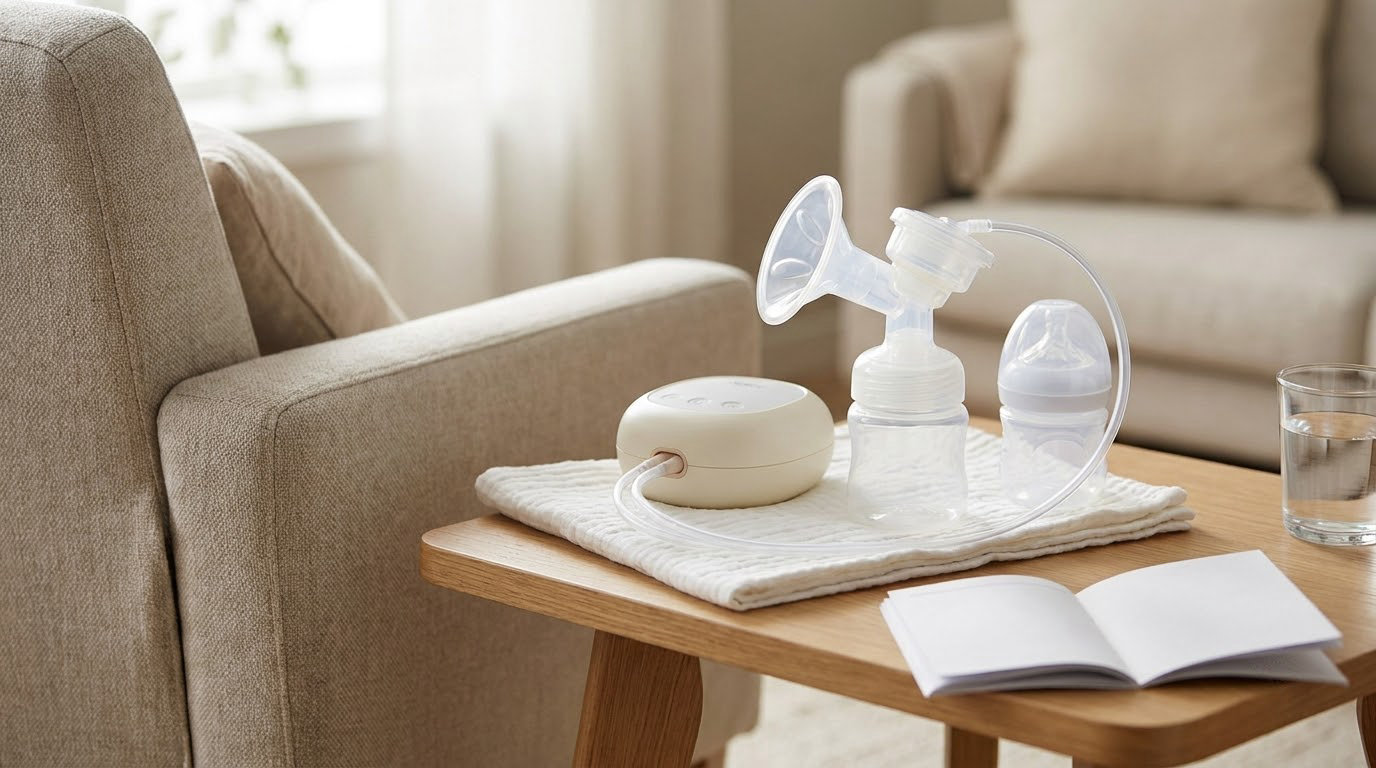
Pumps come in three main types, and all of them work for a first session. Electric pumps have a motor and tubing, offer different suction levels, and let you pump both breasts at once, which is the biggest time saver. Manual pumps use a lever or squeeze bottle you work yourself, cost less, and are silent and portable. Wearable pumps fit inside your bra with no tubing, which is discreet but offers the least control over suction. Start with whichever one you have.
How to Use a Breast Pump for the First Time
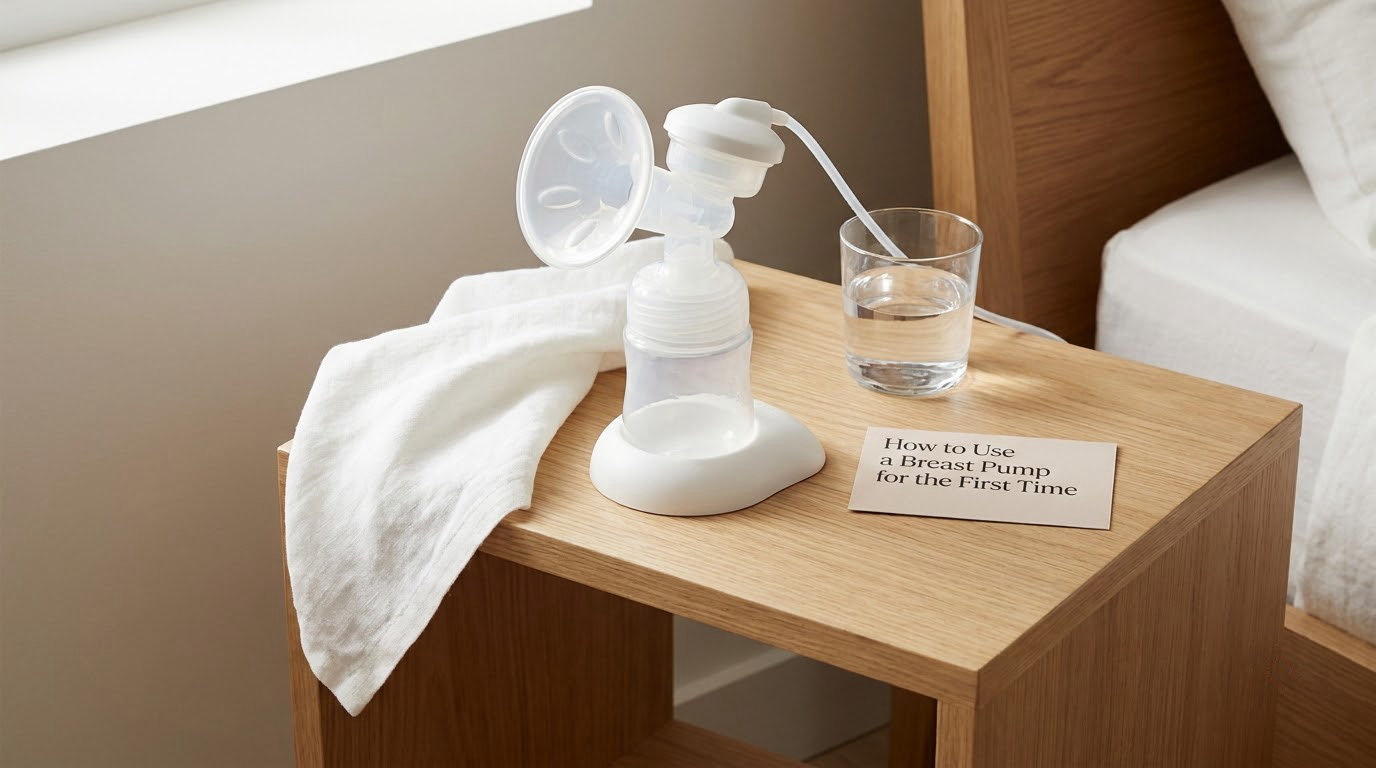
Here is the whole process: wash your hands, assemble the pump with clean dry parts, sit upright and supported, center your nipple in the flange, begin on the lowest suction, express until the flow slows, break the seal, store the milk, and wash every part. Most first sessions take 15 to 20 minutes per breast.
How to use a breast pump for the first time: Set up the pump
Open the manual and find the parts diagram before you touch anything. New pumps ship with a flange, backflow protector, connector, tubing for electric models, valves, membranes, and one or two collection bottles.
Check each part for damage, cracks, or a missing valve before you connect anything. A missing or worn membrane is a common reason a pump loses suction mid-session. Read the assembly order in the manual rather than guessing, because tubing connections differ between brands and a reversed connector will not seal.
For an electric pump, attach the tubing to the port on the bottle, then to the backflow protector, then to the flange. Follow the manual for your specific model. Before pumping, briefly run the pump into the bottle so you know the motor works and can feel how the lowest setting pulls.
How to use a breast pump for the first time: Get comfortable
Sit upright rather than reclining, and support your forearms so your shoulders relax. Tension works against you, because the let-down reflex depends on oxytocin, and oxytocin drops when you are bracing or rushing.
Hold the flange against your breast and guide your nipple into the center of the tunnel. Your nipple should sit centered with a small amount of space around it, moving freely in and out. Your areola should not be pulled deep into the tunnel, and the flange should not rub the sides of your nipple.
Bring your breast to the flange rather than leaning your body into it. Leaning changes the angle and usually flattens the nipple against the tunnel wall, which causes soreness and reduces output. If the fit feels off, remove the flange, use a mirror to check the alignment, and try again.
How to use a breast pump for the first time: Start at a low setting
Begin on the lowest suction level in stimulation mode, the fast, light pattern intended to trigger let-down. Increase suction only one step at a time, and only while staying comfortable.
Your maximum comfort vacuum is the highest setting you can use without pain, and that is the ceiling for the whole session. More suction does not mean more milk, and pushing past your comfort level causes swelling that makes the next session harder, not easier.
Stop and re-check if you notice sharp pinching, a burning feeling, or a nipple that comes out looking flattened or white. Break the seal by sliding the flange off gently or inserting a clean finger at the corner to release the vacuum, then take the flange off. Never pull straight off, because a full suction will pull the nipple tissue with it.
How to use a breast pump for the first time: Pump and check the milk
Once milk starts flowing, switch to expression mode, which uses slower, deeper suction. Pump for 15 to 20 minutes total. Avoid going under 10 minutes, because the later let-downs carry the largest volume, and avoid going over 25 minutes in the early weeks, since over-pumping causes swelling and soreness.
When the flow slows, switch sides, then come back if you want to finish the first breast. Not everyone feels a let-down. Silent let-down is real, where milk flows without any sensation, so watch the bottle rather than waiting to feel something. Expect roughly 0.5 to 2 ounces in a first session, and expect less during the first days when you are producing colostrum in tiny amounts.
Do not watch the bottle continuously. Watching output makes most people anxious, and anxiety works against let-down. Cover the bottle with a sock, set it down, and look at something else.
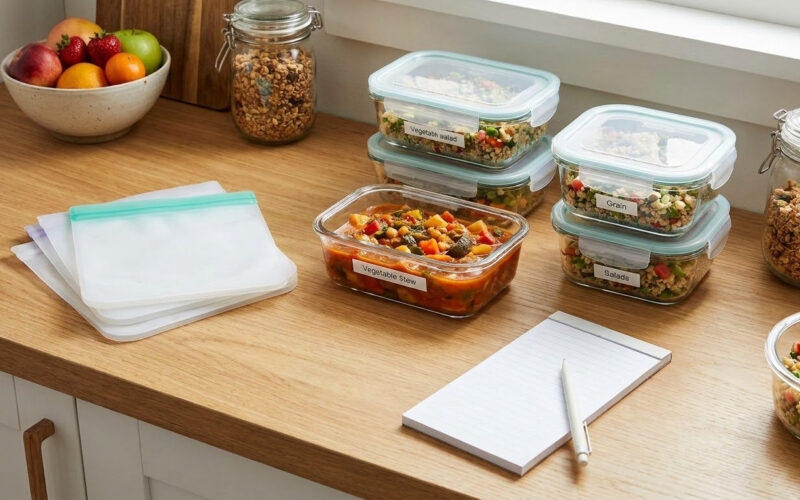
Label each container with the date and time, then follow current public-health storage guidance. Freshly expressed milk sits at room temperature for up to 4 hours, stays in the refrigerator at 40 degrees Fahrenheit or below for up to 4 days, and goes in the freezer for up to 12 months, stored at the back of the freezer rather than the door.
How to use a breast pump for the first time: Clean and maintain the parts
Wash your hands, take the pump apart, and separate every piece that held milk. Rinse them in cool running water first, then wash in warm soapy water and scrub the flange tunnel, valves, and membranes with a brush, since crevices hide residue.
Rinse again and air-dry everything on a clean rack or towel, never in a closed container, which traps moisture. Check periodically for cloudiness, cracks, or discoloration and replace any worn part. Pumps that touch milk should be cleaned after every use and sanitized at least daily during the first three months, following the instructions that came with your pump.
Single-use pumps are designed for one person and one use only, so do not buy one secondhand. Multi-use parts are fine to share only within the same family.
Common Mistakes
Nearly every first-session problem traces back to one of these, and all of them are fixable today.
Starting at maximum suction. Turn it down to the lowest setting and work up slowly. Your maximum comfort vacuum, not the highest number on the dial, is the right ceiling.
Using the flange that came in the box without checking. The standard size included with most pumps fits many mothers and not others. If your nipple is being pinched, rubbed, or flattened, measure again and order a different size.
Leaning into the pump. Sit upright and bring the breast to the flange. Leaning changes the angle and pushes nipple tissue against the tunnel wall.
Squeezing or pressing the breast into the flange. Let the suction do the work. Pushing down compresses the ducts and contributes to engorgement and low output later.
Forgetting a valve or a worn membrane. Reassemble the pump piece by piece against the manual. A missing valve is a common cause of weak or lost suction and of milk leaking backward into the tubing.
Quitting early because the bottle is nearly empty. Output often builds in waves rather than arriving as one gush. Keep pumping for the full 15 to 20 minutes, because the strongest let-down frequently comes after several minutes of stimulation.
Starting before your supply is established. If your baby is nursing well, there is usually no reason to start pumping yet, and starting too early can add pressure on your supply. The usual exceptions are a baby in the NICU, a baby who cannot latch, engorgement that needs relief, and an upcoming return to work or separation.
Believing a small amount means something is wrong. Low first-session output is normal, especially while you are producing colostrum. A small amount collected is a functioning pump, not a failed one.
Stop and contact a qualified healthcare professional or lactation consultant if you notice a lump, redness, spreading warmth, skin breaks, blisters, bleeding, or fever, or if pain persists after correcting the flange size. The same goes for any worry about your baby’s feeding or about storing milk safely.
Frequently Asked Questions
How long does it take to pump for the first time?
Your first session usually runs 15 to 20 minutes, which includes getting comfortable and centering the flange. Set aside 20 to 25 minutes in total so you are not rushing. Most milk arrives in waves rather than one gush, so stopping early because the bottle looks empty is the most common reason beginners get low output. Switching sides when the flow slows, then returning to finish, gets you the most milk for the time spent.
Should a breast pump hurt the first time I use it?
No. A gentle pulling or tugging sensation is normal, but sharp pinching, stinging, or burning means the fit or the suction level is wrong. Break the vacuum seal before removing the flange, then check that your nipple is centered in the tunnel and that your areola is not pulled deep inside. If it still hurts at low suction, stop and ask a healthcare professional or lactation consultant rather than pushing through.
How do I know if my flange is the right size?
Your nipple should sit centered in the flange tunnel with a little space around it, moving freely in and out without rubbing. A correct fit does not pull your areola deep into the tunnel, and the flange should never pinch. Flange size can change across the early weeks of feeding, so re-measure and try another size when output drops or soreness appears, even if the size that shipped with your pump felt fine at the start.
Can I use a breast pump instead of hand expressing?
Yes, a pump and hand expressing work the same way, since both remove milk through the nipple. Many people use one during a session and the other between or after it, and pumping usually removes more milk faster. If pumping is your only option, start slowly, stay at your maximum comfort vacuum, and pump for 15 to 20 minutes. Hand expressing can also help relieve fullness right before you pump.
When should I call a doctor or lactation professional for help?
Call a healthcare professional or lactation consultant for pain that does not settle after correcting the flange size, a lump, redness, warmth, skin breaks, blisters, bleeding, fever, or a baby who is not feeding well. Get support early rather than late if output drops suddenly, if you cannot latch your baby, or if you are starting to pump because of a NICU stay or an upcoming return to work. Early help resolves most pumping problems faster than repeated troubleshooting alone.
Conclusion
A first pumping session is mostly setup. Wash your hands, assemble clean dry parts, sit upright, center your nipple in the flange, and start on the lowest suction. Increase only to what stays comfortable, pump for 15 to 20 minutes, break the seal before removing the flange, label and store your milk, then wash every part and let it air-dry.
Small amounts at the start are normal, and a pump that feels awkward at first usually just needs a different flange size or a calmer chair. Go slowly. If pain continues, or you notice a lump, redness, skin changes, fever, or worry about your baby’s feeding or your milk storage, contact a qualified healthcare professional or lactation consultant.