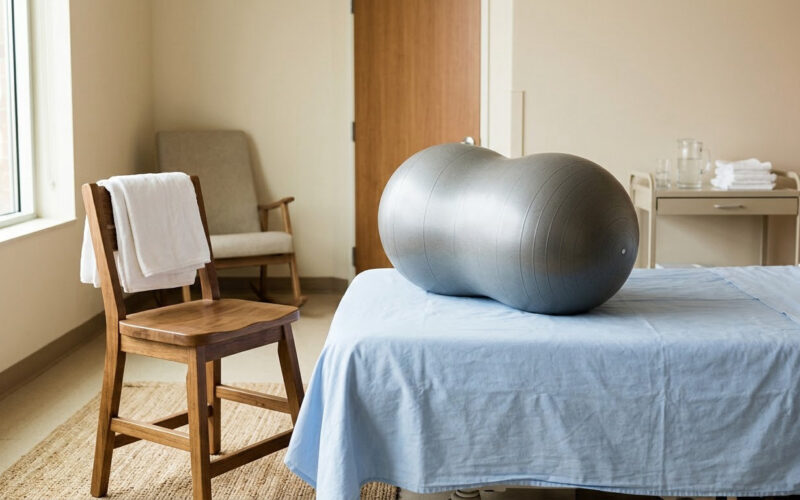
Pelvic floor therapy after childbirth is physical therapy for the muscles that support your bladder, bowel, and uterus. It combines an assessment of those muscles with breathing work, tailored exercises, hands-on techniques, and practical strategies for daily life, so you can return to ordinary activity with less leaking, pressure, or pain.
It gets framed mostly as treatment for people who are already having symptoms, but plenty of new parents start before anything feels wrong. This guide is general information to talk through with your OB-GYN, midwife, or a pelvic health physical therapist, not a plan for your body.
Table of Contents
- What Is Pelvic Floor Therapy After Childbirth?
- How Do You Know If You Need Pelvic Floor Therapy?
- What Does a Pelvic Floor Therapy Evaluation Involve?
- Do they do an internal pelvic floor exam?
- How awkward is it, really?
- How Does Pelvic Floor Therapy After Childbirth Work?
- What Exercises Are Commonly Used?
- Are Kegels enough?
- How Often Does Pelvic Floor Therapy Take?
- Can You Do Pelvic Floor Therapy at Home?
- When Should You See a Doctor or Pelvic Health Professional?
- How Do You Find a Qualified Pelvic Floor Therapist?
- Frequently Asked Questions
- Do they finger you during pelvic floor therapy?
- How soon after birth can I see a pelvic floor physio?
- What do they actually do at pelvic floor therapy postpartum?
- Is pelvic floor therapy painful?
- How many sessions will I need, and how long until it works?
- Can pelvic floor therapy help after a C-section?
- Conclusion
What Is Pelvic Floor Therapy After Childbirth?
Pelvic floor therapy is a specialised branch of physical therapy focused on the group of muscles forming the floor of the pelvis, sometimes described as a hammock or muscular sling. Those muscles hold your bladder and bowel in place, support the uterus, and play a role in sexual function and in how you push during labor.
Pregnancy loads them for roughly nine months. The weight of the baby, hormonal changes that soften connective tissue, and the mechanics of vaginal birth can leave the floor weak, uncoordinated, or tight and unable to let go. A C-section does not spare them from that load, only from the pushing stage.
Therapy can include an initial assessment, education about how the floor works, breathing and relaxation training, individualised exercises, manual therapy, and sometimes sensor-based biofeedback. What a session actually contains depends on what your assessment found.
Some people see a physical therapist who specialises in pelvic health. Others get general postpartum care from an OB-GYN, a midwife, or a women’s health physiotherapist. The credential matters less than the fact that the person treats pelvic floor patients routinely.
How Do You Know If You Need Pelvic Floor Therapy?
Common postpartum concerns worth mentioning to a clinician include urinary leakage, pelvic pressure, pain with intercourse, difficulty emptying the bladder or bowel, and reduced confidence in bladder or bowel control. None of these symptoms tell you on their own what is causing them.
Here is a rough map of what people commonly report and what those patterns tend to point toward.
| What you notice | What it often relates to | How soon to raise it |
|---|---|---|
| Leaking when you cough, sneeze, laugh, or jump | Stress urinary incontinence, usually a support or coordination issue | At your next appointment; sooner if it is limiting you |
| Heavy or falling-out feeling, or a visible bulge | Reduced support, sometimes with pelvic organ prolapse | Within a few weeks, no need to wait it out |
| Pain with sex | Scar tissue, muscle guarding, or a floor that cannot relax | Whenever it starts; no need to push through it |
| Constipation or straining | Difficulty coordinating relaxation rather than weakness | Over the next few weeks if it is not settling |
| Visible abdominal gap or pooch | Diastasis recti, related to but separate from pelvic floor function | Common at six weeks, often assessed then |
| Lower back, hip, or pelvic girdle pain | Deep core and pelvic control, sometimes scar or SI joint | Once your provider has cleared you for exercise |
| Scar pulling, numbness, or tenderness after a section | Scar tissue mobility and abdominal wall function | After your surgical follow-up clears external work |
Leakage in particular gets treated as simply part of recovery. It is common, and common things still deserve individual attention rather than a shrug.
People often confuse a pelvic floor problem with a core problem because the symptoms overlap. A gap in the abdominal separation is a diastasis recti and needs its own assessment; a tight or unsupported pelvic floor is a different issue with a different approach. A therapist trained in both can tell them apart.
What Does a Pelvic Floor Therapy Evaluation Involve?
The first appointment is mostly conversation and observation, with your consent asked at each step. A typical session runs through six stages.
- History and goals. Your birth history, symptoms, medical restrictions, and what you want to be able to do again, whether that is lifting a car seat or running.
- Posture, breathing and movement. Watching how you breathe, stand, and move in a way that does not expose you unnecessarily.
- External assessment. Palpation of muscles, hip and back movement, and core function including any abdominal separation.
- Optional internal assessment. Often offered, never required, and stoppable at any moment.
- Explanation and plan. What was found, what it means, and what happens next.
- Hands-on or sensor-based work and a home plan. Manual techniques, sometimes biofeedback, and a short list of things to practise between visits.
You can raise trauma history, a difficult birth, or simply not wanting an internal exam at any point, and a good therapist will adjust. Everything should be gradual and reversible, and you should be able to stop anything without justifying it.
Do they do an internal pelvic floor exam?
They often offer one, and it is never required. It involves a gloved, lubricated finger placed internally to feel how the muscles contract and release, typically taking a few minutes. You can say yes, you can decline, and you can change your mind after starting. Plenty of useful assessment and treatment happens entirely externally.
How awkward is it, really?
Less clinical than most people expect. You stay dressed or partly dressed, no stirrups or speculum are involved, and the therapist explains each step as it happens. Many people tell clinicians the dread was worse than the appointment itself, particularly when they had a traumatic birth. Booking and saying up front that you need things explained step by step makes a real difference.
How Does Pelvic Floor Therapy After Childbirth Work?
It works by retraining how your breath, deep core, and pelvic floor work together, then rebuilding confidence in movement. The first goal is usually comfortable breathing and body awareness, not squeezing harder.
Progress depends on what is happening now, not on a week-by-week calendar.
| Time after birth | What is usually appropriate |
|---|---|
| 0 to 6 weeks | Breathing, gentle awareness, walking, and whatever your provider has cleared. Focus on rest and healing rather than structured exercise. |
| At the six-week check-up | A natural point to raise pelvic symptoms, ask for a referral, and be assessed for core separation and clearance to progress. |
| 6 to 12 weeks | Many people start a formal programme here, once their provider has cleared exercise and any surgical site is healed. |
| 3 months and beyond | Assessment for anyone whose symptoms persisted or who wants to return to running and impact exercise with confidence. |
| Months or years later | Never too late. People start pelvic floor therapy years after birth and describe meaningful change. |
Once assessment is done, sessions typically work through your goals, restoring comfortable breathing and body awareness, progressing exercise only when it is earned, and retraining habits such as lifting, coughing, and toileting. Some sessions use relaxation and pacing work rather than strengthening, depending on whether your floor is weak or tight.
Therapy is not simply doing Kegels repeatedly. It may equally involve breathing, coordination, bladder and bowel strategies, and a gradual return to activity.
What Exercises Are Commonly Used?
Exercises fall into broad categories rather than a single prescribed routine. Breath and pressure coordination, gentle pelvic floor contractions, deliberate relaxation, endurance work, and practising contractions during tasks like standing, lifting, or coughing all show up in treatment.
Progressing intensity is not automatically better. For some postpartum people the problem is not weakness at all but a floor that is tight and will not let go, and in that case more contraction work can make pain, urgency, and painful sex worse. A good assessment tells the two apart before you start.
Are Kegels enough?
Usually not on their own. Kegels address one pattern of problem, and they are only useful if your muscles can actually contract and release well and if contraction is what your symptoms need. Generic Kegel advice is also what most people get handed when they mention a pelvic floor concern, which is why it persists.
How Often Does Pelvic Floor Therapy Take?
Most plans involve an initial assessment followed by a course of sessions spaced one to two weeks apart, then less frequent check-ins. Sessions commonly run about an hour, and the total number depends on your symptoms, goals, how fast you progress, and access to care.
On timing, the range that comes up most often from people who have actually done the work is eight to twelve weeks for meaningful change in typical cases, with urinary and back symptoms often improving well before that. Some needs longer, and some resolve sooner. Results vary, and a therapist who promises a fixed number of visits before assessing you is overselling it.
Outcomes vary more than clinic pages like to admit. Some people finish in six weeks, some are still making progress at a year. A trajectory you can feel week to week matters more than a calendar.
Can You Do Pelvic Floor Therapy at Home?
Between appointments, your home work is usually tracking symptoms, breathing, gentle movement, and exercises your therapist has given you. Symptom tracking is underrated: a week of noting when you leak, what you did that day, and what changed in your bowel habits gives a therapist far more to work with than memory.
Telehealth pelvic floor therapy is a real option, and many people use it for follow-up sessions. It works well for exercise programming, breathing, posture, and education. It is less useful when a hands-on assessment or manual therapy is needed, though some clinics arrange a limited in-person visit for that part and handle the rest remotely. It also solves the logistics problem that stops a lot of new parents: appointments with a newborn in tow, no car, and no time.
Pause and contact your provider if exercise increases pain, urinary urgency, bleeding, or symptoms that were settling. Some soreness is normal; escalating symptoms are not a sign to push harder.
When Should You See a Doctor or Pelvic Health Professional?
Some things need a doctor or midwife rather than a physical therapist, either first or alongside. Book medical care promptly if you have heavy or unusual bleeding, fever, fever with pelvic pain, chest pain, or shortness of breath, if you cannot urinate, or if you have severe constipation or worsening pelvic pain.
Signs of infection at a wound or incision, such as spreading redness, increasing pain, or a wound opening, also belong with your medical team. A physical therapist can treat pelvic floor dysfunction but cannot rule out an infection, a retained fragment, or a postpartum complication, and those need diagnosing first.
If symptoms are not improving after six to twelve weeks of consistent work, or if you cannot get an appointment and symptoms are getting worse rather than better, say so. Escalating symptoms deserve a re-evaluation rather than more of the same exercise.
How Do You Find a Qualified Pelvic Floor Therapist?
Look for someone whose practice includes pelvic floor patients, not someone who occasionally treats pelvic health. Two postgraduate credentials are worth looking for: WCS, a board-certified specialty from the American Board of Physical Therapy Specialties, and PRPC, pelvic rehabilitation certification through the Herman and Wallace Pelvic Rehabilitation Institute.
The American Physical Therapy Association maintains a Find a PT directory, and Herman and Wallace lists clinicians who have completed its programmes. Your hospital or clinic network may also have an in-house pelvic health service.
Five questions are worth asking before booking: do you treat postpartum patients regularly, how do you assess externally, do you offer internal assessment and how is consent handled, what does a typical session look like, and can you coordinate with my OB-GYN or midwife?
Asking your OB-GYN or midwife for a referral is normal and worth doing directly. Something like a plain request for a pelvic health referral, along with what you have noticed and when it started, is usually enough to get the ball moving. You can also self-refer in most places; a referral is helpful for insurance reasons rather than a clinical requirement.
Frequently Asked Questions
Do they finger you during pelvic floor therapy?
Internal assessment is often offered and is never required. It uses a gloved, lubricated finger to feel how the muscles contract and release, usually for a few minutes, with no speculum or stirrups involved. You can decline it entirely and still get a full external assessment, a treatment plan, and an exercise programme. Many people start without it and add it later if they want the information.
How soon after birth can I see a pelvic floor physio?
Many people wait for the six-week postpartum check-up, which is a natural point to mention symptoms and ask for a referral. Earlier than that, focus on breathing, gentle awareness, walking, and whatever your own provider has cleared. After a surgical birth, wait until your surgical team clears external work. Nobody is too late, however; pelvic floor therapy started years after birth can still help.
What do they actually do at pelvic floor therapy postpartum?
A first session usually covers your birth history and goals, an observation of posture, breathing and movement, an external assessment of the pelvic floor, hips, back and core including any abdominal separation, an optional internal assessment, and an explanation of findings with a plan. Hands-on techniques, biofeedback, or a starting home programme often happen in the same visit or the next one.
Is pelvic floor therapy painful?
It should not be painful. Hands-on work around a sensitive perineum or scar can feel uncomfortable, and that is different from pain, so tell your therapist immediately and let them adjust. If you have painful sex, urinary urgency, or a floor that is tight rather than weak, starting with relaxation and breathing rather than strengthening matters. A good therapist checks this before prescribing anything.
How many sessions will I need, and how long until it works?
The most commonly reported range from people who have completed treatment is eight to twelve weeks for meaningful change, with sessions about an hour, spaced one to two weeks apart, then less frequent check-ins. Some needs resolve sooner, some take longer, especially long-standing symptoms or pain. Progress you can feel from week to week is a better guide than any number a clinic quotes before assessing you.
Can pelvic floor therapy help after a C-section?
Yes. The pelvic floor is loaded by the growing pregnancy for around nine months regardless of how you give birth, and a section adds its own considerations around abdominal wall and scar tissue recovery. Guilt about needing care after an unassisted birth is common and unfounded; plenty of people who had a straightforward vaginal birth turn out to need it more, not less.
Conclusion
The first step is small: if something about your bladder, bowel, pelvic pressure, or sex has not felt right since the birth, ask for a respectful postpartum or pelvic health assessment rather than starting a generic exercise programme from a list.
Recovery here varies a great deal and nobody’s timeline is a rule. What a pelvic health professional adds is a clearer picture of what your body is doing, and a plan built around it, so activity gets more comfortable and more confident rather than more anxious.