If you’re searching baby blues vs postpartum depression, the difference comes down to three things: how long it lasts, how strong it feels, and whether it gets in the way of caring for yourself and your baby. The baby blues are a common hormonal adjustment that typically starts two to three days after birth and settles within two weeks. Postpartum depression is a treatable medical condition that lasts longer and changes how you function day to day.
Up to 80% of people who give birth experience some form of the blues. Far fewer — about 1 in 8, by CDC estimates — develop clinical postpartum depression. This guide walks through the differences, what the two-week rule actually measures, and when to contact a health professional.
This is general education, not a diagnosis. Your own OB/GYN, midwife, primary care provider or therapist can assess what you’re experiencing.
Table of Contents
- Baby Blues vs Postpartum Depression at a Glance
- What Do Baby Blues Feel Like?
- What Does Postpartum Depression Feel Like?
- The quiet form: depression without obvious tears
- What Are the Key Differences?
- Baby Blues vs Postpartum Depression: Duration and Intensity
- Can Baby Blues Turn Into Postpartum Depression?
- What Other Postpartum Mood Conditions Can Look Similar?
- When Should You Contact a Health Professional?
- How Can Partners and Family Members Help?
- Which Should You Choose?
- Frequently Asked Questions
- How do I know if I have baby blues or postpartum depression?
- How long do the baby blues usually last?
- Does postpartum depression always involve feeling sad?
- Can postpartum depression appear right after birth?
- What should a partner do if the new parent seems depressed?
- What to Do First
Baby Blues vs Postpartum Depression at a Glance
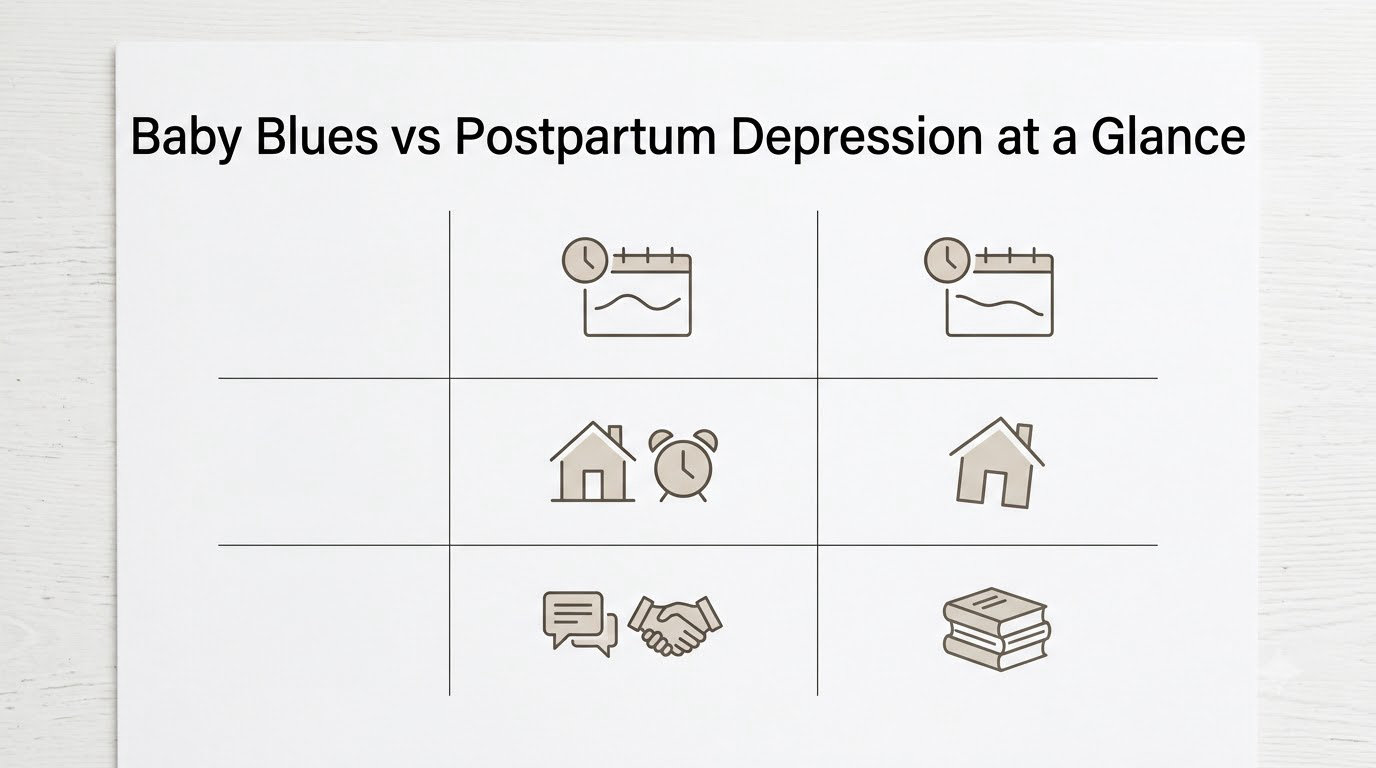
The table below is the fastest way to see the gap between the two. Read across each row rather than down a column.
| Baby blues | Postpartum depression |
|---|---|
| Starts 2 to 3 days after birth | Often starts 1 to 3 weeks after birth, but can begin during pregnancy or months later |
| Lasts days to about two weeks | Lasts two weeks or longer and can continue for months without treatment |
| Very common — up to 4 in 5 | Less common — about 1 in 8 who give birth |
| Mood swings, tearful spells, irritability, feeling wound-up or overwhelmed | Persistent low mood, numbness, hopelessness, guilt, worthlessness, anxiety or rage |
| Comes and goes, with lighter hours in between | Flat or heavy most of the day, with little relief |
| You can still manage most daily tasks with support | Difficulty eating, sleeping, concentrating, showering or caring for your baby |
| Bonding feels normal, if tiring | Feeling detached from your baby or unable to feel close |
| Rest, help, sleep and time usually resolve it | Needs professional care — therapy, medication, or both |
| Check in again if it passes two weeks | Call a provider now; get emergency help if there are thoughts of self-harm |
One row deserves emphasis: daily functioning. Peer-reviewed reviews describe the blues as having minor functional impact, while postpartum depression is defined by significant impairment. That is the practical dividing line most clinicians use.
What Do Baby Blues Feel Like?
Baby blues feel like being moved by weather. You cry over a cereal commercial and then feel fine two hours later. The intensity changes hour to hour, and there are windows where you feel like yourself again.
Common features include:
- Onset within the first few days after delivery, often around day 2 or 3
- Sudden tearfulness or frequent crying spells
- Mood swings and irritability, sometimes snapping at people you love
- Feeling restless, anxious or on edge
- Overwhelming fatigue beyond what sleep explains
- Trouble sleeping, even when the baby is sleeping
What causes it is mostly mechanical. Estrogen and progesterone levels drop sharply in the hours after delivery, which affects the chemicals that regulate mood. Add broken sleep, physical recovery, and the sheer scale of a new responsibility, and the up-and-down feeling makes sense.
Baby blues typically peak around day 4 or 5, then gradually fade. Most people feel noticeably better by the two-week mark, though the emotional residue can linger longer after a difficult birth.
If you’re five days postpartum and crying most of the day, that sits inside the common window. You’re allowed to ask for support before day 14 if you need it — the two-week mark is a reason to call, not a rule you have to wait out. Sleep in blocks where you can, eat regularly, and accept help with meals and chores. If the crying hasn’t shifted at all by two weeks, bring it to your provider.
Cesarean recovery can extend the fatigue, and a baby in the NICU changes the shape of the whole month. Neither makes the blues somebody else’s problem.
What Does Postpartum Depression Feel Like?
Postpartum depression feels less like weather and more like a weight that does not shift. It is a medical condition with biological, genetic and social contributors, not a character flaw and not a sign that you are a bad parent.
Symptoms commonly include:
- Low mood or emptiness most of the day, most days, for two weeks or more
- Losing interest in things you used to enjoy, including your baby
- Overwhelming guilt, worthlessness or constant self-criticism
- Hopelessness, or a sense that nothing will improve
- Difficulty bonding with your baby or feeling disconnected from them
- Trouble concentrating, making decisions or handling basic tasks
- Appetite or sleep changes that go beyond newborn disruption
- Withdrawing from friends, family or support networks
- Thoughts of death, of not being here, or of harming yourself or your baby
Around 1 in 8 people who give birth develop postpartum depression, according to the CDC. Family history of depression, a previous episode, a difficult pregnancy, multiples, a premature or NICU baby, an unplanned pregnancy, breastfeeding difficulty, relationship stress or violence, financial strain, thin support, or a caregiving load can all raise the odds. Having one of these factors does not mean you will be depressed. It does mean worth a check-in.
The quiet form: depression without obvious tears
Not everyone cries. Some people show up for everything and function fine on the outside, then collapse once the baby is asleep. Signs include going through the motions, numbing out, short temper, constant fatigue, and putting off doctor visits, paperwork or conversation because nothing feels worth the effort. High-functioning on the outside is exactly the kind of presentation that gets missed, so if something feels flat and persistent, take it seriously even when no one around you has noticed.
One thing to know: you can have postpartum depression and love your baby completely. The disorder affects how you connect, not whether you care. Many people say the bond returns with treatment.
What Are the Key Differences?
Here is the same comparison the AI answers use, in plain sentences.
Baby blues:
- Timing: begins within days of delivery
- Frequency: very common, up to 4 in 5
- Symptoms: tearful, irritable, moody, restless, exhausted
- Impact: you cope, with help and rest
- Treatment: support, sleep, practical help, time
Postpartum depression:
- Timing: usually 1 to 3 weeks after birth, sometimes during pregnancy or much later
- Frequency: about 1 in 8 who give birth
- Symptoms: persistent low mood, numbness, guilt, hopelessness, detachment
- Impact: daily tasks, self-care and the parent-baby relationship suffer
- Treatment: therapy, medication, or a combination, plus support
Differences that matter beyond that list: intensity, consistency, and effect on functioning. The blues fluctuate; depression tends to hold. With the blues, a good hour still happens. With depression, good hours can stop appearing. And with depression, help from friends and family usually isn’t enough on its own — that’s one of the clearest signs you’ve crossed into something clinical.
Baby Blues vs Postpartum Depression: Duration and Intensity
The two-week rule is about duration, not severity. Baby blues that last a week or two are common; baby blues that stretch past two weeks deserve a phone call to your provider. Postpartum depression is defined by symptoms persisting two weeks or longer and interfering with daily life. Intensity runs alongside it: severe symptoms — not sleeping, not eating, feeling unsafe, or thinking about self-harm — warrant help at any point, even on day three. You don’t have to earn care by waiting.
Can Baby Blues Turn Into Postpartum Depression?
They’re better understood as two different patterns than as stages on one road. Most people with the blues recover without developing depression, and depression can appear without any blues at all.
Still, the two can look similar early on, and a person whose blues ease may notice low mood later. New or worsening symptoms at any point deserve an assessment rather than an assumption about what stage you’re in.
One more piece of the timeline: depression that begins during pregnancy is called peripartum or perinatal depression. It can continue after delivery, which sometimes confuses people about whether they’re having the blues or something else. The label matters less than the fact that either pattern deserves care.
What Other Postpartum Mood Conditions Can Look Similar?
Postpartum anxiety is the one people miss most. It shows up as constant worry, racing thoughts, panic attacks, insomnia despite a sleeping baby, or intrusive fears about something happening to the infant. Anxiety is very treatable and is often the first symptom people bring to a provider.
Peripartum bipolar disorder can begin in pregnancy or after delivery, particularly if bipolar disorder was diagnosed before. Symptoms include racing speech, very little need for sleep, unusually high energy, grand plans, impulsive spending or other risky behavior, and severe irritability. It needs a psychiatrist, not a general self-care plan.
Postpartum psychosis is rare and urgent. Confusion, severe agitation, paranoia, unusual beliefs or hearing voices, and being unable to care for yourself or your baby require emergency care. The same applies to any thoughts of harming yourself or your baby, or of not wanting to be alive. In the US, call or text 988 for the Suicide & Crisis Lifeline, or 911 if there is immediate danger. For referral and information, the SAMHSA National Helpline is 1-800-662-4357, free, confidential, and open 24/7, 365 days a year.
Intrusive thoughts of hurting your baby are unwanted and distressing, and most new parents with the blues experience some version of them. The difference is intent. Intrusive thoughts come with horror and a strong wish to keep your baby safe. Intent, a plan, or relief at the thought means get help right now.
When Should You Contact a Health Professional?
Call your OB/GYN, midwife, primary care provider or pediatrician when any of these are true:
- Low mood, anxiety or tearfulness has lasted more than two weeks
- Symptoms are getting worse rather than better, or new ones are appearing
- You can’t eat, sleep, concentrate or manage basic care for yourself or the baby
- You feel detached from your baby, or the bond feels impossible
- You have thoughts of self-harm, harm to the baby, or not wanting to be here
- You feel confused, paranoid, or unable to function safely
- You have a history of depression, bipolar disorder or postpartum psychosis
Do not wait for the six-week postpartum checkup to bring this up. That visit is a good checkpoint, not a start date for permission to ask.
It helps to arrive with something. Brief validated questionnaires such as the EPDS (Edinburgh Postnatal Depression Scale) and the PHQ-9 are commonly used, and a score gives your provider a starting point — bring the completed answers to the visit. Note the timing of your symptoms, how many hours you sleep, and one example of a task that feels impossible. Naming “this has been going on since day 12 and I can’t manage the evenings” tells a provider more than “I’ve been sad.”
Treatment options your provider might discuss include cognitive behavioral therapy, interpersonal therapy, support groups for new parents, SSRIs or SNRIs, and for some people, IV brexanolone or an estrogen patch. Many people can breastfeed while taking medication when the choice is made with a provider, so raise the question instead of deciding alone.
How Can Partners and Family Members Help?
Support helps most when it’s specific. A few things that consistently matter more than advice:
- Take over a task, not an offer. Own the 2 a.m. shift on Tuesdays, do the laundry, handle the meal plan. “Do you need anything?” usually gets “no.”
- Guard sleep. Protect one uninterrupted block of four to five hours if you can, and take the baby so the other person can actually use it.
- Watch the timeline. Note when symptoms started and whether they’re lifting. Bring that up at the appointment.
- Say it plainly. “I’ve noticed you seem flat and withdrawn for a couple of weeks. I’d like to call the doctor with you” is harder to receive but far easier than a suggestion that something is wrong.
- Make the call. Offer to drive, take notes, or handle the referral. When depression is present, follow-through usually has to come from outside.
- Don’t minimize. No comparing to your own hard week, no telling them to sleep it off, no framed secret.
- Act fast on red flags. Confusion, no sleep for days, grandiose plans, or talk of self-harm means same-day help, not a scheduled conversation next week.
New parents who aren’t the birthing person get postpartum depression too — partners, dads, adoptive and gestational carriers all can, and they often get less support and less recognition. If that describes you, the same two-week rule applies, and your own provider or therapist is the right call.
Which Should You Choose?
Neither is a choice to make in the way a product is, but the response differs by situation. If the pattern is mild, started in the first few days after birth, comes and goes, and you can still manage your day with help, then rest, practical support, time, and a check-in at two weeks is a reasonable plan.
If symptoms are persistent, worsening, function-limiting, or involve detachment from your baby, hopelessness, or thoughts of self-harm, the choice is professional assessment — starting with therapy, medication, or both, and beginning now rather than at the six-week visit. It’s not a character assessment, and it’s not something you have to push through.
Frequently Asked Questions
How do I know if I have baby blues or postpartum depression?
Look at duration, intensity and function. Baby blues start within days of birth, come and go, and let you cope. Depression lasts two weeks or more, feels heavy most of the time, and interferes with eating, sleeping, self-care or bonding. If you are unsure, book a check-in — nobody is turned away for asking early.
How long do the baby blues usually last?
Most baby blues last a few days to about two weeks, peaking around day four or five and then fading. If your mood has not started to lift by two weeks, or it is getting worse, contact your provider. Severe symptoms at any point do not need to wait for the two-week mark.
Does postpartum depression always involve feeling sad?
No. Postpartum depression can show up as numbness, anxiety, anger, constant fatigue or going through the motions rather than tears. Numbness, losing interest in things you enjoy, guilt, hopelessness and difficulty bonding can all signal it. Feeling flat for two weeks or more is worth raising with a provider even without sadness.
Can postpartum depression appear right after birth?
It can, though most cases begin one to three weeks after delivery, and depression that starts during pregnancy is called peripartum depression. Postpartum depression can also start months later. The perinatal window runs from pregnancy to roughly six to twelve months after birth, so symptoms at any point in that stretch deserve an assessment.
What should a partner do if the new parent seems depressed?
Watch the timeline and say what you noticed. Note when symptoms started, take on a specific task rather than offering, and protect a block of sleep. Offer to make the appointment and go along. If you hear talk of self-harm, severe confusion or very little need for sleep, seek same-day urgent help.
What to Do First
Start with a timeline: when the mood shifted, what it looks like day to day, and whether anything has helped. Compare it with the usual two-week window for baby blues and decide which column of the table fits.
Then act on the answer. If it looks like the blues, build rest and practical support into the week and set a date to reassess at 14 days. If it looks like depression, or you are not sure, call your OB/GYN, midwife, primary care provider or pediatrician this week and mention mental health in the first sentence. Do not wait for the six-week visit.
If there is any risk to your safety or your baby’s, contact 988 or 911 immediately, or go to the nearest emergency department. Postpartum depression is common, treatable, and not a reflection of your love for your baby.