
Maternity leave planning goes far better when you treat it as a list of dated tasks instead of one huge decision made in the third trimester. This guide covers how to plan maternity leave step by step for US employees: what leave and pay you qualify for, when to tell your employer, which start date to pick, how to hand off your work, and how to come back without losing the plot. It takes a few hours of admin spread over four months, not one weekend of stress.
Here is the whole process in seven steps. Each one gets its own section below.
- Set your leave goals. Decide how long you want out and what the time is for.
- Check your rights. Look at FMLA, your employer policy, and state paid leave.
- Pick a start date. Work backwards from your due date.
- Tell your employer in writing. Give notice and confirm the dates on paper.
- Build the handover. Document, delegate, and set your out-of-office.
- Sort the money. Map out every pay source and file the right claim on time.
- Plan the leave and the return. Line up childcare, support, and a phased return.
Table of Contents
- What You Need
- Step-by-Step: How to Plan Maternity Leave Step by Step
- 1. Start Early and Establish Your Leave Goals
- 2. Check Your U.S. Leave Rights and Employer Benefits
- 3. Map the Leave Timeline and Decide Your Start Date
- 4. Build a Financial and Benefit Plan
- 5. Prepare Your Work Handoff and Support System
- 6. Plan for Birth, Recovery, and the First Weeks Home
- 7. Reevaluate Before Returning to Work
- Common Mistakes
- Frequently Asked Questions
- How many weeks before my due date should I go on maternity leave?
- Is maternity leave 100% paid in the US?
- Do I qualify for FMLA if I have not been at my job for a year?
- What should I tell my employer before maternity leave?
- What do I actually do during maternity leave once I am off work?
- How do I plan a phased return to work?
- Conclusion
What You Need
Most people start planning without the paperwork in front of them, then have to start over. Gather these seven things first and the rest of the process moves quickly.
- Your due date and the date you would like to start leave. Write down both, even as a rough guess. Due dates move, especially with first pregnancies.
- Your employer details. HR contact, manager name, employee handbook, and any leave policy or parental leave policy document.
- Your tenure and hours. Start date, whether you are full-time, and how many employees work at your location.
- Health insurance information. Plan name, monthly premium, deductible, and who handles claims.
- Short-term disability and life insurance contacts. Many policies sit with the employer or an insurance company, not with HR.
- Your birth plan and provider details. Hospital or birth center, midwife or OB, doula, and any planned C-section date.
- A rough budget. Take-home pay, savings, bills due during leave, and the extra costs nobody warns you about.
A note on where you can and cannot get care. If you have not settled on a provider yet, or you are in an area with few options, that is worth sorting out early too. How maternity care deserts affect rural families covers why distance changes your planning timeline.
Step-by-Step: How to Plan Maternity Leave Step by Step
1. Start Early and Establish Your Leave Goals
Begin before 28 weeks if you can. That is the point where nothing is urgent, your employer still has budget for coverage, and you have time to read a policy instead of reacting to one.
Most people figure out how to plan maternity leave step by step by answering one question first: what is this leave for? Some families want every day of bonding time and take unpaid leave on top of protected weeks. Others want medical recovery time and plan to work remotely partway through. Both are valid, but they produce very different timelines.
Write down three things: the number of weeks you want out, the week of pregnancy you would like to start, and the date you realistically need to be back. Some families also plan for adoption, fertility treatment, or a placement, and the paperwork path is different for each. Knowing which one you are covers a lot of ground before you talk to HR.
2. Check Your U.S. Leave Rights and Employer Benefits
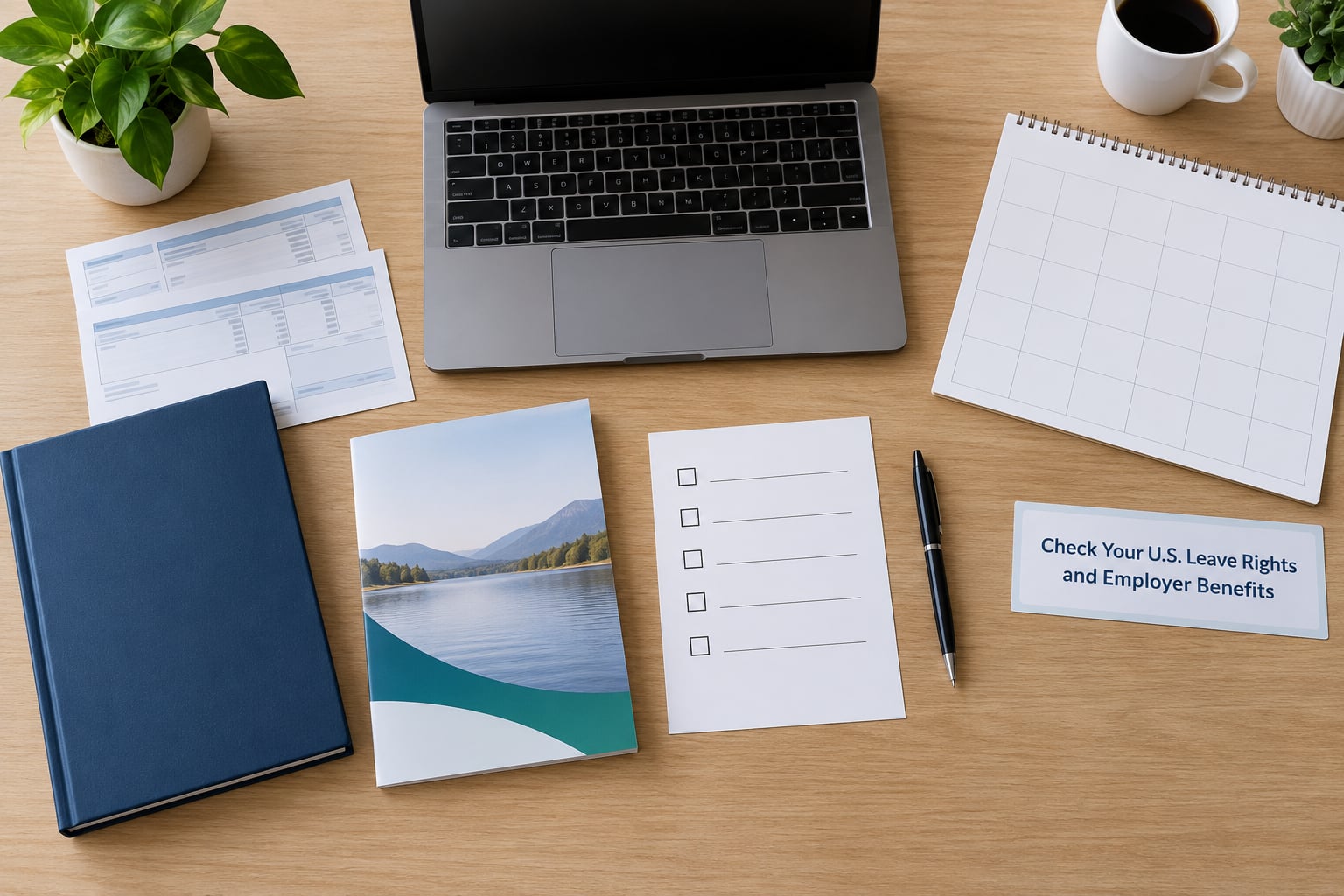
US leave comes from four different places, and most people only know about two of them. FMLA is the job-protected baseline. State paid family leave replaces part of your wages. Short-term disability covers the medical side of recovery. Your employer may add paid weeks on top.
For FMLA, check the two eligibility tests: you generally need 12 months with the employer and an employer who employs 50 or more people within 75 miles of your worksite. Eligible employees get up to 12 weeks of unpaid, job-protected leave for birth and bonding, and that protection is the part employers cannot take away.
Short-term disability is the one most people miss. It is usually a separate claim that pays a percentage of your salary for about six to eight weeks, and it covers the medical recovery portion rather than bonding. Many plans will not let you open the claim until after the baby is born, which is the single most common paperwork surprise parents run into.
Ask your benefits administrator or leave specialist to confirm in writing: total weeks available, the waiting period, whether benefits run consecutively or at the same time, what documentation is required, who pays the premiums during leave, and the exact date forms are due.
3. Map the Leave Timeline and Decide Your Start Date
Most US employees start leave about two to four weeks before the due date, which puts the start around 36 to 38 weeks. Starting earlier costs you bonding time. Starting later means working while very pregnant, and for many people that is the part they regret.
| Start week | Time before birth | Weeks of leave left | Who it suits |
|---|---|---|---|
| 34 weeks | 6 weeks early | About 16 | High-risk pregnancies, multiples, demanding roles, long commutes |
| 36 weeks | 4 weeks early | About 14 | First pregnancy, C-section plans, long travel to hospital |
| 38 weeks | 2 weeks early | About 12 | Comfortable second pregnancies with a support plan at home |
| Due date | 0 | About 12 | Parents who want every bonding week and can work to term |
Build the timeline backwards from your due date and put real dates on a calendar: benefits enrollment deadlines, the medical certificate date, your notice deadline, claim forms, payroll coordination, childcare booking, and the last day before you leave. Treat the due date as a range, not a day. A large share of first-time parents go past it, so leave a buffer of at least two weeks.
If your leave involves a planned C-section, a multiples pregnancy, or a recovery your provider has flagged as longer, move the start date earlier and talk to HR about a medically certified start rather than a guessed one.
4. Build a Financial and Benefit Plan
Maternity leave in the US is rarely paid in full. The typical package people describe is roughly 12 weeks of unpaid FMLA plus around six to eight weeks of short-term disability at about 60 percent of pay, plus whatever paid weeks the employer provides. Some states pay a larger share, and some employers pay considerably more, so treat that as a reference point rather than your number.
| Source | What it covers | How it is claimed | Paperwork timing |
|---|---|---|---|
| FMLA | Up to 12 weeks, unpaid, job-protected | Employer form plus medical certification | Notice at 30 days for planned leave; certification after starting |
| State paid family leave | Partial wage replacement for bonding | Direct claim with the state program | Usually filed within about 30 days of the start |
| Short-term disability | Medical recovery, often 6 to 8 weeks at a percentage of pay | Claim with the carrier or employer | Frequently cannot be opened until after the birth |
| Employer paid leave | Fully paid weeks, often 4 to 12 | Company policy or HR form | Per the handbook, sometimes tied to tenure |
| Unpaid leave | Anything beyond the above | Written agreement with HR | Confirm job protection before you commit |
Pay sources can run back to back or at the same time, and which arrangement you get changes your total. Ask specifically whether short-term disability and any state program run consecutively or concurrently. Ten weeks at full pay is a different life from twelve weeks at a fraction of it, and you can only plan for what you can calculate.
On the benefit side, ask whether health premiums continue through leave or whether you need to pay the employer share yourself. Also budget for what leave does not cover: diapers, formula, a car seat, a lactation consultant, extra childcare, and higher grocery bills during the fourth trimester. Families who self-fund an extended unpaid leave should run that number against savings before they commit to a date.
5. Prepare Your Work Handoff and Support System
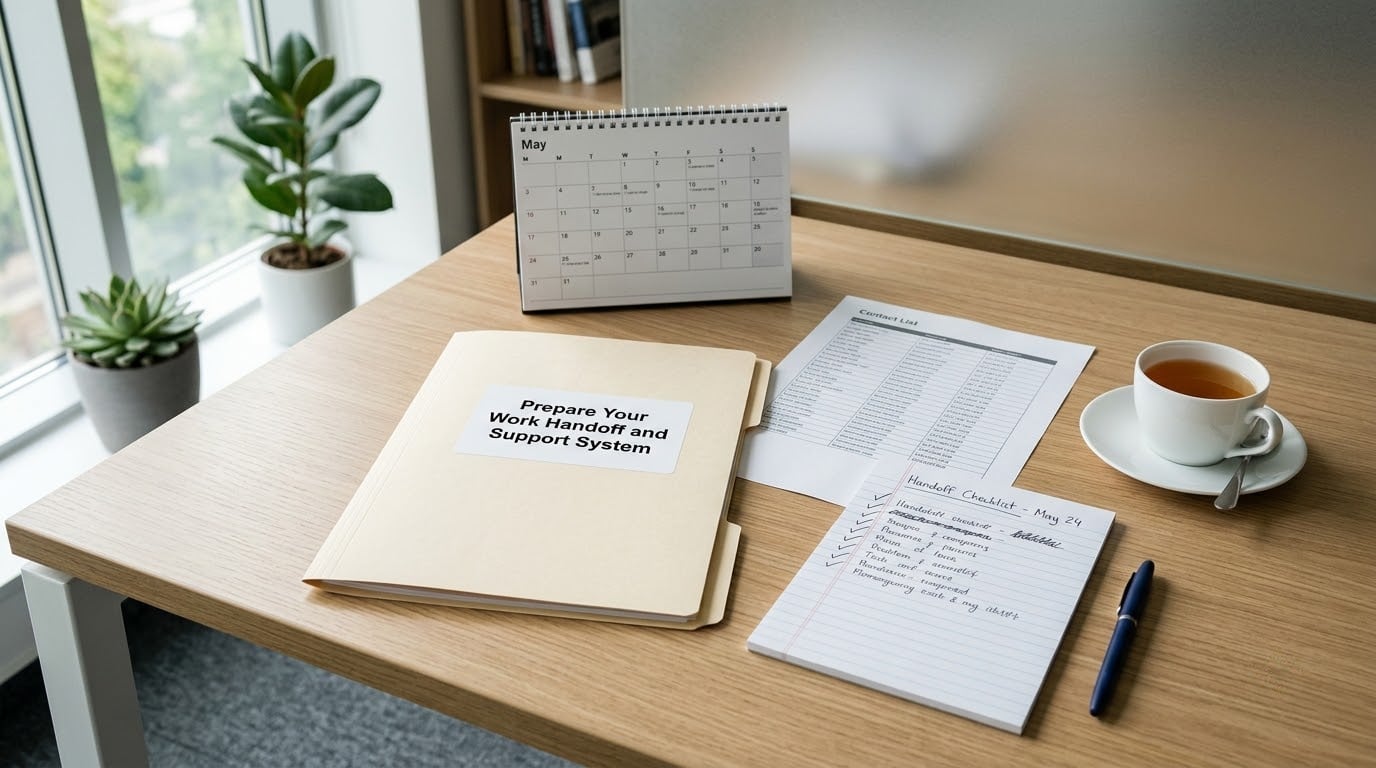
Write a handover document, not a farewell email. One page per responsibility, each with the current status, the next action, the deadline, and the person taking it over. Include where the files live and who to ask when something breaks.
- List every recurring task with a named owner.
- Move shared logins and system access to a team account rather than leaving it in your name.
- Write a short paragraph on where projects stand, not just a task list.
- Name one person as the point of contact for your team and one for everything else.
- Protect confidential files by moving them out of personal drives before you go.
Set your boundaries in writing too. An out-of-office auto-reply that names no due date and gives no personal detail stops the stream of well-meant check-ins. A version that says you are on leave until a specific date, will not be monitoring email, and points questions to a named colleague does most of the work for you.
If you hold a leadership or client-facing role, book time with your manager before you leave to walk through the transition in person. People are far less anxious about a role they have watched someone else pick up. How to become a foster parent step by step covers the same skill from another angle: naming a backup early.
6. Plan for Birth, Recovery, and the First Weeks Home
The first two weeks are the part people leave blank, then improvise at 3am. Plan them while you still have normal weeks.
- Have meals, household help, and transport lined up for the days around the birth.
- Set visiting boundaries before anyone arrives, and put them in writing.
- Get a feeding plan and a lactation contact in advance, not after a hard week.
- Keep your calendar empty for the first ten days. Recovery is the whole point of the leave.
- Know which of your leave forms must be filed from the hospital, and pack them.
Your own preferences matter here. What informed consent really means in maternity care explains why you should agree your birth preferences with your provider while you are well, not in labour.
7. Reevaluate Before Returning to Work
Set the return date as a decision, not a default. Roughly six to eight weeks after birth, honestly assess sleep, feeding, energy, childcare, and finances. Ask whether you need a ramp, a different schedule, remote days, a temporary reassignment, or more unpaid leave.
A phased return is easier to arrange than people assume. Ask early, in writing, and put the request in the same conversation as your return date. If you are extending leave, tell your manager before the date passes, not after.
Common Mistakes
Waiting until the third trimester. Notice periods, benefit enrollment windows, and childcare booking lead times all close well before the due date. Fix: start at 28 weeks.
Assuming your employer policy equals your legal rights. A generous handbook does not remove your FMLA rights, and a thin one does not remove them either. Fix: read the statute and the handbook separately.
Trying to file short-term disability before the birth. Plenty of plans will not open the claim until delivery. Fix: read your plan document now, pre-fill everything you can, and know the date the claim can actually be submitted.
Underestimating costs. Leave pay replaces a salary, not a lifestyle, and the fourth trimester adds expenses. Fix: add a realistic monthly figure to your budget, not just the pay you will receive.
Letting health coverage lapse. Assume nothing about premiums during leave. Fix: get the answer in writing from your benefits administrator.
Handing over in a panic. Fifteen rushed minutes the night before delivery is not a transition plan. Fix: start the document around 34 weeks and revise it twice.
Treating recovery as a calendar date. The due date is an estimate, and recovery is not a stopwatch. Fix: keep a week or two of slack in your plan.
A few tips that help more than the rest: get every answer about leave in writing so you are not relying on memory later, ask your benefits administrator rather than only your manager, and treat your start date as negotiable up to about 36 weeks. Whatever you decide, you will do better rested if you leave before you are visibly exhausted.
Frequently Asked Questions
How many weeks before my due date should I go on maternity leave?
Most US employees start about two to four weeks before the due date, which puts the start at roughly 36 to 38 weeks. Starting earlier gives you more recovery time and costs bonding weeks. Starting at the due date gives you the most leave but means working while very pregnant. Add two weeks of slack either way, because due dates are estimates.
Is maternity leave 100% paid in the US?
Rarely. The most common package is about 12 weeks of unpaid FMLA plus six to eight weeks of short-term disability at roughly 60 percent of pay, plus a few fully paid weeks your employer may provide. State paid family leave programs replace part of wages rather than all of it. Ask your benefits administrator to calculate your actual amounts in writing.
Do I qualify for FMLA if I have not been at my job for a year?
Probably not. FMLA generally requires 12 months with the employer, and an employer with 50 or more employees within 75 miles of your worksite. If you miss the tenure test you can still have state paid leave, short-term disability, and employer policy weeks. Talk to HR about those before you assume you have nothing.
What should I tell my employer before maternity leave?
Tell them in writing once you know your dates, and include the expected start date, expected return date, and the length of leave you plan to take. Ask HR for the leave process, forms, and deadlines in the same message. Keep a copy, and follow up with a calendar entry for each deadline so nothing depends on remembering it.
What do I actually do during maternity leave once I am off work?
Recover first. Keep the first ten days free of obligations, then let the weeks build around feeding, sleep, and short walks. Practical jobs wait for you: confirming insurance, filing any disability claim, booking childcare, and setting a return date. Anything you can do lying down, you can do that week.
How do I plan a phased return to work?
Ask your manager early and put the request in writing with your return date. A common ramp is a reduced schedule for the first month, then a slow build to full hours with remote days kept in place. Check whether your employer counts the ramp inside your 12 weeks of FMLA or after it, because the answer decides whether it costs you leave.
Conclusion
Write your preferred leave dates on paper today, then check your FMLA eligibility, employer policy, and state program. Put every deadline on a calendar, build the financial plan with the real pay numbers rather than the ones you hope for, and draft the handover document while you still have normal weeks.
Confirm the details with your employer, your benefits administrator, and your state leave program, since rules differ by state and by employer. This is general information, not legal or HR advice.