
Becoming a foster parent means completing your state’s licensing process: orientation, pre-service training, an application, background checks, a home study with interviews and a home visit, and final approval by a licensing agency. This guide walks through how to become a foster parent step by step, from the first phone call to the day a child arrives. Plan on three to six months from first call to approval, and know up front that every rule below is set by your state, not by a national standard.
That last point trips up more applicants than anything else. People read a checklist online, assume it applies everywhere, and then find out their state wants something different. Use this guide as the shape of the process, then confirm the specifics with your state child welfare agency and the agency that will actually license you.
Table of Contents
- What You Need
- Personal readiness
- Documents
- Home requirements
- Training
- How to Become a Foster Parent Step by Step
- 1. Decide If You Want to Become a Foster Parent
- 2. Choose a Foster Care Agency
- 3. Complete the Licensing Application
- 4. Finish Required Training and Assessments
- 5. Prepare and Study Your Home
- 6. Complete the Home Study and Approval
- 7. Understand Your First Placement
- Common Mistakes
- Frequently Asked Questions
- How long does it take to become a foster parent?
- Do you need a certain income to become a foster parent?
- Can a single person become a foster parent?
- What is the difference between foster care and adoption?
- Can I foster if I have a criminal record?
- What should I prepare before a foster care home visit?
- Where to Start This Week
What You Need
Before you contact anyone, get a realistic read on four areas: your own readiness, the paperwork, the home, and the training commitment.
Personal readiness
Most states set a minimum age between 18 and 21. You generally need a stable home, a willingness to be matched with a child whose age and needs you cannot fully predict, and enough emotional capacity to sit with the possibility that the child may return to their birth family. Reunification is the goal in nearly every case, and a good foster home sometimes means helping a child leave.
Documents
Agencies typically ask for a physical exam and a tuberculosis test completed within the last year, FBI fingerprints and a state criminal check, proof of income such as recent pay stubs or a W-2, three or four personal references, an autobiographical statement, and copies of legal documents like marriage licenses, divorce decrees, and birth certificates for everyone in the home. References are usually people outside your family. Ask your agency for its exact list, because it varies.
Home requirements
You need a spare room for the child, a working smoke detector on every level and a carbon monoxide detector, locked storage for medications and cleaning supplies, a fire extinguisher, safe sleeping arrangements for infants, and outlet covers where children will be. If you rent, your landlord may need to sign a consent form. Pets are usually fine if the agency knows about them ahead of time and the animals’ temperament checks out.
Training
Pre-service training minimums range from about 18 to 36 hours depending on the state, delivered in workshops, online, or both. You will also have ongoing training after licensure. This is where most first-time families underestimate the commitment.
Child Welfare Information Gateway is the federal resource for national foster care statistics and licensing definitions, and it is the best single starting point for comparing states.
How to Become a Foster Parent Step by Step
1. Decide If You Want to Become a Foster Parent
Before you fill out anything, decide honestly whether you want this. The useful questions are not romantic ones. They are: can you take a call on a Sunday evening and have a child in your home that night, can you manage paperwork, doctor visits, school meetings and court dates alongside a job, and are you willing to ask for help when you need it?
Foster care is also not adoption. It is a temporary arrangement with a legal license, and in most cases the parents remain involved in their child’s life. If you want to adopt, foster-to-adopt programs exist, but you start as a foster parent and the intent is not decided at approval. On r/Fosterparents, the question applicants ask most is how to explain the difference to their own kids before it happens, and the honest answer is to describe it as helping a child whose situation is hard right now.
Ask a licensing worker directly: what ages do you place, what is the average wait for a first match, and how many of your current families have a placement this month.
2. Choose a Foster Care Agency
You have two routes, and they work differently. A state child welfare agency (called DCFS, DFCS, DHS, or DSS depending on your state) licenses directly, places children quickly, and requires no fee for licensing. A private foster family agency charges a home study fee, often in the low thousands, and can offer narrower supports such as therapeutic or foster-to-adopt tracks.
How to identify the agency serving your area: search your state’s child welfare agency name plus “become a foster parent,” and call the county or regional office listed. Also ask your state’s licensing office for a list of licensed private agencies in your region. Bring the same questions to both: what ages and needs do you serve, what training is required, what does support look like after a placement, and what is the fee and refund policy.
For each agency, compare the same things rather than being swayed by a brochure. Placement speed, the age ranges they actually fill, the track record on reunification, whether they provide respite backup, and whether a foster parent association is connected to them.
3. Complete the Licensing Application
The application is longer than you expect and asks for more than names and addresses. You will list household members, occupation and income, personal history, your health, and the names and contact details of references. Some agencies also want a written autobiographical statement explaining why you want to foster, in your own words.
The single most important thing here is completeness. Do not hide a past conviction, an old CPS investigation, a divorce, a health diagnosis, or debt. Undisclosed history is a common reason a home study stalls, and agencies will run a child protective services check on everyone in the home regardless of what you write. If you are unsure whether something counts, write it down and explain the context rather than leaving it blank.
4. Finish Required Training and Assessments
Pre-service training covers child development, the foster care system, trauma-informed parenting, permanency and reunification, and your legal rights and responsibilities as a licensed parent. Expect assessments, knowledge checks, or scenario exercises at the end.
After approval you keep training. Most states require a set number of continuing education hours each year on top of required topics such as child abuse reporting and safe sleep. Put the deadlines on a calendar the day you are licensed, because renewal paperwork depends on them.
5. Prepare and Study Your Home
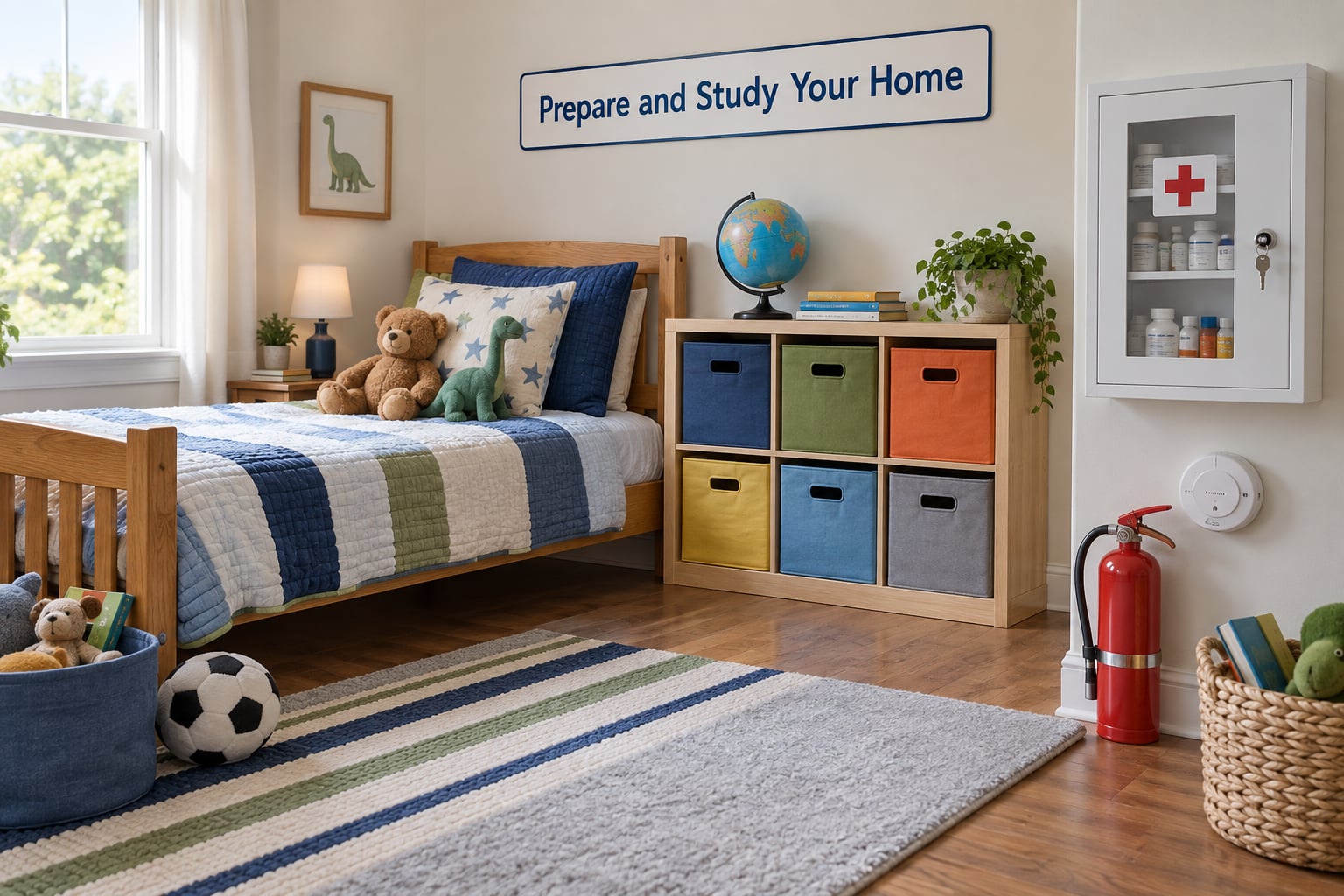
Home safety inspections are not a formality. Your licensing worker will walk the whole house, and in a foster home they can open cabinets. Expect to be asked about medication storage, cleaning supplies, firearms, alcohol, outlet covers, stair rails, window guards above the second floor, and pool fencing or alarms.
A few details catch first-time families out. Children over a certain age need their own bedroom, not a shared room with a folding cot in a closet. An infant needs a crib that meets current safe sleep standards, on a firm mattress with nothing else in it. Every adult in the home needs a background check, including adult children living there. And keep a running list of what you fixed, with dates, because you will be asked to document the changes at the follow-up visit.
Build the support closet at the same time. A locked bin of age-appropriate clothes, shoes, a car seat appropriate to the child’s size, a toothbrush, and basic toiletries saves you at midnight on day one. Many parents also keep a car seat of each common size on hand, since a same-day call may come before you can buy one.
Do not guess at the checklist. Ask your licensing agency for its written home safety checklist and go down it item by item.
6. Complete the Home Study and Approval
The home study is the assessment that decides whether you get licensed. It usually combines several visits or calls with the same writer over three to six months, an interview with you and your other adult, a home visit, and sometimes interviews with your children or a partner who is not an applicant.
What the agency is looking for, and how to prepare:
- Safety — walk the house with the checklist and fix what you can before the visit.
- Stability — have employment, school, or volunteer commitments in hand with dates.
- Capacity — be ready to explain your daily routine and how a child’s needs would fit into it.
- Relationships — know who your references are and have contacted them beforehand.
- Motivation — articulate why you want to foster in terms of what you would give a child, not what you would gain.
- Support — name the family, friends, or community pieces you will draw on.
The interview feels more invasive than most people expect. Licensed parents frequently say afterward that the writer was fair and that honesty mattered more than a polished house. If the agency asks for corrections after the visit, treat them as a checklist rather than a verdict, fix them promptly, and ask for a written follow-up date.
You should receive a copy of your home study report. Read it. Agencies themselves encourage this, and errors get corrected when you point them out. Approval comes as a license with an expiration date, and you enter a placement queue.
7. Understand Your First Placement
The wait after approval is real, and silence is normal. Keep your phone on, your availability current, and your calendar clear. Ask your worker what kinds of matches are likely for your license, given your age range and your county’s needs right now.
When a match does come, it can move fast. Expect a conversation with the caseworker about the child’s needs and history, a placement agreement, a schedule for transportation, medical and dental care, school enrollment, and a plan for contact with the birth family. Documentation is your job from day one: keep a dated log of appointments, medications, behavioral notes, and any injury, however small. Every bump and rash gets reported to the caseworker, and that habit is what protects you and the child later.
Ask for respite coverage before your first placement, not after you are exhausted. Respite care is a scheduled break built into the arrangement, and it is one of the main reasons licensed parents stay licensed.
Common Mistakes
1. Trusting a generic checklist instead of your state’s rules. Requirements, training hours, and home standards are set by your state licensing authority and the agency licensing you. Find your agency’s written checklist and follow that version.
2. Leaving something out of the application. Every household member is checked anyway. Disclosed history gets assessed; undisclosed history becomes a licensing problem.
3. Preparing only the child’s room. The home visit covers the whole house, including storage, stairs, windows, firearms, and medications. Do the full walkthrough.
4. Treating foster care like adoption. You are licensed for temporary care with a legal role around reunification. Adopting, if it happens, happens later and differently.
5. Waiting until you are in crisis to build support. Join your local foster parent association during training, not after the first hard week. Respite should be arranged early.
6. Missing the ongoing record requirements. Licensing has duties attached: annual continuing training, incident reports, documentation, and travel permissions. Missing them puts your license at risk.
7. Deciding during a gap. The weeks after submission are slow. Ask your worker in advance how and when they will update you, so silence doesn’t read as rejection.
Frequently Asked Questions
How long does it take to become a foster parent?
Most families report three to six months from first contact to approval. Orientation and training run first, then the application and background checks, then the home study, which usually stretches across several months with multiple visits and interviews. Private agencies that charge a home study fee can move faster because they schedule more tightly. Delays usually come from missing documents, unresponsive references, or a busy home study writer.
Do you need a certain income to become a foster parent?
There is usually no fixed income threshold, but the agency has to be satisfied that you can meet your household’s basic needs without depending on the foster board payment. Bring recent pay stubs, a W-2, or a financial statement showing income, expenses, and savings. Renters, students, and families on public benefits are routinely licensed. What disqualifies you is an inability to show stability, not an amount on a page.
Can a single person become a foster parent?
Yes. Single applicants are licensed in most states, and many states also license single people who are not married, including single men and single LGBTQ+ applicants. Your age, background check, training, and home assessment all still apply, and some states ask single applicants to show a broader support network. Your state’s licensing standards and the agency you apply to will confirm the exact rules where you live.
What is the difference between foster care and adoption?
Foster care is a temporary, court-supervised placement under a license, with the birth parents usually retaining parental rights and an active case plan toward reunification. Adoption permanently terminates those rights and requires a separate court process, either directly or through a foster-to-adopt track. Most foster parents start in foster care. If you want to adopt, you can discuss a dual approval during the home study, and that conversation happens with your agency, not online.
Can I foster if I have a criminal record?
Often yes, because the standard is judgment about the offense rather than the existence of a record. Agencies assess what happened, how long ago, and what you have done since, then consider things like the age of the offense, whether it involved violence or children, and your current circumstances. Disclosing it early and explaining the context is far better than hoping it does not surface. Your licensing authority publishes the specific rules for your state.
What should I prepare before a foster care home visit?
Walk your home using your agency’s safety checklist and fix what you can before anyone arrives: working smoke and carbon monoxide detectors, locked medication and cleaning supply storage, outlet covers, a fire extinguisher, safe sleeping arrangements, and a clear bedroom for the child. Have your documents out, including exam results, income proof, and reference contact details. Tell your children the visit is coming, and keep pets secured and out of the way during the walkthrough.
Where to Start This Week
The whole process starts with one call: your state child welfare agency, asking how to become a foster parent in your county. Ask for the licensing checklist and the pre-service training schedule, and put both dates in your calendar before the call ends. Everything after that is preparation, paperwork, and showing up consistently, and most of it is easier than people expect when they stop treating it as a hurdle and start treating it as a set of tasks.