Most pregnancy back pain improves with a few unglamorous things done consistently: changing position often, moving gently, supporting your lower back while you sit and sleep, and using moderate heat for short periods. This guide walks through how to relieve back pain during pregnancy at home, step by step, and it costs nothing but a few minutes a day. None of this replaces your own prenatal clinician’s advice, so check anything new with them first.
Backaches in pregnancy are extremely common, and most people find that treating them early is far easier than treating them at 3 a.m. in the third trimester. The steps below are ordered roughly from cheapest to most involved, so you can stop as soon as something helps.
Table of Contents
- What You Need
- Step-by-Step: How to Relieve Back Pain During Pregnancy
- Step 1: How to Relieve Back Pain During Pregnancy Through Daily Movement
- Step 2: Use Gentle Pregnancy-Friendly Stretches
- Step 3: Improve Your Posture and Lifting Habits
- Step 4: Use Heat, Cushions, and Rest Carefully
- Step 5: Build a Comfort Plan Around Work and Daily Tasks
- Step 6: Know When to Contact Your Prenatal Care Team
- Common Mistakes
- Frequently Asked Questions
- When should I call my doctor about back pain during pregnancy?
- Is a pregnancy support belt useful for lower back pain?
- Is it safe to use a heating pad during pregnancy?
- What kind of massage or stretching is generally considered safe?
- Can pelvic girdle pain feel like back pain during pregnancy?
- When does pregnancy back pain need urgent medical attention?
- What to Do First
What You Need
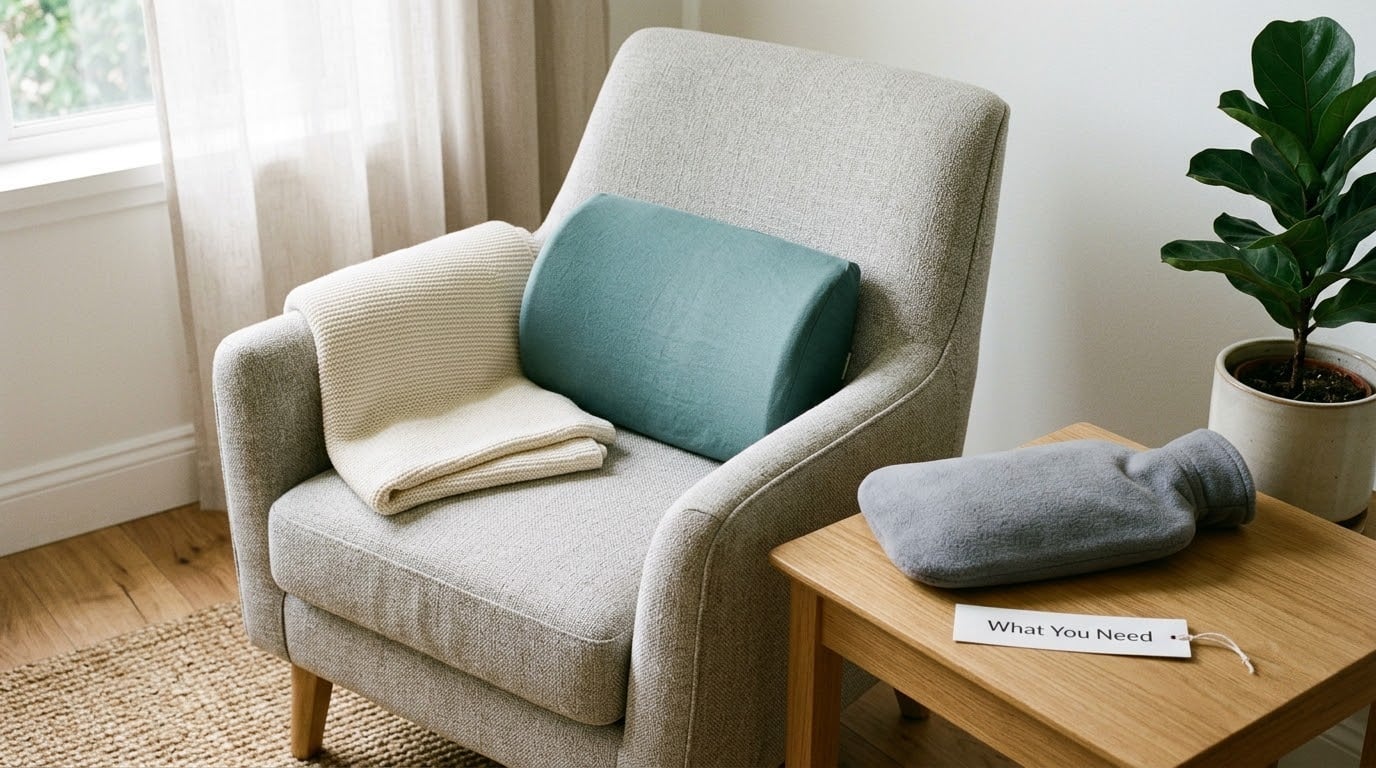
None of the items below are essential, and most households already have some version of them.
- A firm chair with back support. A dining chair with a firm back beats a soft armchair, because soft seats let you slump. If your chair has no lumbar support, a rolled towel or a small cushion behind the low back does the same job.
- Pillows and cushions. One for under your knees when lying down, one for under your belly in later months, and one firm one for the chair.
- A pregnancy-safe heat source. A hot water bottle or a heating pad set to low, plus a thin towel to put between it and your skin.
- Supportive shoes. Low heels, firm arch support, nothing that forces you to balance on a wedge.
- A stable surface for stretching. A non-slip mat on a flat floor beats carpet in socks.
Exercises and products should suit the stage of your pregnancy and any restrictions your clinician has given you. If you have a history of pelvic girdle pain, a prior back injury, or a high-risk pregnancy, ask before starting anything new.
Step-by-Step: How to Relieve Back Pain During Pregnancy
Step 1: How to Relieve Back Pain During Pregnancy Through Daily Movement
Stiffness, not damage, is usually what settles most of this pain, and that is good news for anyone learning how to relieve back pain during pregnancy. Short, frequent changes of position beat one long rest, because sitting or standing still for a long stretch lets the muscles around your lower back tire out.
Change position roughly every 30 to 45 minutes where that is practical. Stand up from a desk, walk to the end of a hallway while the kettle boils, or shift your weight and roll your shoulders back.
Watch the response, not the calendar. If a movement leaves you looser and more comfortable, it is working. If it brings sharper pain, radiating pain, or a feeling of heaviness, drop it and try something gentler.
A daily walk is the single easiest thing most people keep up. So is swimming or water-based exercise if you have access and your provider has cleared it.
Step 2: Use Gentle Pregnancy-Friendly Stretches
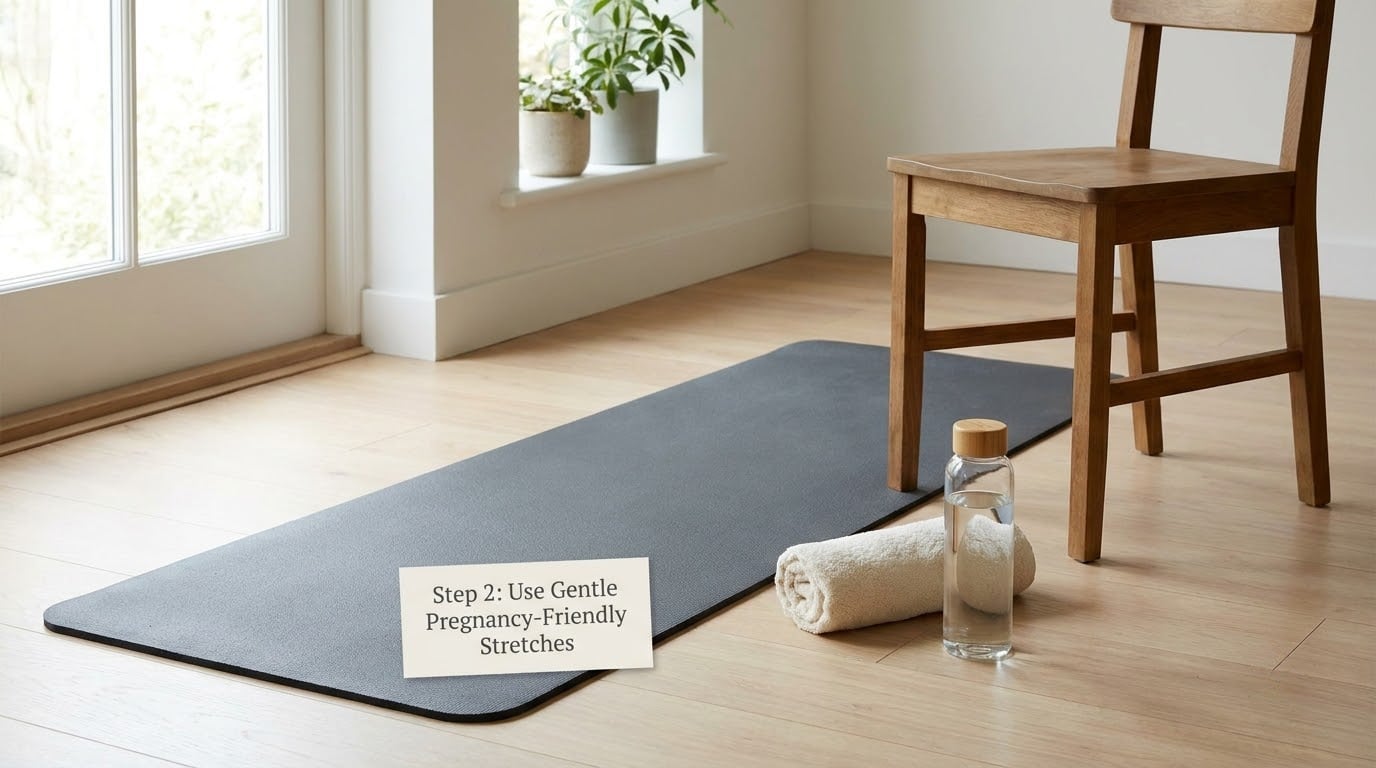
Gentle stretching keeps the hips and lower back mobile, which is what makes posture changes feel possible later. Movements commonly used in prenatal classes include walking, pelvic tilts, the cat-cow stretch on hands and knees, and supported hip openers such as a wide-knee position with forearms on a chair.
Work into these slowly and without forcing range. In cat-cow, the motion is small: arch gently on an inhale, round gently on an exhale. In a supported hip opener, the chest and forearms stay up so the back does not arch to compensate.
Skip the repetition counts you may have seen elsewhere. Movement quality matters more than a number when your ligaments are already looser than usual.
Stop immediately if you feel pain, dizziness, bleeding, fluid leaking from the vagina, or contractions, and do not continue anything your clinician has restricted. Call your care team if you are unsure whether what you feel is normal.
Step 3: Improve Your Posture and Lifting Habits
Your center of gravity moves forward as the uterus grows, and your lower back absorbs the difference. A neutral spine, ears over shoulders over hips, keeps the load where it belongs.
Keep heavy or awkward objects close to your body, ask for help instead of reaching, and turn with your feet rather than twisting through your spine. Those three habits remove most of the strain from ordinary home tasks.
Household examples: to unload the dishwasher, walk over and slide the basket out instead of bending from the waist and pulling it toward you. To lift a laundry basket off the floor, lean back on your thighs and keep it hugged against your belly. To get a toddler out of a high chair, move your feet under you instead of twisting.
You should feel the effort spread across your thighs and both legs, with less pressure in the small of your back. If the back takes the load, the mechanics are wrong.
Step 4: Use Heat, Cushions, and Rest Carefully
Moderate heat relaxes tight muscle. Use a heating pad on its lowest setting or a hot water bottle wrapped in a towel, and limit each application to 15 to 20 minutes. Never sleep on a heating pad, and never place one directly on bare skin.
Cold can help too. A cold pack wrapped in a cloth for 10 minutes or so suits the first day or two of a new, hot, swollen feeling, particularly after activity.
For sleep, side-resting with a pillow between your knees keeps your hips level, and a second pillow under your belly stops the weight pulling your spine forward in later months. Whatever position feels best for your circulation, change sides regularly rather than staying in one spot for hours.
Follow your own prenatal clinician’s guidance on heat and rest, and skip anything that leaves you overheated, flushed, dizzy, or uncomfortable.
Step 5: Build a Comfort Plan Around Work and Daily Tasks
Back pain at a desk and back pain from standing at a counter have different causes, so they need different fixes. For sitting, your back should touch the chair back, both feet flat on the floor or on a footrest, and knees roughly level with hips. Uncross your legs. For standing work, put one foot up on a step stool and alternate sides every 15 to 20 minutes.
In the car, slide the seat forward enough to keep a hand’s width between your knees and the dashboard, and put a small cushion or rolled towel behind your lower back.
Break household chores into smaller pieces and alternate them. A plan built with your partner, a family member, or your doula is the difference between finishing the week and stopping halfway through it. It is worth reading what a doula does during labor and delivery to see how support is usually structured, since many of the same conversations about comfort carry over to pregnancy.
Start with one change this week rather than a full overhaul. People stick with the plan they can actually keep.
Step 6: Know When to Contact Your Prenatal Care Team
Persistent, worsening, severe, or unusual pain deserves a professional assessment rather than another night of heat packs. A reasonable trigger for a routine call is pain that is not settling with rest and has lasted more than a couple of weeks.
Contact your care team promptly if you have pain with any of the following:
- Radiating pain down the leg, especially with tingling, numbness, or weakness, or pain that is worse when you walk
- Fever or chills
- Vaginal bleeding or fluid leaking
- Burning or pain with urination, which can point to a urinary tract infection
- Regular, cramping, or contraction-like pain
- Sudden sharp pain that starts without warning or follows a fall
- Pain severe enough to stop you walking, sleeping, or caring for another child
Bring your own notes on where the pain is and what makes it better or worse, along with a record of what your prenatal visits cover such as the 20 week anatomy scan, so nothing gets lost between appointments.
Common Mistakes
Pushing through sharp pain. Discomfort that builds slowly and eases with movement is one thing; pain that spikes, radiates, or lingers for hours afterward is your body’s signal to stop. Change the activity instead of arguing with it.
Treating every ache as harmless. The assumption that all back pain in pregnancy is normal is the most common reason people wait too long. Knowing the ordinary pattern, and knowing where it stops being ordinary, is what makes the difference.
Using an overheating product. A pad left on high, or one that sleeps against your skin, raises core temperature for no benefit. Low setting, towel barrier, 15 to 20 minutes.
Adopting one fixed posture. Sitting “correctly” for six hours is not better than slouching for one hour. The aim is frequent movement, not a single perfect position.
Lifting without help. Most back injuries in pregnancy happen during ordinary tasks rather than sport. Ask someone, or lower the load, before you reach.
Relying only on rest. Rest helps a flare settle, but long stretches of inactivity leave the surrounding muscles weaker, so the pain returns sooner. Pair rest with gentle movement.
Using medication without checking. Ask your own clinician about anything you take, including over-the-counter products, before you use it. What is appropriate depends on your history, your gestational age, and your care plan.
Frequently Asked Questions
When should I call my doctor about back pain during pregnancy?
Call if your pain is severe, worsening, or interfering with sleep, walking, or daily tasks, or if it has persisted for more than a couple of weeks without settling. Call promptly for pain radiating down the leg with weakness or numbness, fever, vaginal bleeding, fluid leaking, painful urination, or regular contractions. Otherwise, routine backaches that come and go with activity are common and usually improve with posture changes, gentle movement, and rest. When in doubt, a quick call costs nothing.
Is a pregnancy support belt useful for lower back pain?
Some people find a maternity support belt genuinely helpful, especially in the second and third trimesters or during longer periods of standing. It works by lifting and stabilizing the front of the pelvis, which takes some load off the lower back. It is not a cure, and the effect fades once you take it off, so it works best alongside gentle movement and posture awareness. Try one in a shop if you can, and check with your clinician if you have pelvic girdle pain, since tightness can sometimes make that worse.
Is it safe to use a heating pad during pregnancy?
Moderate heat is generally considered fine for short periods, but overheating is the concern. Use the lowest setting, put a thin towel between the pad and your skin, and limit each session to 15 to 20 minutes. Never sleep on a heating pad, and avoid very hot baths, saunas, and hot tubs, which raise core temperature. Stop if you feel flushed, overheated, dizzy, or unwell. Your own prenatal clinician should confirm what suits your pregnancy, particularly if you have been told to avoid temperature changes.
What kind of massage or stretching is generally considered safe?
Prenatal massage from a practitioner trained in pregnancy, and gentle prenatal stretching, are generally considered reasonable options. Look for someone who works regularly with pregnant clients, who supports the side-lying position, and who avoids pressure on the abdomen and deep work along the inner thigh. For stretching, movements like pelvic tilts, cat-cow, and supported hip openers are commonly used, kept slow and pain-free. Tell any practitioner about your stage of pregnancy and any restrictions from your clinician before they start.
Can pelvic girdle pain feel like back pain during pregnancy?
Yes, and the two are often confused. Pelvic girdle pain sits at the front of the pelvis, in the pubic bone or the sacroiliac joints, and is typically triggered by walking, getting out of bed, climbing stairs, or rolling over. It can spread to the lower back and hips, which is why many people describe it as back pain. A useful clue is that pelvic girdle pain is worse with activity that opens the legs and better with rest, while muscular lower back pain tends to build with prolonged sitting or standing.
When does pregnancy back pain need urgent medical attention?
Seek urgent care for a sudden severe pain, pain following a fall or injury, back pain with abdominal pain or bleeding, fever or chills, fluid leaking from the vagina, painful urination, fainting, or leg weakness or numbness that is worsening. Pain that comes with regular cramping or contractions before 37 weeks also needs prompt assessment. These can point to something that is not ordinary pregnancy back pain, and they are assessed differently from a routine ache that settles with rest and position changes.
What to Do First
Stop whatever is causing the pain right now and change position. Once you are somewhere comfortable, try a couple of minutes of gentle movement, such as a walk or a pelvic tilt, and add moderate heat for 15 to 20 minutes if that feels right for you.
Then pick one thing to carry into tomorrow: a chair with support behind the low back, a pillow between your knees, or a reminder to stand up every half hour. Small habits held consistently beat an intense week that collapses by Friday.
If the pain is not settling, or if any of the warning signs in Step 6 show up, contact your prenatal care team and describe the pain, where it sits, and what you have already tried. That is the one part of this plan you should never work around alone.
This article is educational and does not replace advice from your own doctor, midwife or physical therapist, who can account for your pregnancy and your history.