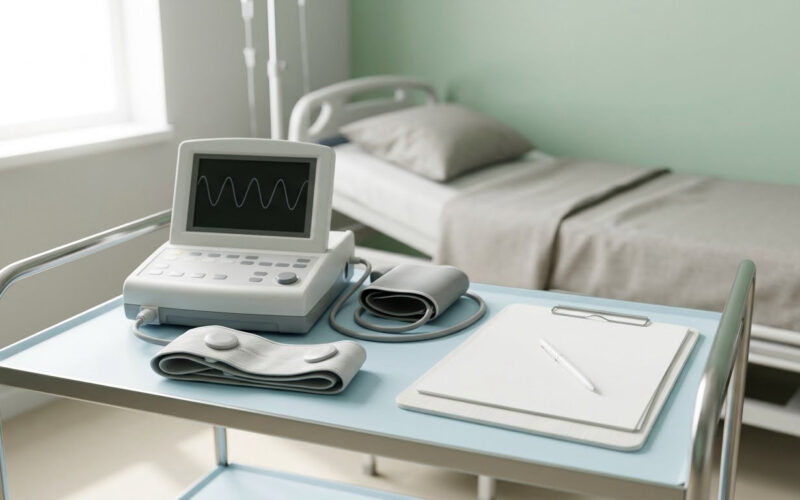
A planned cesarean is a scheduled surgery: you arrive at the hospital, meet your team, have a spinal block so you stay awake but feel no sharp pain, and your baby is born through an incision in the lower abdomen and uterus in about 40 to 60 minutes. Most families describe the whole day as faster and calmer than they expected, and by 2026 most planned cesareans are done, uncomplicated and well planned.
Knowing the sequence in advance does two useful things. It takes away the fear of the unknown, and it gives you time to ask for the things that matter to you — a clear drape, delayed cord clamping, skin-to-skin on your chest — while there is still someone who can say yes.
This guide walks through the day step by step. Every hospital organizes it a little differently and every country has its own protocol, so treat the specifics here as a map rather than a promise, and let your own obstetrician and anesthesiologist fill in the parts that apply to you.
Table of Contents
- What to Expect During a Planned Cesarean, Hour by Hour
- How Is a Planned Cesarean Different From an Emergency One?
- How Do You Prepare Before Going to the Hospital?
- Follow the fasting instructions exactly
- Shower, but do not shave
- Pack for a two to three night stay
- Sort out the practical side
- Bring your birth plan and your medication list
- Discuss medicines with your provider beforehand
- Plan for the emotional side
- What Happens at the Hospital on Arrival?
- What Happens During the Surgery?
- What Happens After Your Baby Is Born?
- How Soon Can You See and Hold Your Baby?
- What Can the Support Person Do During a Cesarean?
- What Is Recovery Like After a Planned Cesarean?
- The first 24 hours
- Things nobody warns you about
- Hospital stay and going home
- Warning signs to call about
- Questions to Ask Your Care Team Before Surgery
- Frequently Asked Questions
- How long does a planned cesarean take?
- Can I be awake during a planned cesarean?
- Can my partner be in the operating room?
- Can I hold my baby immediately after a cesarean?
- How long do I stay in the hospital after a cesarean?
- When should I call my doctor after a cesarean?
- Conclusion
What to Expect During a Planned Cesarean, Hour by Hour
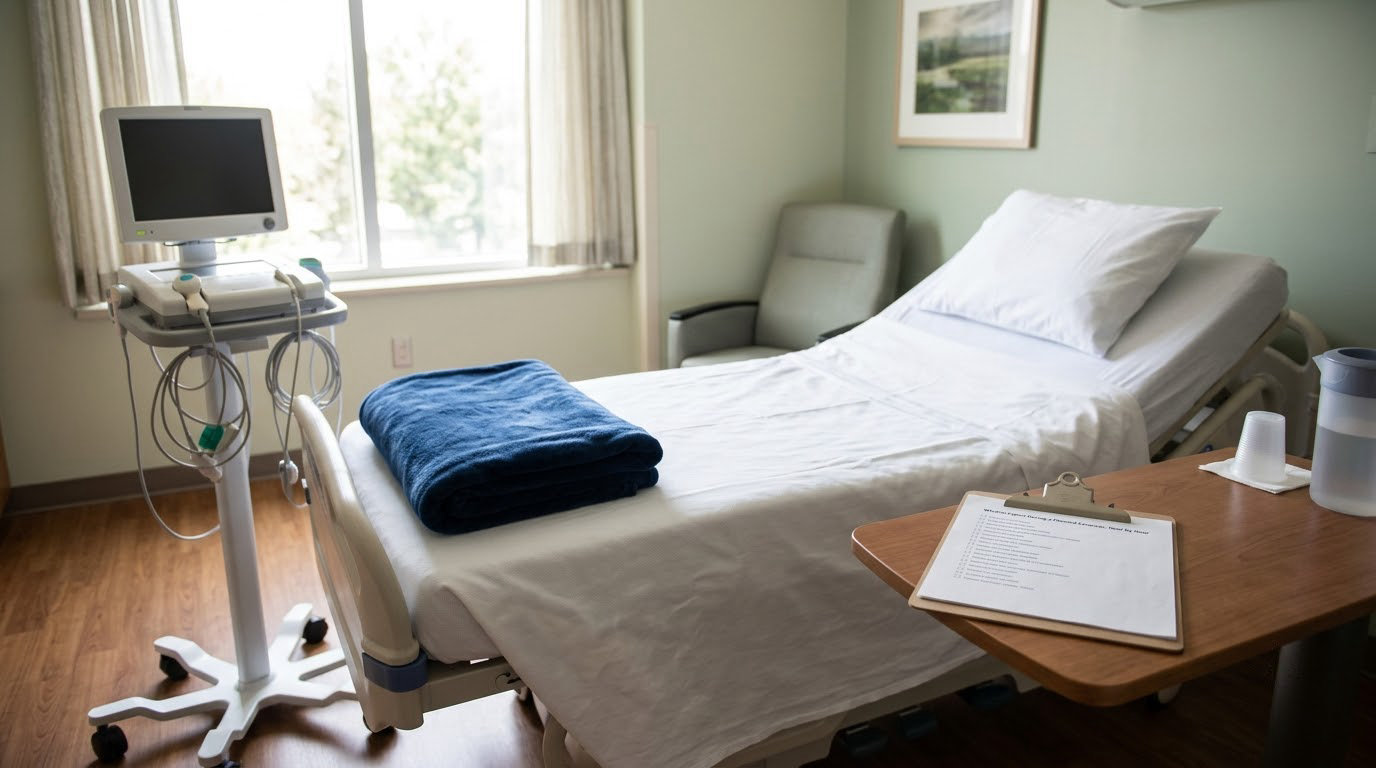
The shape of the day is fairly consistent even though the details shift. Most hospitals ask you to arrive one to two hours before your scheduled time, and most parents spend the whole day in the building.
- Arrival and check-in: you are admitted, changed into a gown, and asked to empty your bladder. A nurse takes your history and confirms the plan.
- Pre-op: IV fluids, a blood sample, antibiotics, a blood pressure cuff and monitors. A urinary catheter usually goes in at this stage.
- The anesthesia block: a spinal block, given sitting up or lying on your side, takes a few minutes. This is the part most people remember as the worst of it.
- Into the operating room: you are wheeled in on a table, tilted slightly to keep your blood pressure up, and covered with a sterile drape. A screen goes up unless you ask for a clear one.
- The surgery: the incision, the layers, the uterine opening, the baby, the cord, the placenta, the closing. Forty to sixty minutes in total.
- Birth and first contact: the baby is dried and warmed, the cord is clamped, and skin-to-skin on your chest happens in the room whenever your team can do it safely.
- Recovery room: one to three hours of monitored recovery while the spinal block wears off and your blood pressure settles.
- The ward: catheter out, first walk, first food, and usually a night or two on a mother-baby unit before you go home.
Plenty of parents tell us the surgery itself felt shorter than the waiting. Knowing the sequence is what makes the waiting bearable.
How Is a Planned Cesarean Different From an Emergency One?
The main difference is preparation. A planned cesarean is booked in advance, so you get written instructions, a fasting window, a scheduled arrival time and a chance to discuss preferences with your provider over weeks rather than minutes.
An emergency cesarean happens after labor has started or because something changes suddenly — the baby’s heart rate, bleeding, cord prolapse, a failure to progress. There is no preparation, no birth plan, and often no time to wait for anesthesia to take effect.
The surgery itself is broadly the same either way: an incision through the abdomen and uterus, delivery of the baby and placenta, then closure. What changes is the atmosphere. Planned means people are calm and on time. Emergency means everyone is moving quickly.
If your labor starts early or your date gets postponed, the operation still happens — it just stops being planned. Ask your team in advance what they would do in that situation, and have your bag packed by the door from a couple of weeks out.
How Do You Prepare Before Going to the Hospital?

Preparation is mostly logistics, and almost all of it is done the night before. Here is what people tell us actually mattered.
Follow the fasting instructions exactly
Most hospitals ask you to stop eating six to eight hours before surgery and stop clear fluids at a set time, often midnight. The rule exists because anesthesia needs a protected stomach. It is the single most common reason a scheduled cesarean gets delayed, so follow the instruction your hospital gave you rather than a general internet rule.
Shower, but do not shave
A shower the night before or the morning of is fine and often encouraged. Do not shave or wax the area yourself. Hospitals clip hair if they need to, and home shaving causes skin irritation and small cuts that raise infection risk.
Pack for a two to three night stay
Bring comfortable clothes that open at the front or pull up easily, a phone charger with a long cable, toiletries, a pillow, snacks for your partner, and anything that makes waiting bearable. You will wear a hospital gown for most of the day, but you choose what you wear home.
Sort out the practical side
Confirm who is driving you, since you will not be discharged to drive yourself. Arrange childcare for your existing children. Make sure someone knows where the hospital is, which entrance to use, and your provider’s out-of-hours number.
Bring your birth plan and your medication list
Two copies of your cesarean birth plan, a written list of every medication and supplement you take, and any notes from your provider. Write the preferences you care about most on one small card so you can hand it over instead of reciting it while nervous.
Discuss medicines with your provider beforehand
Ask which of your usual medications to take or pause, which to bring, and what to avoid. Blood thinners and some supplements are usually handled differently before surgery. Do not stop anything on your own — ask first.
Plan for the emotional side
A cesarean birth can carry grief for the birth you pictured, and that grief is real even when the medical reason was clear. Many parents find it helps to say out loud, before the day, that disappointment is allowed and that a surgical birth is still a birth.
What Happens at the Hospital on Arrival?
You check in at labor and delivery, usually two hours before your scheduled time. The first hour is administrative and calm, and it is the right hour to ask every question you thought of on the way in.
A nurse confirms your history, your allergies and the plan for the day. You change into a gown, empty your bladder, and have an IV placed in your hand or arm for fluids and antibiotics. A blood sample is often drawn to check your blood count and blood type, because a surgical birth carries a small risk of needing a transfusion.
A urinary catheter, also called a Foley catheter, is usually placed to keep your bladder empty. It feels uncomfortable for a moment and then you stop noticing it. It typically comes out on the ward the next day.
You will be taken to a delivery room or pre-op holding area, and the anesthesiologist will come by to discuss the block. They explain what you will feel, ask about previous anesthesia experiences, and often give an anti-sickness medication so your stomach is settled before the spinal. You also sign a consent form. Signing is a conversation, not a formality — ask questions before you sign, not after.
What Happens During the Surgery?
You are awake. Most planned cesareans use a spinal block or an epidural, which numbs from the waist down while you stay conscious, and general anesthesia is used only when it is medically necessary or as an emergency.
The spinal block itself is the part people brace for. You sit up on the edge of the table or curl onto your side, the anesthesiologist cleans your lower back, and you feel a quick pinch and pressure. Many parents say this pinch was the worst moment of the whole day, and that the surgery itself was pressure and tugging rather than pain. The block is checked before you go in, and you will be asked to describe how cold or heavy your legs feel.
In the operating room you are positioned on your back on a narrow table and tilted slightly to one side, which keeps your blood pressure from dropping. Your abdomen is painted with an antiseptic, your hair may be clipped, and the team drapes the area. A sterile screen goes up between you and the surgical field. Ask for a clear drape if seeing the birth matters to you, and ask early, before you are covered.
Then the surgery. Most planned cesareans use a low transverse incision, a horizontal cut low on the abdomen, often called a bikini-line incision, roughly 10 centimeters or about the length of a popsicle stick. The abdominal muscles are separated, not cut, and moved aside. Then the uterine incision, the baby is lifted out, the cord is clamped and cut, the placenta is removed, and the layers are closed with suture, staples, glue, or a combination of them. Total operating time is usually 40 to 60 minutes.
Who is in the room matters too. Typically there is your obstetrician, the surgeon, the anesthesiologist, a scrubbed nurse, a circulating nurse, a nurse for your baby, and your support person if your hospital allows it. That is seven or eight people. It feels like a crowd because the room is small and everyone is working.
What Happens After Your Baby Is Born?
The first minute is loud. Your baby comes out and the room fills with the sound of crying, which many parents describe as the best and most shocking moment of the day.
The cord is clamped and cut. You can ask in advance for delayed cord clamping, where the cord is left intact for a short time before cutting, and many hospitals now do this routinely for planned cesareans, but policies vary, so ask yours. If your support person is present and you want it, they can cut the cord.
Your baby is dried, warmed and assessed by the newborn team, who check breathing, heart rate, muscle tone, skin color and reflexes. These are scored on the APGAR scale at one and five minutes. That assessment takes about five minutes and is routine for every baby, whether born surgically or vaginally.
Skin-to-skin on your chest in the operating room is possible in most planned cesareans, and many families call it the best part. One honest caveat from parents: you are lying flat and a newborn on your chest is heavier than you expect. Plenty of partners hold the baby alongside you instead, and that is a good plan too.
You then go to the recovery room, or PACU, for one to three hours, with monitors on your blood pressure, heart rate and incision. Your baby usually goes to a warmer nearby or with your partner, and rejoins you in your room once you are both stable.
How Soon Can You See and Hold Your Baby?
Usually within minutes. In a straightforward planned cesarean with regional anesthesia, you will hear your baby cry in the room, have skin-to-skin on your chest before you leave the operating room, and hold your baby for extended skin-to-skin contact once you are in recovery.
Three things can change that. If you had general anesthesia, you will meet your baby fully awake in recovery rather than immediately. If your baby needs support — breathing help, warmth, or a check in the neonatal unit — the newborn team will take your baby straight to them, and skin-to-skin happens later when your baby is settled. And if your surgery takes longer than expected, the team will prioritize your stability over keeping everything to the ideal order.
All three are ordinary, non-emergency situations. Ask your provider in advance what their usual practice is and what happens if your baby needs extra support, so you know the plan rather than reacting to it.
What Can the Support Person Do During a Cesarean?
Your partner has a real job, and it starts before you walk in. Most hospitals require them to change into scrubs, remove jewelry, wash their hands and sometimes sign in as a designated person. Some limit the number of people in the room.
Inside, the useful things are small and specific. Bring your phone and know the camera settings beforehand, because the first photo is often taken seconds after birth. Ask the nurse early about skin-to-skin and delayed cord clamping on your behalf, while the birthing parent is focused on breathing through the block. Say the name of the baby out loud. And keep one hand on your partner’s arm or shoulder, because the flat table, the cold room and the bright lights are more unsettling than the surgery itself.
Be ready to be asked to step outside. That happens for anesthesia, for safety, or when the newborn team needs space, and it is routine rather than a sign that something went wrong.
Partners also need permission to feel whatever they feel. In our experience the operating room is intense, loud and emotionally heavy, and many people are not sure whether to watch or look away. Both are fine. Watching is not a test of love.
What Is Recovery Like After a Planned Cesarean?
A cesarean is major abdominal surgery, and recovery is slower than most first-time parents expect. The first three to seven days are the hard part, mainly because of getting in and out of bed rather than the incision itself.
The first 24 hours
You are up and walking within hours, usually with help and often within a few hours of arriving on the ward. The catheter comes out, your IV comes down, and you start eating normal food. You will be given a combination of pain medicines, and many parents find over-the-counter paracetamol and ibuprofen together more helpful than anything stronger. Ask your team what you are getting and how often.
Things nobody warns you about
Shivering is extremely common after a spinal block and is not a sign of fever or a problem. Nausea can come on with the block or when you start moving. Numbness around your belly button and along the incision can last for weeks and feels strange. Gas pain in the first few days is real, and walking is the treatment your team will keep pushing you toward, however unwelcome that sounds.
Hospital stay and going home
Most people stay two to four nights. You go home once you are walking steadily, passing urine on your own, eating, and managing pain with oral rather than intravenous medication. Showering is usually allowed once the dressing is off or waterproof.
Common guidance, though your provider’s instructions win: nothing heavier than about 10 pounds for the first few weeks, no driving for around two weeks, and a follow-up appointment at about six weeks. Many second cesareens are quicker, calmer and less painful than the first, which surprises people who expected the opposite.
Warning signs to call about
Contact your provider or your local emergency service if you have a fever, increasing redness or swelling or discharge from the incision, pain that is getting worse rather than better, heavy or foul-smelling vaginal bleeding, a painful or swollen calf, chest pain or breathlessness, difficulty breathing, or a severe headache or visual change. These are worth a phone call. Waiting rarely improves them.
Recovery also has an emotional arc. Some days feel triumphant and other days feel flat, and both are common in the weeks after a surgical birth. If low mood or anxiety lasts beyond two weeks or affects daily life, tell your provider or midwife.
Questions to Ask Your Care Team Before Surgery
These are worth writing down and bringing to an appointment, because you will not remember them in the pre-op room.
- What time should I arrive, and what time is my procedure?
- What are my fasting rules, in writing, and when do they start?
- Which of my medications should I take, pause, or bring?
- Which anesthesia do you expect to use, and what will I feel?
- Is a clear drape possible, and when do I need to ask?
- Do you clamp the cord after a delay for planned cesareans?
- Can my support person be in the room, and what do they need to do?
- Can my support person cut the cord?
- Can I have skin-to-skin in the operating room, and what happens if my baby needs support instead?
- When will I first hold my baby, and where will we spend the first hours?
- Can I bring my own music, and can someone narrate what is happening?
- What pain medicines will I have, and how often can I take them?
- When do the catheter and IV come out?
- What are my lifting and driving limits, and when is my follow-up?
- What happens if I go into labor early or the date is cancelled?
One framing question makes the rest easier: which of these do you already do routinely? Most of your wish list is probably already standard practice, and knowing that in advance means you can relax about it.
Frequently Asked Questions
How long does a planned cesarean take?
The operation itself usually takes 40 to 60 minutes from the first incision to the last stitch, and often longer if there is unexpected bleeding or the baby needs help out. Add check-in and pre-op before it and one to three hours of monitored recovery afterward, so budget most of a day. Babies sometimes arrive ten minutes before the surgeon has started closing.
Can I be awake during a planned cesarean?
In most planned cesareans, yes. A spinal block or epidural numbs you from the waist down while you stay awake, so you hear your baby’s first cry and feel skin-to-skin within minutes. You will feel pressure, pulling and pushing but no sharp pain. General anesthesia is reserved for specific medical reasons or emergencies, because it means you miss the birth entirely.
Can my partner be in the operating room?
Most hospitals allow one support person in the operating room for a planned cesarean, though policies vary and some limit visitors. Your partner will usually change into scrubs, remove jewelry, wash their hands and sign in. They may be asked to step out for anesthesia or newborn checks. Ask your hospital’s visitor policy in the weeks beforehand rather than on the morning itself.
Can I hold my baby immediately after a cesarean?
Usually, yes. In a straightforward planned cesarean with a spinal block, skin-to-skin on your chest happens in the operating room and continues in recovery. If you had general anesthesia or your baby needs support in the newborn unit, contact happens once you are both awake and settled. Both are routine paths, not problems with your birth.
How long do I stay in the hospital after a cesarean?
Most people stay two to four nights. Going home usually depends on walking steadily, eating, passing urine without the catheter, and managing pain with tablets instead of an IV drip. Your own length of stay is set by your provider and is longer after complications. Plan for a slow first week at home rather than assuming you will be fully mobile by the time you get through the door.
When should I call my doctor after a cesarean?
Call your provider if you have a fever, increasing redness, swelling or discharge from the incision, pain that is worsening instead of easing, heavy or foul-smelling bleeding, a painful or swollen calf, or chest pain or breathlessness. A severe headache or vision change also needs a call. Severe symptoms such as chest pain or trouble breathing warrant local emergency services rather than waiting for an appointment.
Conclusion
A planned cesarean is a booked surgery with a predictable shape: arrive early, settle in, have a block, watch or do not watch a drape go up, hear your baby, and then spend several days recovering from abdominal surgery. The logistics are the part worth planning. The emotional part is worth giving permission to.
Plenty of parents describe a planned cesarean as one of the best days of their life, and plenty of others cry about the birth they did not get. Both are normal, and neither is a verdict on how well you mothered your child.
The first thing to do is simple: call your provider’s office and ask for your arrival time, your fasting rules, and their policy on skin-to-skin, delayed cord clamping and support people in the room. Everything else on the list above can wait for that one conversation.