
To find a hospital that supports VBAC, you research the facility itself, not just the doctor: read its written trial-of-labor policy, check its published cesarean and trial-of-labor rates, confirm who covers labor when your provider is off, and confirm the surgical and anesthesia backup around the clock. Start at 12 to 16 weeks, narrow to two or three hospitals by 28 weeks, and lock in your choice by 34 weeks so insurance and referral paperwork can follow you.
Most people start this search from a bad feeling they cannot name. A nurse mentioned the word “repeat” on the second visit. A friend delivered in an operating room after nine hours of labor. Someone at work was told flatly that her hospital “does not do VBAC.” That feeling is worth taking seriously, because hospital policy can override a supportive doctor. A provider who is ready to support a vaginal birth after cesarean still has to work inside a facility that permits it.
One thing to sort out first: this guide helps you evaluate facilities and prepare questions. It cannot tell you whether you are a candidate for a vaginal birth after cesarean, because that is a clinical decision made with your own provider based on your records. If anything in your history is unclear, ask to see your operative report from your previous delivery.
Updated for October 2026. Reviewed for clinical accuracy by a board-certified obstetrician-gynecologist. In an emergency, always call 911 or go to the nearest emergency department.
Table of Contents
- What You Need
- Step-by-Step: How to Find a Hospital That Supports VBAC
- Start With a Short List of Hospitals
- Ask the Hospital About Its VBAC Policy
- Confirm the People Who Support Labor
- Ask What Happens During Labor and Emergencies
- Look for Respectful, Informed Decision-Making
- Check Practical Access and Backup Plans
- Common Mistakes to Avoid
- Frequently Asked Questions
- Do hospitals actually allow VBAC?
- How do I get approved for a VBAC?
- What questions should I ask during a hospital tour?
- Can I switch hospitals or providers during my pregnancy for a VBAC?
- Is a birth center a safe place to have a VBAC after a cesarean?
- What can disqualify someone from a VBAC?
- Conclusion
What You Need
Gather this before you contact a single hospital. It turns a vague worry into a short, specific list of requests, and most of it takes one afternoon.
- Your previous delivery record. You want the operative note and the exact incision type, plus the reason for the cesarean. Low transverse and classical incisions lead to very different conversations.
- Your insurance information. Have the member ID, the network name, and a clear sense of your deductible and out-of-pocket maximum ready before you compare facilities.
- Your current provider’s name and practice group. On-call schedules decide who actually shows up at 3 a.m.
- A written list of your non-negotiables. Epidural access, water immersion, a doula, an unmedicated birth, delayed cord clamping. Pick the two that matter most, because every hospital will say yes to some of these.
- A notebook or voice recorder. You will get more than you can remember, and you will want the exact words your questions produced.
- Pen and paper for rates. Write down the trial-of-labor rate, the repeat cesarean rate, and the name of the person who gave them to you.
Also decide who else is in the room of the decision. A partner, a parent, a close friend who has had a VBAC, or a VBAC-trained doula will each catch different details. People in the r/vbac and r/CsectionCentral communities repeat the same thing: the doula or the childbirth educator is often the person who knew which local clinicians were genuinely supportive.
Step-by-Step: How to Find a Hospital That Supports VBAC

Start With a Short List of Hospitals
Start with a short list of three to five hospitals within a radius you can actually reach in labor, then cut it down with data. The free public sources below take about an hour across the whole shortlist and replace most of the guessing that comes from reading marketing copy. Every person trying to figure out how to find a hospital that supports VBAC hits the same wall here, so build the shortlist from geography and coverage first, then let the numbers do the sorting.
| Source | What it shows you | How to look up your hospital |
|---|---|---|
| Care Compare on Medicare.gov (formerly Hospital Compare, run by CMS) | Overall and maternity-specific quality measures, including delivery method for some stays | Search the hospital name, then open the women’s health or maternity section |
| cesareanrates.org | Facility-level cesarean rates assembled from public discharge data, updated over time | Look up your hospital and city directly |
| Your hospital’s own quality report | Often the most detailed version, including trial-of-labor data | Search the site for “quality”, “patient outcomes” or “VBAC” |
| Your state perinatal quality collaborative | Regional improvement work, sometimes with facility-level dashboards | Search your state name plus “perinatal quality collaborative” |
Interpret those numbers carefully. A hospital cesarean rate includes people who planned a cesarean from the start, so a high rate does not automatically mean low VBAC support. What you are looking for is the trial-of-labor rate: the share of people who were eligible and actually attempted labor. Quality benchmarks in maternity care improvement work have called for at least 60% of eligible patients to be offered a trial of labor after a prior cesarean, with 70% to 80% treated as a reasonable goal, so a facility far below that range deserves a direct question.
Then add local knowledge. Search your city name plus “VBAC hospital” and join a local Facebook or Reddit group; parents post city-specific lists there constantly, because no national directory exists. Check whether an International Cesarean Awareness Network chapter runs near you, and ask a VBAC-trained doula directly, which one or two hospitals in your area actually support trial of labor. Keep in mind that this is anecdotal evidence, so treat it as a source of names rather than proof of a policy.
Ask the Hospital About Its VBAC Policy
Ask the hospital for its current written VBAC or trial-of-labor policy, and ask for the version with a date on it. The request is simple: “Could you email me your current trial of labor after cesarean policy, including any gestational-age limits and induction criteria?” Most labor and delivery units will send it without a fight, and the dated document gives you something concrete to hold people to.
Green-flag language looks like this:
- Eligibility framed around clinical factors, with individualized discussion of risks and preferences.
- No fixed cutoff that stops labor before 39 or 40 weeks without a clinical reason.
- Willingness to induce for medically necessary reasons, including when a membrane sweep or cervical ripening is appropriate.
- Language about mobility, position changes, non-pharmacologic comfort measures, and continuous labor support.
- Acknowledgment that continuous electronic fetal monitoring is used, and an explanation of why, rather than a blanket rule with no reasoning.
Red-flag language looks different. Watch for a requirement that you must go into spontaneous labor before 39 weeks with no clinical justification, a mandatory external cephalic version before a trial is allowed, a promise that induction is “not available” for people with a prior cesarean, and any wording that makes VBAC conditional on the current cesarean rate at that hospital staying below a threshold. Also watch for “we only allow VBAC in certain circumstances,” which pushes the decision out of the room and into an administrative committee.
If the policy is vague, ask a pointed follow-up in writing and keep the reply. A hospital that treats the question seriously will tell you what triggers a change in plan and who makes the call.
Confirm the People Who Support Labor
Confirm who will actually be in the room with you. Nurse staffing matters as much as the physician. Ask whether you are likely to have a nurse assigned primarily to you during active labor, what the nurse-to-patient ratio is on the night shift, and whether continuous labor support from your doula or partner is permitted, including overnight and during an emergency.
Next, get specific about coverage. Ask which clinicians cover your hospital when your provider is unavailable, whether every member of that on-call group is willing to support a trial of labor, and how often a clinician from another group attends instead. In practices built around a single partner, the supportive doctor you chose may never be the one who arrives. TheVBACLink frames this as the difference between VBAC-supportive and VBAC-tolerant care, and it is the most common complaint in the parenting forums: a supportive doctor paired with a group that will not follow through.
Anesthesia and neonatal coverage round out the picture. Ask whether an anesthesiologist is physically in the hospital around the clock or merely on call from home, whether there is an on-site blood bank, and whether a neonatal intensive care unit is on site or reachable by a short flight.
Provider type is a reasonable tiebreaker rather than a guarantee. Obstetrician-gynecologists, family physicians, maternal-fetal medicine specialists and certified nurse-midwives all attend VBACs, and midwife-led practices often have lower trial-of-labor cutoffs because that is how they practice. Ask about experience with your specific situation rather than assuming from credentials. If you want a midwife, the American College of Nurse-Midwives directory and midwifery organizations by state are reasonable places to start.
Ask What Happens During Labor and Emergencies
This is the step that separates a hospital that allows a VBAC from one that supports it. Ask how routine labor is managed, how often cervical checks happen, whether you can move and change position, whether an intrauterine pressure catheter can be used, and how decisions about augmentation get made.
Then ask the emergency questions out loud, because how a hospital answers the rare scenario tells you more than its brochure.
| Criterion | What a supportive hospital describes | Red flag |
|---|---|---|
| Trial-of-labor rate | 60% or higher among eligible patients, with 70% to 80% as a stated goal | No number available, or a rate well under 50% |
| Emergency surgery | In-house obstetrician, 24/7 anesthesia, operating room response measured in minutes | Anesthesiologist on call from home, no stated OR response time |
| Blood and neonatal care | On-site blood bank, on-site or closely linked neonatal intensive care | Vague answers, or neonatal intensive care requires a helicopter |
| Labor management | Mobility, position changes, birth positions, non-intervention comfort options | Bed rest, continuous monitoring with no explanation, no movement policy stated |
| Induction | Gentle induction considered for medically necessary reasons with risks explained | Outright refusal, or induction only after a specific arbitrary date |
| Decision-making | Benefits, risks, alternatives and uncertainty all discussed in writing | Risks of a repeat cesarean never mentioned |
| Support people | Doulas and partners welcome, including overnight | Visitors limited to two, doulas treated as visitors |
Ask about operative vaginal delivery, meaning vacuum or forceps assistance, and how that decision would be handled. Ask what the escalation process looks like: who is called, at what threshold, and what happens if a decision has to be made in the next few minutes. You are not asking them to predict the future. You are asking whether they have a rehearsed path.
Look for Respectful, Informed Decision-Making
Shared decision-making is harder to measure than a rate, and it is the one most likely to change your actual experience. Watch for a clinician who names benefits, risks, alternatives and uncertainty for both paths, including the risks of a repeat cesarean, not only the risks of a trial of labor. ACOG’s guidance on cesarean delivery on labor is built around exactly this conversation, and a provider who cannot discuss the downside of surgical delivery is not having a real discussion with you.
Ask directly: “What would make you recommend a cesarean during my labor, and who would make that call?” Then ask what happens if you decline a recommendation. Informed refusal is a legitimate part of consent, and how a unit handles it is a reasonable proxy for how it will handle everything else.
Bring your birth trauma into this conversation if you have it. Many people who had an emergency cesarean were traumatized by the experience itself, and that changes what “support” means. Ask about options during the procedure, early skin-to-skin, and whether a support person stays with you if a cesarean becomes necessary.
Check Practical Access and Backup Plans
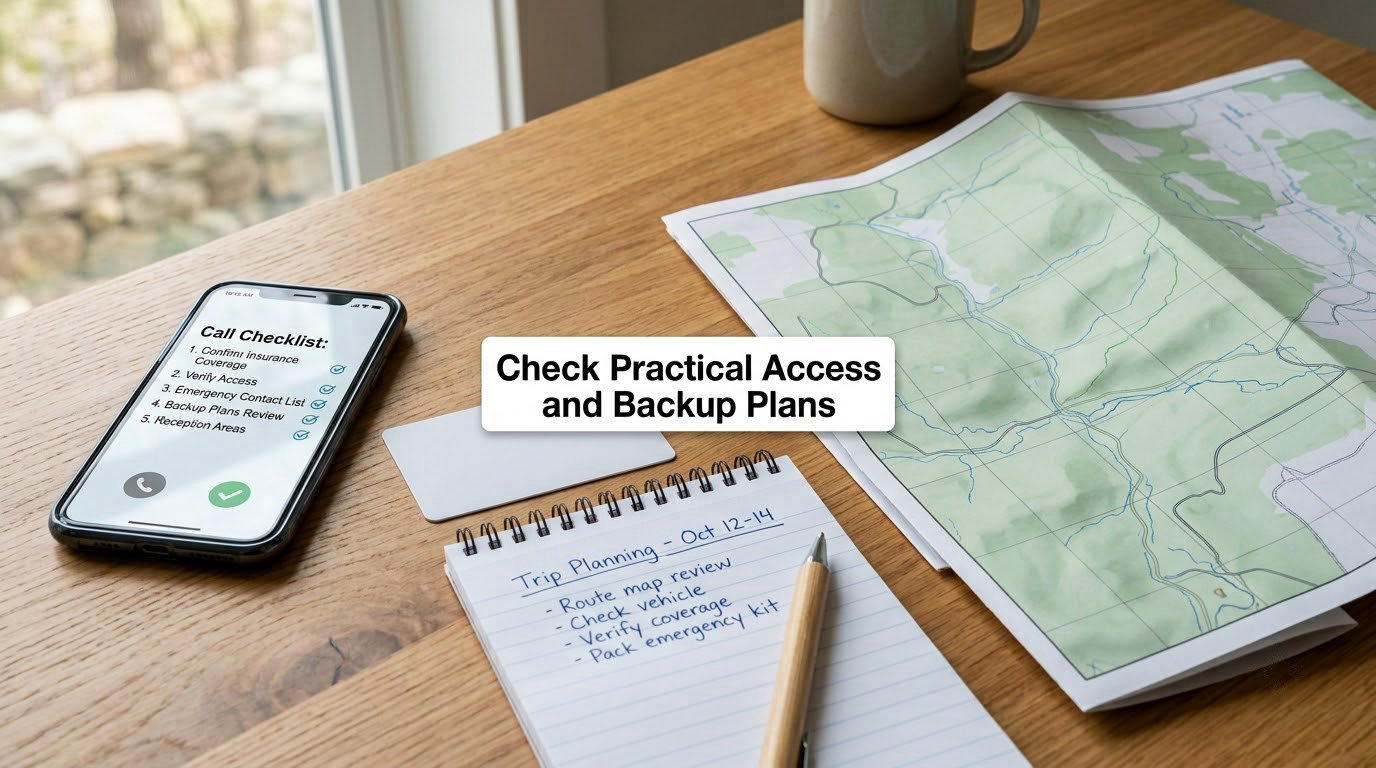
Support you cannot reach is not support. Verify that your insurance covers the facility and that the facility is in network, ask whether a referral or prior authorization is required, and ask what happens to your coverage if you transfer in labor. If the VBAC-supportive hospital is out of network, get a written cost estimate before you commit, and check whether your plan’s out-of-pocket maximum applies out of network, because that single detail changes the arithmetic more than anything else.
Then look at logistics. How far is the drive in the worst case, and is there a second hospital in the same system with the same policy, in case you deliver while visiting family? What are the visiting rules, including for a doula? Are there VBAC-specific prenatal classes? Is there a written transfer agreement with a freestanding birth center, and if you are considering a birth center, how long is the drive to the backup hospital in real traffic at 2 a.m.?
Finally, plan for the plan changing. Ask what happens if you arrive in labor and the clinician on call disagrees with your plan. Patients can request a change of provider or a transfer of care, and in most settings this can be raised at any point, including during labor, though it becomes harder once monitoring has started. Write the question and the answer down while you are still pregnant, and give a copy to the person who will be with you.
Common Mistakes to Avoid
Most wasted time comes from a handful of predictable errors, each with an easy fix.
Trusting marketing language. A page that says “we support VBAC” tells you almost nothing. Fix: ask for the policy, the trial-of-labor rate, and the anesthesia coverage in the same conversation. Facilities that will not produce numbers have given you an answer.
Asking only whether cesareans are required. The useful question is not whether a cesarean is permitted when there is a complication, which every hospital will say yes to, but what happens during a labor that is slow, and whether a scheduled repeat cesarean is offered on a date rather than a plan. Fix: ask what percentage of people with your exact history were offered a trial.
Skipping the labor and delivery conversation. Calling scheduling and getting a brochure is not the same as talking to the nurse manager of the unit. Fix: ask to speak with the nurse manager or a VBAC nurse educator, and ask for the scheduled tour.
Confusing facilities with people. A wonderful doctor at a hospital with no trial-of-labor policy has nowhere to go. Fix: screen the hospital first, then the clinician, in that order.
Waiting too long. Switching insurance mid-pregnancy, transferring records, and re-establishing care all take time. Fix: aim to have your decision made by 28 to 34 weeks, earlier if you are leaving a network or a state.
Skipping the insurance check. A supportive hospital 45 minutes away that leaves you with an open-ended bill is a different plan. Fix: get a written cost estimate and confirm network status before you sign anything.
Treating a birth center as an automatic answer. Not every birth center takes people with a prior cesarean, and not every one has written transfer agreements or accreditation. Fix: ask whether they have ever cared for a VBAC, how many, what their transfer agreement with the backup hospital says, and whether they hold Commission for the Accreditation of Birth Centers accreditation or American Association of Birth Centers membership.
One more worth naming: doing this alone. Bring your doula, your partner, or a VBAC-experienced friend to the tour. Fresh ears catch the hedged answers, and they remember what was said afterward.
Frequently Asked Questions
Do hospitals actually allow VBAC?
Most hospitals do allow a trial of labor after a cesarean, but the details vary enormously and the deciding factor is often the facility rather than the doctor. Some units have no gestational cutoff, will consider induction for medical reasons, and treat a VBAC as a normal birth. Others set a date past which labor will not be started, or require spontaneous labor first. Get the written policy and the trial-of-labor rate before you commit.
How do I get approved for a VBAC?
There is no formal approval process at most hospitals. Whether you are a candidate is a clinical decision made by your provider based on your prior incision type, the reason for your previous cesarean, how many you have had, and your current pregnancy. What you are really looking for is a provider willing to counsel you through that assessment. If a clinician seems hesitant, ask what specific factor concerns them and whether a maternal-fetal medicine consultation would clarify it.
What questions should I ask during a hospital tour?
Ask what percentage of eligible patients are offered a trial of labor and what the repeat cesarean rate is. Ask whether labor can be induced or augmented for medical reasons after a prior cesarean, and whether there is a gestational cutoff. Ask whether an anesthesiologist is in the building around the clock, whether an obstetrician is in house, how fast the operating room can be activated, and whether a doula is allowed to stay during labor.
Can I switch hospitals or providers during my pregnancy for a VBAC?
Usually yes, and earlier is easier. Notify your current provider, request a copy of your records including your prior operative report, and establish care with the new hospital so your history, monitoring, and blood type are already in their system. If you are switching insurance networks, check open enrollment timing first. You can also raise a change of provider or a transfer of care during labor, but it is far simpler before you arrive.
Is a birth center a safe place to have a VBAC after a cesarean?
It depends entirely on the center. Ask whether they have cared for people with a prior cesarean and roughly how many, whether they hold Commission for the Accreditation of Birth Centers accreditation, and whether there is a written transfer agreement naming the backup hospital. Ask for the realistic drive time to that hospital at 2 a.m. A center with experienced VBAC staff and a short, rehearsed transfer route is a different proposition from one that has never done it.
What can disqualify someone from a VBAC?
The usual clinical factors are a prior classical or vertical uterine incision, a previous cesarean for a reason likely to recur, some placenta presentations, certain medical conditions, and previous birth trauma involving significant uterine injury. Prior low transverse incisions and a non-recurring reason, such as breech position or fetal distress, generally do not rule it out, and many people with two prior low transverse incisions are offered a trial. Your own provider reviews your operative report to make this call.
Conclusion
Start by requesting the written VBAC policy, dated, from the labor and delivery unit, not from the marketing team. That one document settles more of how to find a hospital that supports VBAC than any tour, brochure, or secondhand opinion will. Then compare what you find against the scorecard: trial-of-labor rate, induction flexibility, in-house anesthesia, operating room response, blood bank, neonatal care, and mobility in labor.
Once you have picked the hospital, book a focused conversation with the labor and delivery team about your specific history, ask about the on-call group, and confirm your backup and transfer plan in writing. That conversation takes an hour and it is the difference between a policy surprise on delivery day and a plan you already understood.