Most people overspend on a baby registry because of the list, not the prices. To learn how to make a baby registry without overspending, set your total before you open a single product page, list only what you would buy yourself if nobody bought you a thing, and spread that list across several price points so a guest spending twenty dollars feels as welcome as one spending two hundred. Budget an hour for the setup and another for the edits.
Creating a registry is free at every major retailer, so the tool is not where your money goes. What costs you money is a default list built around premium gadgets, oversized clothing and three versions of the same essential, all of which arrive gift-wrapped whether you needed them or not.
That pattern comes up constantly in parent communities. On r/pregnant, people describe registry building as taking forever because the sheer number of choices is overwhelming. In one Facebook group for parents with a spring baby, a registry meant to make shopping easier ended with the family holding five bathtubs, each one pricier than the single tub they had originally asked for. Plenty of parents on r/Anticonsumption take the opposite route and decline registries altogether, because they already have what they need.
Updated for 2026.
Table of Contents
- What You Need
- Step-by-Step: How to Make a Baby Registry Without Overspending
- Step 1: Set a firm registry budget
- Step 2: Identify the essentials before anything else
- Step 3: Add practical items across a few price tiers
- Step 4: Remove duplicates, preferences, and unnecessary upgrades
- Step 5: Add gift alternatives that do not require a purchase
- Step 6: Share the registry with clear spending boundaries
- Step 7: Track gifts, purchases, and price changes
- Common Mistakes
- Mistake 1: Registering before checking what you already have
- Mistake 2: Filling the registry with designer or premium versions
- Mistake 3: Making the registry feel like a shopping demand
- Mistake 4: Ignoring taxes, shipping, returns, and warranty costs
- Five Tips to Keep Gifts and Spending Under Control
- Frequently Asked Questions
- How much should I spend on a baby registry?
- What items should not be put on a baby registry?
- How do you make a registry when you already received gifts?
- Is it okay to ask for expensive baby-registry items?
- What is a good registry budget for a first-time parent?
- Should You Make a Baby Registry at All?
- How Do You Ask People Not to Buy Gifts?
- Should a Baby Registry Include Expensive Items?
- How Do You Handle Gifts You Do Not Need?
- How Can I Protect Privacy When Sharing a Baby Registry?
- Conclusion: Start With Your Real Budget and Biggest Need
What You Need
Five things, and none of them are baby gear. Sorting these out first is what keeps the rest of the process honest.
- A realistic total for the first few months of baby costs, written as one number you are actually willing to spend.
- A prioritized list of the things you will use in the first 90 days, kept somewhere outside the registry.
- A decision about registry format: one universal registry that pulls from several retailers, or a single-retailer list.
- A privacy preference, decided before anyone has a link.
- A simple tracker, even if it is a spreadsheet with four columns: item, price, gift status, remaining budget.
The first item is the one people skip, and skipping it is how the overspending starts. Without a number, every item on the list feels equally defensible. With a number, some items have to lose. If money is already tight this year, it helps to look at the wider picture first, including guides like what IVF costs without insurance, because fertility care and new-baby budgeting land in the same household budget more often than people expect.
Keep the list and the tracker separate from the registry itself. If you build the registry from scratch while browsing, you will end up with whatever the algorithm surfaced, and the algorithm is paid to surface expensive things.
Step-by-Step: How to Make a Baby Registry Without Overspending
Seven steps, in order. The order matters, because the budget is set before the list exists and the list is trimmed before anyone sees it.
Step 1: Set a firm registry budget
Decide what you will spend in total, then divide it by the number of people who will realistically buy you something. This is the step that does most of the work in how to make a baby registry without overspending.
Then separate two lists that parents usually blur together. The essential list is what the baby needs to eat, sleep, stay clean and be transported safely. The optional list is everything else. Essentials you are happy to cover yourself; optional items are where guests come in. A registry made only of optional items, at a total you can absorb, behaves very differently from one built on top of necessities you were already budgeting for.
Say out loud, in the announcement, that gifts are never expected. That single sentence removes more social pressure than any other line you can write.
Step 2: Identify the essentials before anything else
Sort candidates into three buckets before you add anything: immediate essentials, useful higher-cost items, and upgrades you can skip. The first bucket is short and boring, and that is the point.
Start with the things with a hard replacement date. A rear-facing infant car seat expires and cannot be resold safely, so it belongs near the top. Feeders, a safe sleep surface, a way to carry the baby, and enough diapering supplies to get through a week are all in the same category: needed, dated, non-transferable.
Everything with a longer life goes in bucket two. A stroller, a car seat for the toddler stage, a changing table, a decent bottle set. Bucket three is where marketing lives: monitors with extra screens, wipes warmers, sterilizers, bath supports, weighted blankets, novelty blankets. If a product’s main argument is that it is on registries, that is its whole argument.
Step 3: Add practical items across a few price tiers
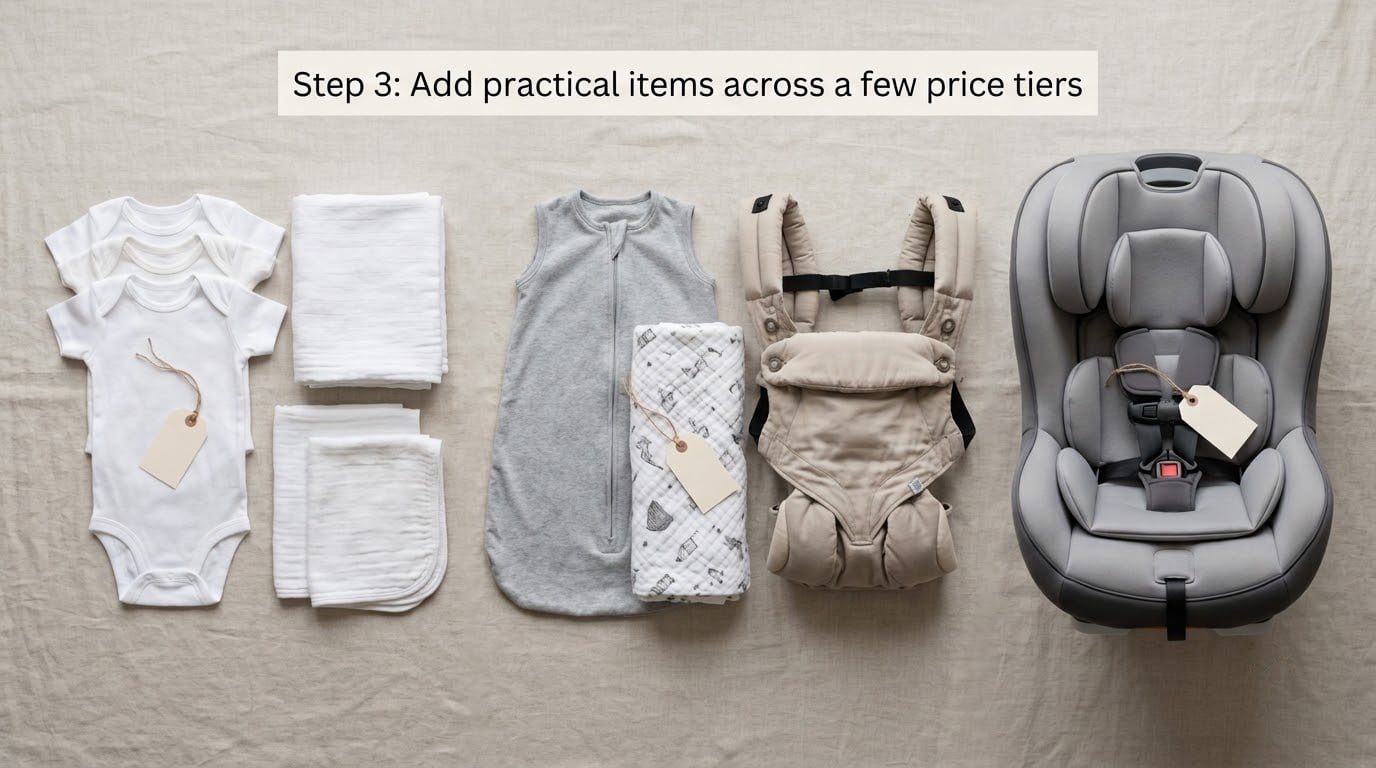
A registry with one price point excludes people. Most guests arrive with between fifteen and sixty dollars to spend, and a list where the cheapest option is well over a hundred quietly tells them to buy nothing.
Build four or five tiers and put something in each:
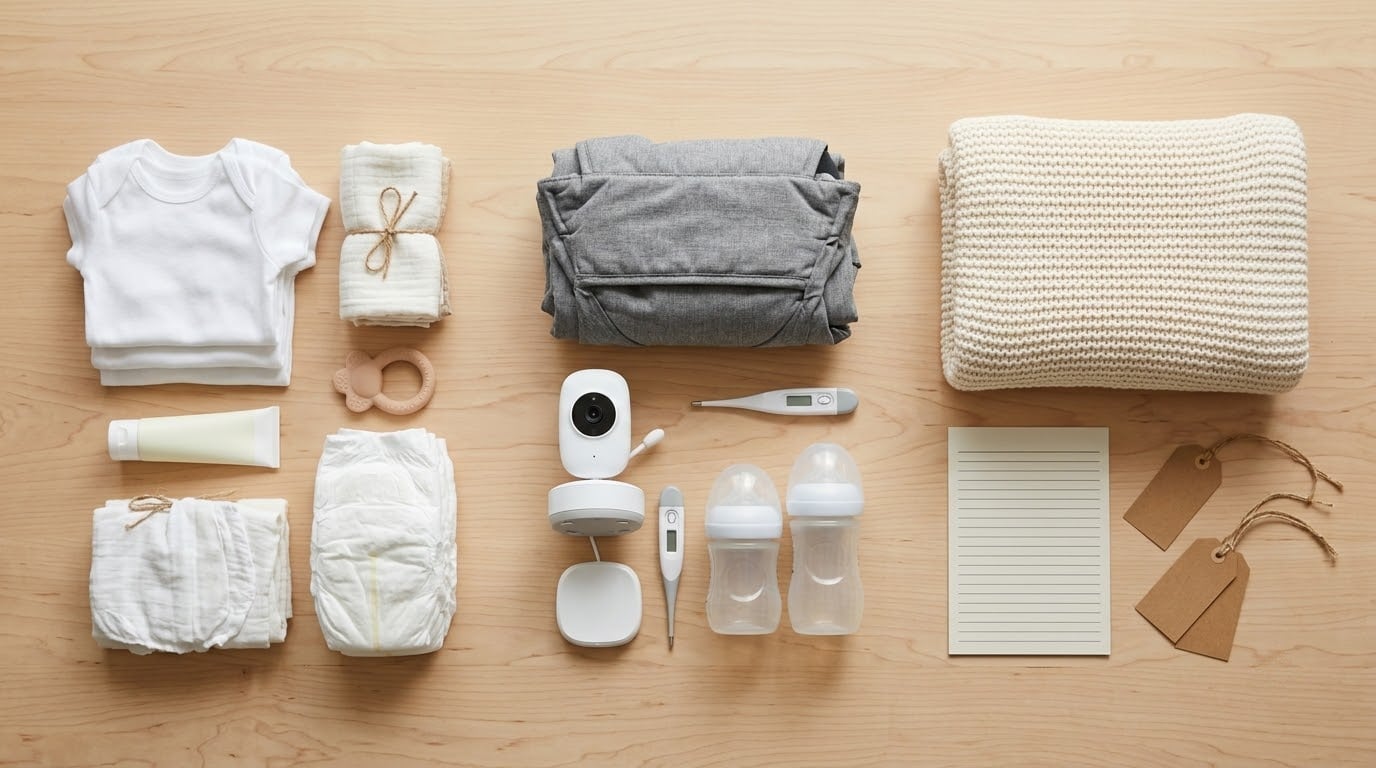
- Under ten dollars: socks, bibs, washcloths, a book, unscented bath wash, muslin cloths.
- Ten to twenty-five: bottle brushes, nail files, a thermometer, diaper cream, laundry detergent made for sensitive skin, a soft brush for the cradle board.
- Twenty-five to sixty: a feeding set, a swaddle set, a changing pad, a sound machine, a decently made diaper pail.
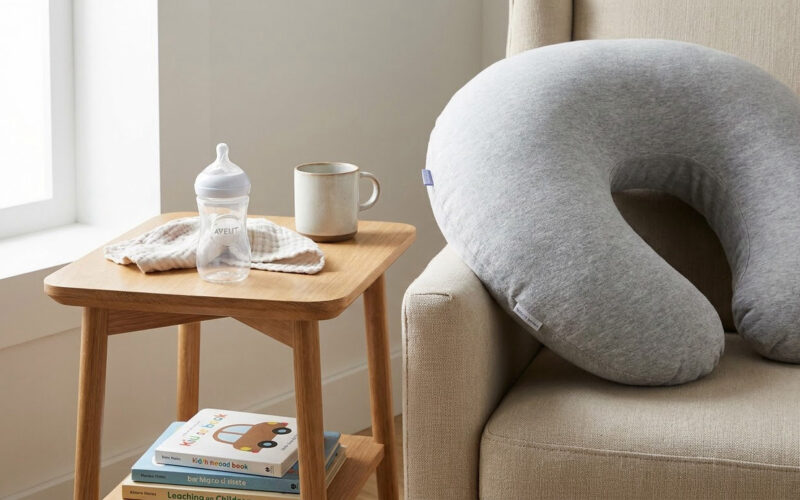
- Sixty to one hundred fifty: a carrier or wrap, a single stroller, a safe sleep setup, a nursing pillow.
- One item above one hundred fifty, at most: the single thing you would feel the absence of most.
Clothing needs quantities, not styles. A useful working list runs to roughly five to seven bodysuits, three onesies, two sleep sacks, five pairs of socks and a handful of outfits sized three to six months, not newborn. Newborn sizes are the most-bought and least-worn clothing there is, and a parent who registers for them will have unworn clothes within a month.
Step 4: Remove duplicates, preferences, and unnecessary upgrades
Go down the list and compare items by function, not appearance. Two bottle sets in different colours are one bottle set. Three bottles, one breast pump and a sterilizer for a family that plans to formula feed is a different list than three bottles and a hand-washing routine for a family that does not.
Cut anything that is mostly a preference: a specific brand of onesie, a particular shade of blanket, a designer diaper bag. Guests should not have to guess between two nearly identical options, and you should not have to return one of them.
Then question anything marketed as a registry essential. Ask whether it has a safety certification, whether the safety body would flag it, and whether you would buy it with no registry in the room. If the answer is no, it goes.
Step 5: Add gift alternatives that do not require a purchase
Some guests want to help and would rather not shop. Make that easy: a meal, an errand run, a folded load of laundry, a ride to an appointment, a spare key, a check on the house while you sleep. None of these cost much and each one solves a real problem in the first three months.
Add funds alongside items, not instead of them. A diaper fund, a childcare fund and a general fund behave differently from a physical gift: they go toward the highest-cost months, which are usually the ones your budget cannot absorb. Guests with a small amount to give find funds far easier to accept than a physical item, which is why several parents in WhatToExpect threads describe them as the least awkward option on the list.
Keep the balance honest. If the list is eighty percent funds, most people will read that as a request for money and some will find it uncomfortable. A mix of real items, a couple of funds and a few no-purchase options gives everyone an easy way in.
Step 6: Share the registry with clear spending boundaries
When you send the link, send the boundaries with it. Something close to this works: we are not expecting gifts, and if you would like to mark something off, here is what we will actually use. Everything is spread across price points, so anything in the list is welcome and nothing needs to be bought.
Add a line about the funds, a line about meals and help being just as welcome, and a line about your privacy preferences. Share it privately, in groups, rather than posting it publicly. A public post invites performance; a private message invites a decision.
For guests, the guidance is simpler than most parents assume. Buying something small off the list is not stingy, and a thoughtful item chosen without the registry is often the one people remember.
Step 7: Track gifts, purchases, and price changes
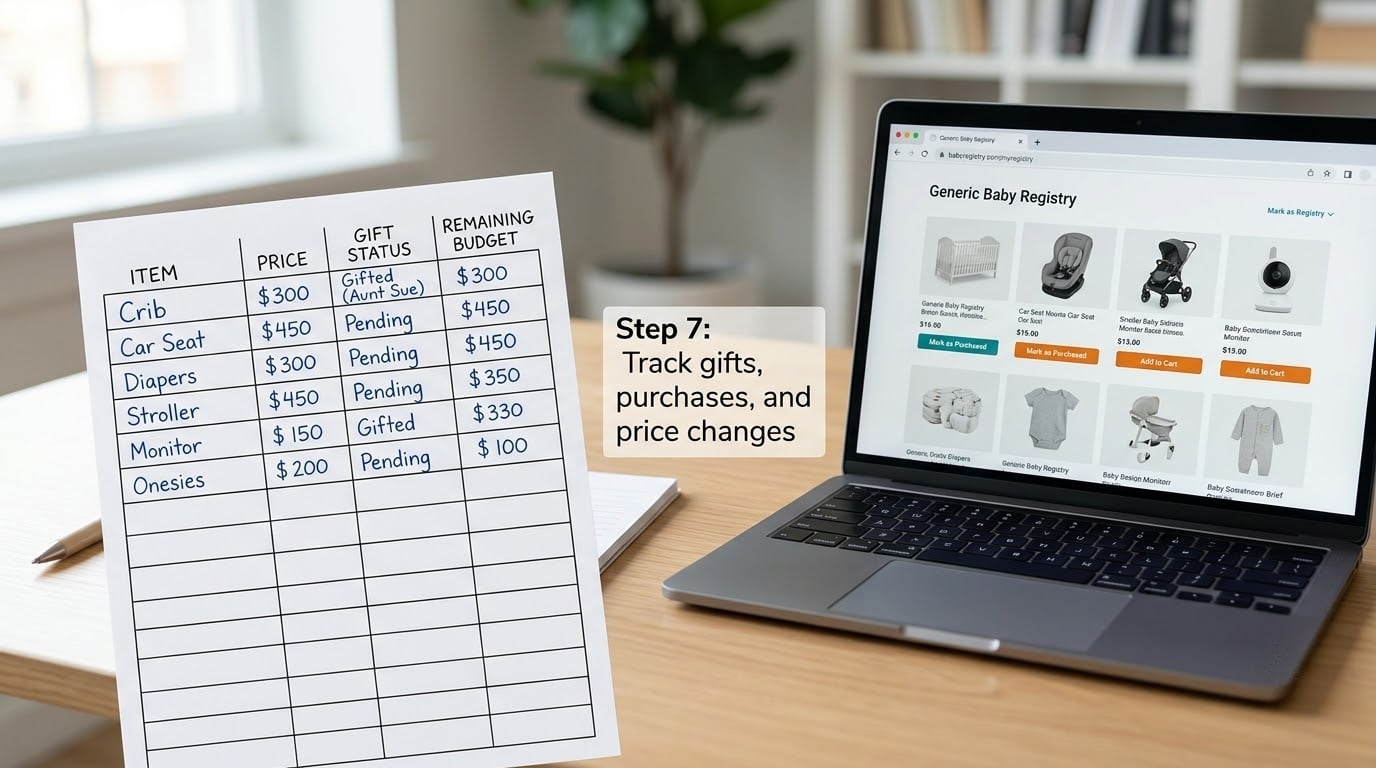
Keep a small sheet where you note every gift as it arrives, with the date and who sent it. Duplicate purchases are the most common registry failure, and they happen because two people saw the same popular item on the same day and nobody told them it was already gone.
Check the list weekly and hide anything that arrives more than once. The registry completion discount is the other half of the budget strategy: after the shower period, most retailers apply a discount to items still unpurchased, so a registry you never trim means paying full price for whatever nobody chose. Curating hard before the baby arrives is what makes that discount worth having.
Keep back a slice of your total for essentials you will need in months two and four, and buy those yourself rather than adding them now. And thank each person individually, with no hint attached about anything still unbought.
Common Mistakes
Mistake 1: Registering before checking what you already have
Duplicate and near-duplicate items are where registry money quietly disappears. Before you add anything, walk through your own closets, your storage, and the boxes you may already be storing at a relative’s house.
Include borrowed gear in that count. A car seat borrowed for the newborn stage still has to be bought eventually, but a bouncer or a swing that a friend is finished with is genuinely one less purchase. Ask directly. Parents routinely say that a two-minute message to a friend saves a two-hundred-dollar mistake.
Mistake 2: Filling the registry with designer or premium versions
The premium version of an ordinary item costs several times more and usually does the same job. Compare durability, safety certification, reviews and return terms before you compare looks.
Two places are genuinely worth spending more: a car seat and a safe sleep surface. Both are safety-rated, and neither is a place to economise or to buy secondhand. Everywhere else, the budget version is usually the right version.
Mistake 3: Making the registry feel like a shopping demand
A long list with a wall of expensive items reads as a demand, and guests who cannot afford it skip the whole thing, which leaves you with an unclaimed list and a gap in your budget. This is the failure that a widely shared post about not buying expensive shower items captured perfectly.
Replace pressure with options. Keep the total visible in your own planning, keep the item count close to your real needs, include cheap items at the top of the list, and say plainly that no gift is expected. Present the registry as a convenience, not a claim.
Mistake 4: Ignoring taxes, shipping, returns, and warranty costs
The number on a product page is rarely the number that leaves your account. Add sales tax, shipping, and the cost of a return window you will not use. Some items are cheaper to buy in store, or in a larger pack, or from a secondhand source.
Check return windows on anything you are unsure about, and check warranty terms on the bigger items. A product you cannot return cheaply and cannot service cheaply is an expensive item regardless of what it was listed at.
Five Tips to Keep Gifts and Spending Under Control
- Use a price filter or price bands on every retailer page you build from, so the full list stays visible at a low budget.
- Register only items you would replace rather than repair, and skip everything consumable you can buy in bulk later.
- Keep your own essential purchases off the registry entirely, and buy them yourself when you actually need them.
- Pool duplicates rather than returning them: two identical sets of sheets or bottles become a spare you will use in month four.
- Set a gift deadline in the announcement, and trim anything unpurchased after that date so the completion discount applies to a short list.
Frequently Asked Questions
How much should I spend on a baby registry?
There is no universal figure, because registry spending is really your total baby budget minus what you have already covered. As a working rule, list only optional items you would enjoy but not need, and keep that optional total in the range you can absorb without credit. Essentials stay off the list and stay on your own plan.
What items should not be put on a baby registry?
Leave off anything you already own, borrow or can buy in bulk cheaper later. That means duplicates, clothing in newborn sizes you will outgrow, single-use gadgets, subjective preferences like a specific brand or colour, and anything marketed mainly because registries feature it. Consumables, big sizes and anything with a safety question belong in your own careful plan instead.
How do you make a registry when you already received gifts?
Add the gifts you already have to your tracker before you build the list, then remove every duplicate from the registry. Anything bought in a size or colour that does not fit goes on your keep list rather than the registry, because you can exchange it yourself later. Starting from what you have keeps the list short and stops you buying twice.
Is it okay to ask for expensive baby-registry items?
It is fine to include one or two higher-cost items, especially for safety or mobility, but you should keep them rare and clearly separated from the basics. A list where the cheapest option is high priced tells guests with a small budget to buy nothing at all. Most parents find one meaningful item plus several cheap ones works better than several expensive ones.
What is a good registry budget for a first-time parent?
Most first-time parents do better with a small registry and a clear idea of their own spending, rather than one long list. Put only the higher-cost, higher-usefulness items on the registry, add a few funds for the expensive months, and buy the small consumables yourself in bulk when you need them. Count on hand-me-downs and borrowing for clothing and basic gear.
Should You Make a Baby Registry at All?
Sometimes, yes, and the deciding factor is not the baby, it is your household. A registry earns its place when you are starting from almost nothing, when a car seat and a safe sleep setup are within reach of your budget, and when you genuinely do not know which version of a thing to buy.
Skip it when the gear is already covered. Plenty of parents on r/Anticonsumption and in BabyCenter threads describe building a second registry out of guilt rather than need, and the result is a list that duplicates their own cupboards. A short wish list sent to a handful of people can do the same job with less ceremony.
A few other reasons to skip or shrink it: your gift-giving circle is small, the culture around your family is that babies bring nothing until after the birth, or you are planning a no-waste approach and expect to borrow nearly everything. In each case, a plain message pointing to practical needs works better than a list.
How Do You Ask People Not to Buy Gifts?
Say it early, say it simply, and give people an alternative so nobody feels shut out. A version that works: we are so lucky already, and we are not expecting gifts. If you would like to do something anyway, a meal, a ride, or a contribution toward diapers would mean a great deal to us.
Pair the message with an explanation rather than an apology. Mention that you are still setting up, and that anything bought now tends to duplicate what is on its way from family. People respond well to a specific reason and poorly to a vague one.
Then accept what comes in gracefully. The goal of declining is not to control other people’s behaviour, it is to give them permission to be generous in a way that costs you nothing.
Should a Baby Registry Include Expensive Items?
A few, kept deliberately few. Higher-cost items make sense where the price tracks safety, mobility, feeding, sleep or caregiver support: a rear-facing infant car seat, a safe sleep surface, a carrier, a stroller that works on your terrain, a breast pump if you are pumping.
What to avoid is a list where expensive items are the majority, or where they sit at the top and set the expectation for everything below them. If guests see one serious item, they read the whole list as serious.
One high-price item plus a dozen modest ones gives every guest a workable choice. Two high-price items plus a short cheap list is fine too. Five high-price items is a wish list, not a registry, and it is the version that ends up abandoned by everyone except you.
How Do You Handle Gifts You Do Not Need?
Keep the gift receipt and check the return window the day it arrives, because most windows are short and some stores do not accept returns on opened gear. The faster you decide, the less likely you are to end up storing something indefinitely.
Exchange rather than return when the size or colour is off, and always swap to something you can use rather than another version of the same problem. For duplicates, pooling is usually better than returning: two sets of the same item become a spare, a second set at your parents house, or something you pass on to another expectant family.
For anything still unused, pass it along rather than letting it sit. A Buy Nothing group, a local parents group or a friend with an older child will take clothing and toys quickly. Unused gear that gets handed on is not wasted money; unused gear in a closet is.
How Can I Protect Privacy When Sharing a Baby Registry?
Create a separate email address for the registry account so it is not tied to a personal inbox, and turn off any marketing or profile details you do not need filled in. Most registry platforms let you hide quantities, so set most items to a quantity of one unless you genuinely want a twin set or a spare.
Share the link privately, in groups, rather than posting it publicly. Public posts invite comments on every item, and that is a fast route to spending you did not plan.
Review the privacy settings again after the baby arrives, and delete the registry account once the shower period ends. Guest lists, purchase histories and address details are all useful to nobody at that stage.
Conclusion: Start With Your Real Budget and Biggest Need
The way to make a baby registry without overspending is to decide the number first and the list second. Write down what you can genuinely spend, pick the single essential you most need covered, and build everything else around cheap options, a few funds and a clear no-expectation message.
Then check the list weekly, hide duplicates as they arrive, and buy the small stuff yourself. Most of the budget you save will come from what you refuse to add.