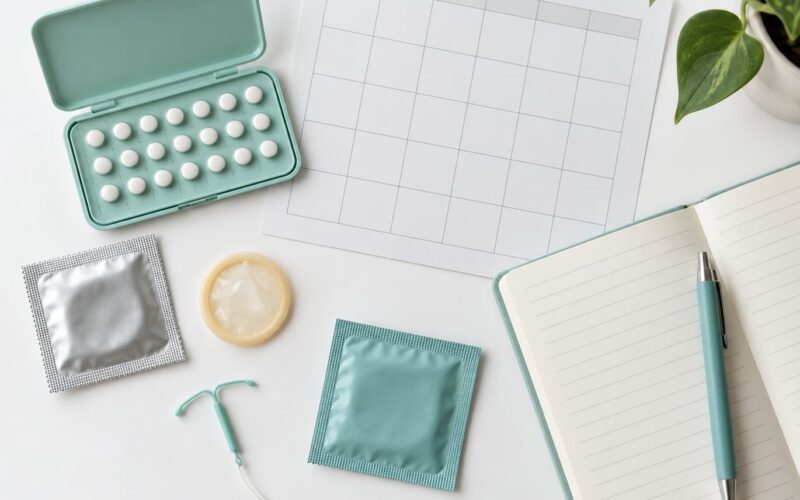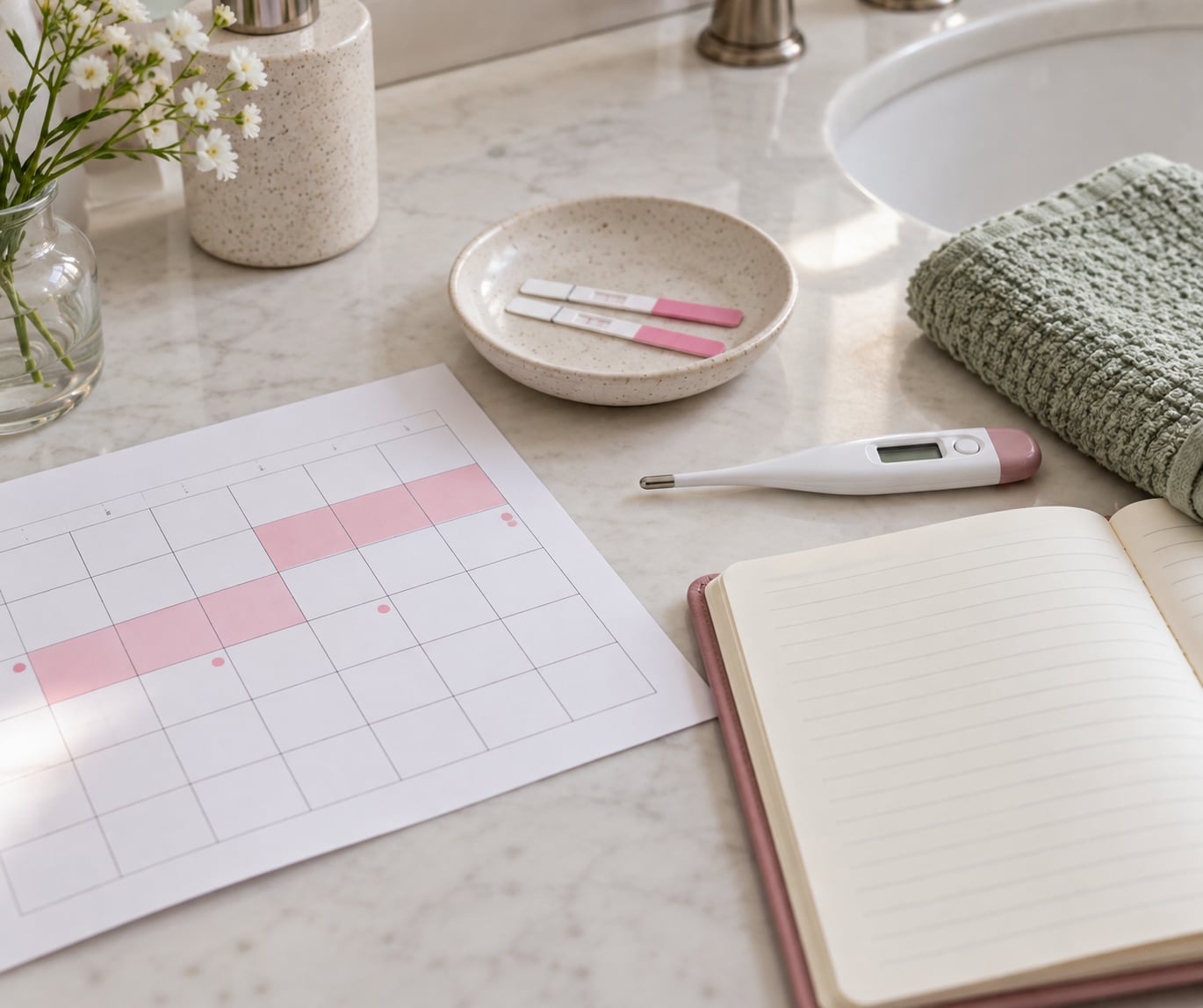
Fertility awareness methods explained in plain language: they are ways of working out roughly when you can conceive by watching your body’s own signs, mainly cervical mucus, basal body temperature, and the timing of your cycle. That is the whole idea. Instead of guessing from a calendar and hoping, you observe something real each day. Below I walk through what each sign means, how to read it, and where every method stops being reliable, so you can decide whether this fits how you want to plan or avoid pregnancy.
Most people arrive here from one of two directions. Some are trying to conceive and want to know when to time intercourse. Others want to avoid pregnancy without hormones. Both work better when you understand the limits up front, so I keep repeating the same honest point: these methods describe your cycle, they do not control it.
Table of Contents
- What Are Fertility Awareness Methods Explained?
- How Do Fertility Awareness Methods Work?
- Cervical mucus
- Basal body temperature
- The hormone signal
- The fertile window
- Which Fertility Awareness Method Is Right for You?
- How to Use Calendar-Based Fertility Awareness
- How Cervical Mucus Helps Identify Fertile Days
- What Is Basal Body Temperature and How Is It Used?
- What Is the Two-Day Protocol and How Does It Help?
- What Can Change Your Fertile Window?
- How Accurate Are Fertility Awareness Methods?
- Frequently Asked Questions
- Which fertility awareness method is easiest for beginners?
- Can fertility awareness methods be used as contraception?
- How many days can you be fertile in a cycle?
- Do cervical mucus and basal body temperature need to be used together?
- What if my cycles are irregular?
- When should I see a doctor about getting pregnant?
What Are Fertility Awareness Methods Explained?
Fertility awareness methods are family planning approaches that identify fertile days by observing direct physical signs of ovulation, rather than predicting future cycles from past ones. The signs most people track are cervical mucus, basal body temperature, cervical position, and the luteinising hormone surge detected by urine tests.
The important word in that definition is observe. A fertility awareness method asks one question every day: what is my body telling me right now? Once you have a run of answers, you can work backwards to see when ovulation probably happened, and forwards to see where you are in your cycle.
There is a difference between using these methods for pregnancy planning and using them to avoid pregnancy. For planning, an estimate is often enough, because a few days of uncertainty cost you little. For avoiding pregnancy, the same estimate has to carry real weight, and that is where the difference in reliability matters a great deal.
Two things these methods never do. They do not diagnose infertility, and they do not diagnose any condition that might be causing irregular cycles. If you have stopped having periods, or they have become very unpredictable, that is a medical question, not a charting question.
How Do Fertility Awareness Methods Work?
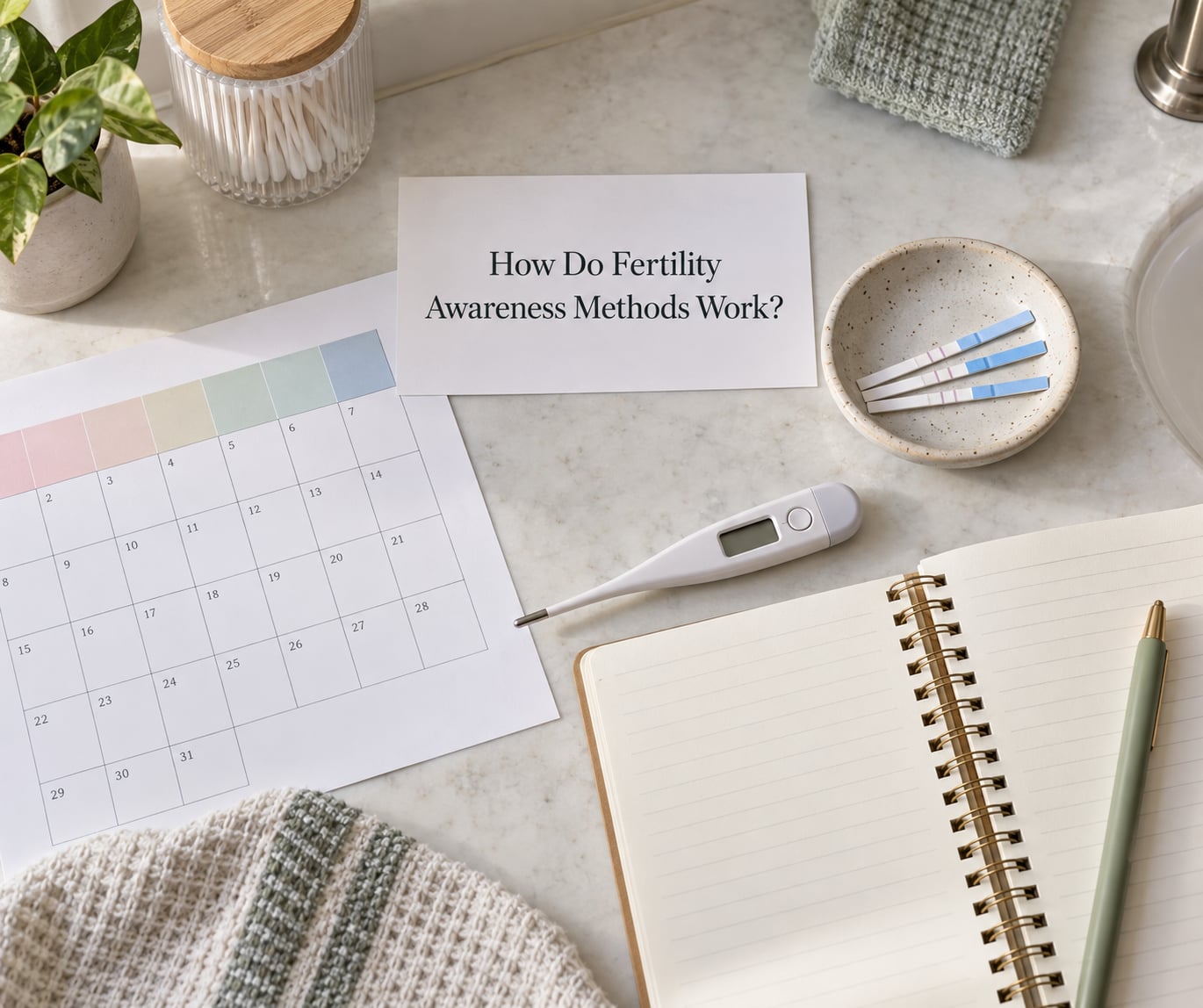
The mechanism is retrospective rather than predictive. You watch a sign daily, note it, and once you have enough data the sign itself marks ovulation as having happened.
Cervical mucus
High estrogen near ovulation makes cervical mucus thin, clear, and slippery. Many people describe the consistency as raw egg white, and some notice a stretch test where a drop of mucus extends between fingers. This is often the earliest sign you can catch, but it is also the easiest to misread.
Basal body temperature
After ovulation, progesterone raises resting temperature by roughly 0.2 to 0.5 degrees Celsius. A consistent rise across three days of readings suggests ovulation happened, though the shift happens after the fact rather than before it.
The hormone signal
Ovulation is preceded by a surge in luteinising hormone. Urine ovulation tests detect that rise, which is a direct biochemical signal rather than an inference from a pattern.
The fertile window
Sperm survive roughly three to five days, and an egg survives around 12 to 24 hours after release. Put together, that creates a fertile window of about six days, starting several days before ovulation and ending the day after. Every method is really trying to locate that window.
Here is the catch. These signs vary cycle to cycle, and some cycles produce none of them clearly. Methods can also be unreliable when used alone, especially calendar prediction or an app with no observations behind it.
Which Fertility Awareness Method Is Right for You?
There is no single best method for every body or every goal. What matters is how much daily attention you can realistically give, how predictable your cycles are, and how much risk of pregnancy you are comfortable carrying. The table below compares the main families of fertility awareness methods so you can see where each one fits.
| Method | What it observes | Daily effort | Main limitation |
|---|---|---|---|
| Calendar or rhythm | Past cycle lengths | Low | Purely predictive, drifts when cycles vary |
| Two-day rule | Mucus change or wetness | Low to moderate | Fewer rules, less protection |
| Temperature based | Mucus plus basal body temperature | Moderate | Confirms ovulation after the fact |
| Symptothermal with cervical position | Mucus, temperature, cervical feel | Higher | Steep learning curve |
| Urine LH tests | Hormone surge in urine | Moderate, timed testing | Detects some cycles, misses others |
| App based | Whatever you enter | Low | Only as good as your inputs |
Named protocols such as the Billings method, the Creighton method, and symptothermal variants are worth knowing about because each has a defined rule set and a teaching structure. The two-day rule is the most common entry point, and it is a reasonable place to start if you are new. Longer-time users on forums often credit book-based learning with building their confidence faster than any app.
How to Use Calendar-Based Fertility Awareness
Calendar methods record two things: the first day of each period, and the length of each cycle. From a log of several cycles you calculate your average cycle length, subtract 14 days to estimate ovulation, and mark a window of roughly five days before and one day after it.
Simple enough on paper. The trouble starts with the wording estimate, because calendar maths assumes your cycles are steady. Once they are not, the prediction drifts further each month and the fertile window you calculated may no longer sit anywhere near the truth.
Record what actually happened rather than what you expected. Marking the day ovulation signs appear teaches you more than the predicted date, and after a few cycles you will see your own pattern rather than a textbook average.
How Cervical Mucus Helps Identify Fertile Days
Cervical mucus changes in response to hormones, and the change is gradual. After a period, discharge is usually scanty, thick, or sticky. As estrogen rises, it becomes more plentiful, slippery, and clear. Around the time of ovulation it may look and feel like raw egg white, then returns to thick once progesterone takes over.
A common question is whether a lot of mucus means you are fertile. Volume alone does not tell you much. Thick, sticky mucus can be plentiful too, especially with hormonal contraception or PCOS. The texture and clarity matter far more than the amount.
Observing safely takes about a minute. Wash your hands, look at discharge on clean underwear or toilet paper, and note consistency and colour in a notebook or app. Avoid douching, since it changes the mucus you are trying to read.
Mucus alone cannot confirm ovulation and cannot prevent pregnancy. It is the earliest sign you get, which makes it valuable, but its timing shifts with stress, illness, and hormonal medication.
What Is Basal Body Temperature and How Is It Used?
Basal body temperature is your lowest body temperature in a fully rested state, taken before you get up, eat, or move around. It is not a one-off reading. Its usefulness comes from comparing it against your own baseline over many days.
Take the reading at the same time each morning, ideally right after waking, and record it the moment you sit up. If you sleep more than a couple of hours, most charts treat that day as unusable because the reading is affected. Oral, vaginal, and rectal readings all work, as long as you stay with the same site and the same thermometer.
What you are looking for is a shift of about 0.2 to 0.5 degrees Celsius that holds for three consecutive days. That pattern usually means progesterone has risen and ovulation has already occurred.
Because the rise happens after ovulation, basal body temperature is generally more useful for retrospective confirmation than for predicting the next fertile day. It tells you what happened, which is excellent for planning the cycle ahead and poor for spotting the day sperm need.
What Is the Two-Day Protocol and How Does It Help?
The two-day rule is the simplest widely used protocol. You watch for a change in cervical mucus or vaginal lubrication, and once you notice one, you treat that day and the following day as potentially fertile.
The logic is short. Mucus changes close to ovulation, so a change today suggests ovulation is near or has passed. Rather than drawing a window from old cycle maths, the rule reacts to what your body is doing today.
It is popular because it takes about a minute a day and has few rules to remember. Its weakness is the same as its strength. Two days of observation give a narrower window than a full symptothermal method, so it carries more risk when you are relying on it to avoid pregnancy.
For your own situation, talk with a qualified clinician or a certified fertility awareness educator. A short consultation can settle whether the rule set suits your cycles, and it matters if you are using this as your only method of contraception.
What Can Change Your Fertile Window?
Most surprise charts come from something changing that you did not account for. Cycle irregularity is the big one, because the calendar maths was built on steady cycles. Stress, illness, travel across time zones, and interrupted sleep can all delay or obscure ovulation signs for a cycle or two.
Breastfeeding and hormonal medication add their own patterns. Hormonal contraception in particular suppresses the signs you are trying to read, so charting while on it produces data that reflects the medication rather than your own cycle. Coming off it can produce several cycles that look unlike your old charts before a new pattern settles.
Conditions such as PCOS, thyroid problems, and perimenopause can change the pattern too, because ovulation may be infrequent, delayed, or absent. Long gaps between periods are not automatically a charting problem to solve with a new app.
Some variation is ordinary. Get medical advice for cycles that stop for months, bleeding that is heavy or irregular between periods, severe pelvic pain, or repeated cycles where you see no signs of ovulation at all.
How Accurate Are Fertility Awareness Methods?
Accuracy depends on which figure you are looking at, and the two figures are far apart. Perfect use assumes every rule followed every cycle. Typical use assumes real life, with missed days, misread mucus, and interrupted routines. Published effectiveness figures for fertility awareness methods typically cluster near the low 70s to high 80s percent effective in typical use, with higher figures reported when users follow the rules carefully.
Compare that with the honesty of the numbers themselves. Perfect use figures look impressive because they describe a person who never makes a mistake, which is not a description of a real week.
There is a second reason prediction fails. Sperm survive several days, so the window is not a single day you can hit. Any method that narrows that window to one date will eventually be wrong, and wrong in the direction that leads to pregnancy.
Estimating fertile days and using a method as contraception are different activities with different stakes. If you are avoiding pregnancy, pair these signs with condoms or another method, and know in advance where you would get emergency contraception if a cycle goes wrong.
Frequently Asked Questions
Which fertility awareness method is easiest for beginners?
Most beginners start with the two-day rule, which asks you to watch cervical mucus once a day and mark any change plus the day after. It has few rules and takes about a minute. Temperature methods ask more of you because they need consistent morning readings, so they tend to feel harder at the start. Whichever you pick, expect three to six cycles before reading your own chart feels natural.
Can fertility awareness methods be used as contraception?
Yes, with honest expectations. When you avoid sex on the identified fertile days, effectiveness is real but well below typical-use figures for implants or an intrauterine device. Typical-use effectiveness for fertility awareness methods lands around the low 70s to high 80s percent, which means roughly one in five to one in four users will have an unplanned pregnancy in a year of use. Many people use condoms alongside fertility awareness for that reason.
How many days can you be fertile in a cycle?
Most cycles have a fertile window of about six days. Sperm can survive roughly three to five days after intercourse, while an egg survives about 12 to 24 hours after ovulation. That combination puts the window from roughly five days before ovulation until the day after. With irregular cycles the window shifts, and ovulation can happen earlier or later than any prediction you made weeks before.
Do cervical mucus and basal body temperature need to be used together?
They do not have to be, and each tells you something different. Cervical mucus is an early sign that gives you warning before ovulation. Basal body temperature is a confirming sign that arrives after ovulation and helps you verify what happened. Many beginners start with mucus only, then add temperature once daily temperature taking has become routine. Combining them is the basis of symptothermal methods and narrows the uncertain days.
What if my cycles are irregular?
Irregular cycles make calendar prediction unreliable, so relying on past cycle lengths alone is a poor fit. Focus instead on signs that occur in the cycle itself, such as mucus changes, temperature shift, and hormone tests. Be aware that conditions like PCOS, thyroid problems, or approaching menopause can cause irregularity, and untreated pain or very long gaps between periods deserve a medical appointment rather than an app.
When should I see a doctor about getting pregnant?
Common advice is to seek help after six months of trying if you are under 35, or after a year if you are 35 or older. Book an appointment sooner if you have very irregular or absent periods, a known condition such as PCOS or endometriosis, previous pelvic surgery or infection, or repeated miscarriage. Getting evaluated early is sensible whenever something about your cycle has changed noticeably from what is normal for you.
Start with one method and stay with it for three cycles before judging it, and write down what you observed rather than what the app predicted. If you are avoiding pregnancy, plan your backup before you need it, including where you would get emergency contraception. And if cycles have stopped, become painful, or show no signs at all, that is a conversation for a clinician rather than something to chart through.
Updated for 2026. This is general health information, not medical advice.