What supplies you need for a planned home birth comes down to two lists: the clinical equipment your midwife or nurse-midwife brings, and the household items you gather ahead of time. The second list covers food and drink, clean linens, bed and floor protection, newborn clothing, and a hospital transfer bag that stays packed from the day you finish preparing. Your clinician hands you the version that matches their own protocol, so start there.
Families in r/homebirth and r/pregnant threads on this question usually ask the same thing first: what am I double-buying? Nobody needs to buy a doppler or a bag of sterile instruments, and nobody should be sorting a clinical kit at three in the morning during early labor. Assume the attending clinician covers the medicine and the monitoring, and spend your energy on the room, the drinks, the towels, and the baby.
Table of Contents
- What You Need
- The short checklist
- Core Documents and Prenatal Care Supplies
- Labor and Birth Supplies
- Newborn Care Supplies
- Comfort Items Worth Considering
- How to check what supplies you need for your birth plan
- Step-by-Step
- Confirm your clinical and emergency plan
- Prepare the birth space
- Wash, label, and divide the supplies
- Pack a small newborn and early-labor kit
- Review the checklist before labor
- Common Mistakes
- When a Home Birth May Not Be Appropriate
- Frequently Asked Questions
- Who should help make the supply list for a planned home birth?
- Are all home-birth supplies necessary, or can families choose only the essentials?
- What should be ready if a hospital transfer becomes necessary during labor?
- What supplies should stay accessible after the baby is born?
- Who decides whether a planned home birth is safe for a particular family?
- Conclusion
What You Need
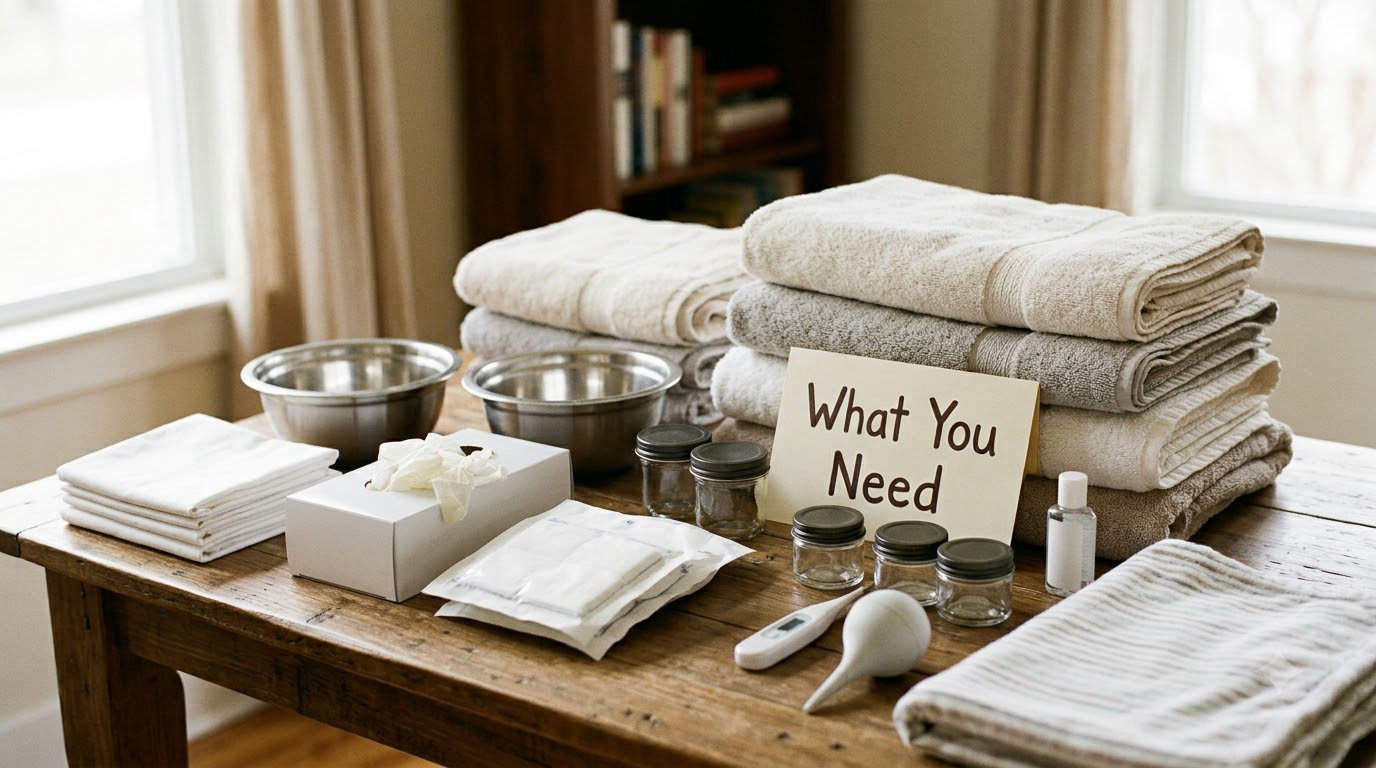
For a clinician-supported home birth, the essentials fall into four groups: things for the person in labor, things for the newborn, things that protect your home, and a packed transfer bag. Optional comfort items sit outside those four and can wait until later in pregnancy. Local rules and clinician protocols vary, so treat everything here as a starting framework and confirm the final list with your maternity-care professional.
The short checklist
- For you during labor: refillable water bottle, electrolyte drinks, light food, an outfit you can discard, a hair tie, and at least two pillows
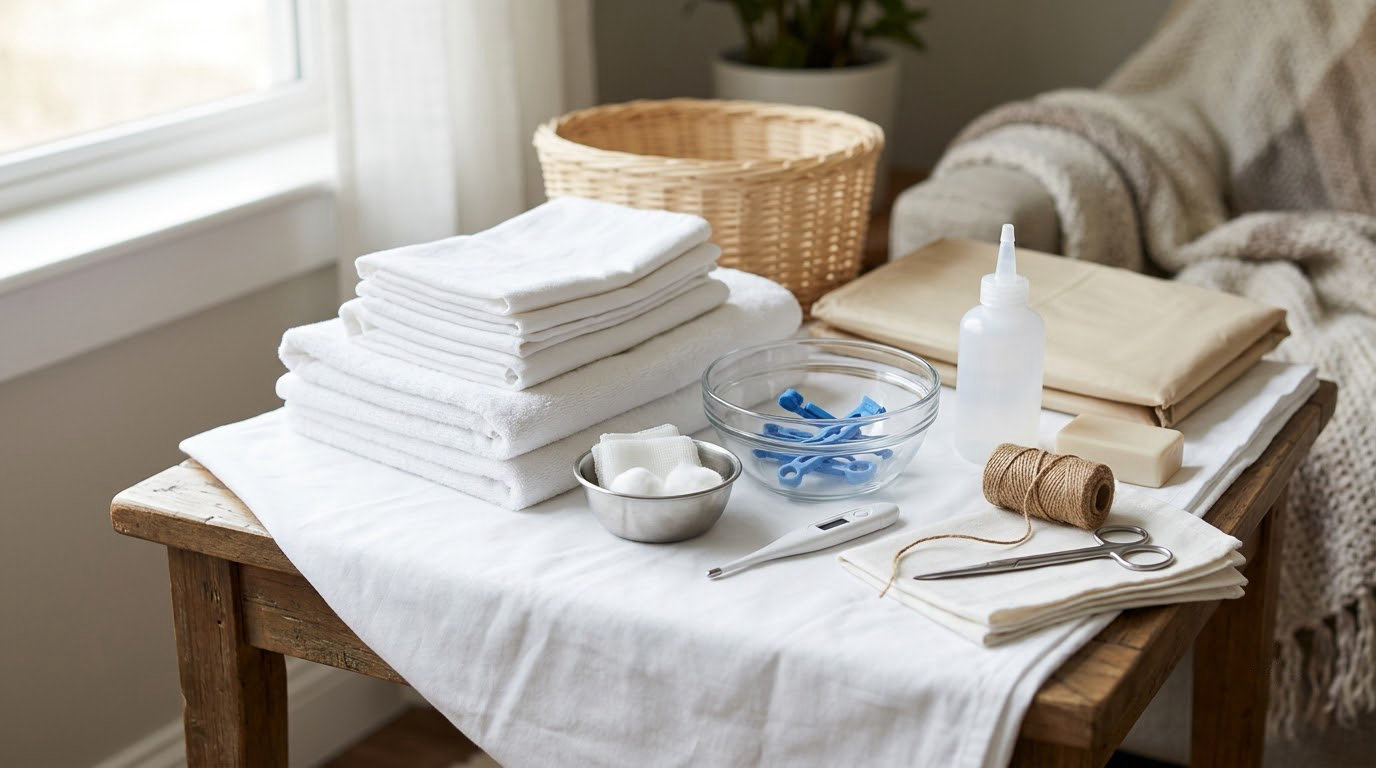
- For the bed and floor: waterproof mattress cover or fitted pool liner, two or three old flat sheets, plastic sheeting, and a couple of large bath towels
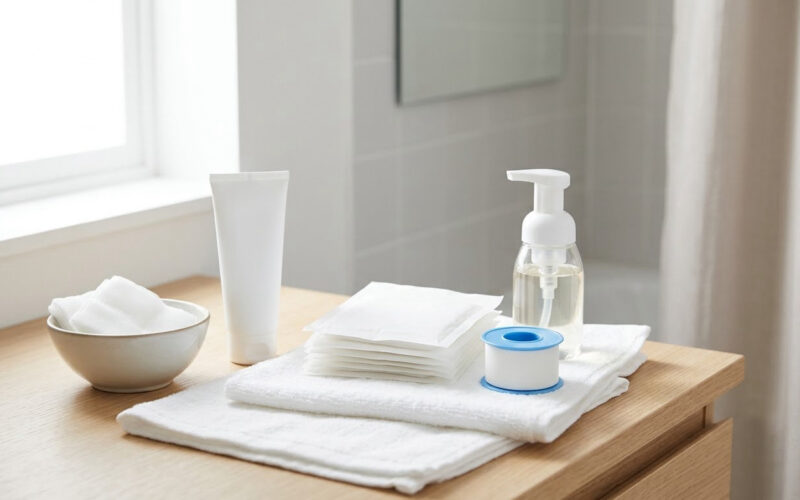
- For hygiene: hand wash basin, plain soap, clean washcloths, a laundry tub with a liner, and a bin bag for rubbish
- For the room: a bright lamp or headlamp, a grounded three-prong extension cord, a thermometer, and something to play music on
- For the baby: three or four cotton receiving blankets, two newborn hats, an undershirt, a sleeper, a going-home outfit sized for six to nine months, and diapers
- For the first 72 hours at home: a peri bottle, large overnight pads, ice packs, witch hazel pads, and a spray-style pain reliever your clinician has already approved
- For transfer: a packed hospital bag, an infant car seat installed in the car, copies of your records, and identification
Quantities are where most published lists disagree. Several practice checklists specify around ten large bath towels, six pillows, six washcloths, two sets of clean sheets, twelve cotton receiving blankets, and two baby hats. Cheaper, older towels are the right call. You will use them, and you will not mourn them.
| Item | Your midwife or nurse-midwife supplies | Your household provides |
|---|---|---|
| Monitoring | Fetal doppler, blood pressure cuff, thermometer | Backup thermometer, charged phone, pen and paper |
| Clinical supplies | Sterile field, gloves, gauze, cord clamp, bulb syringe, medications | Nothing clinical |
| Newborn resuscitation | Resuscitation equipment and newborn care kit | Warm receiving blankets, hat, dry towels |
| Documentation | Clinical records, newborn paperwork, required forms | Copies of your records, insurance card, identification, birth plan |
| Comfort and environment | Guidance, not gear | Pillows, towels, sheeting, lighting, music, birth ball, pool |
| Hydration and food | Advice on intake | Water bottle, electrolytes, snacks, drinks for supporters |
| Postpartum | Assessment and care | Peri bottle, overnight pads, ice packs, clean clothing |
| Transfer | Travels with you, arranges the call ahead | Packed bag, installed car seat, route, phone charger |
Keep the boundary clean. If an item appears under the clinician’s column, buying a duplicate version of it adds clutter and confusion rather than safety.
Core Documents and Prenatal Care Supplies
Paperwork is the least glamorous part of a home birth supply list and the part that causes the most problems when it is missing. Keep everything in one folder, in one place, and take a photo of each page on your phone.
- Pregnancy records, prenatal test results, and any notes your clinician has written for the birth
- Your written birth plan and any birth preference sheets, plus a spare copy for the attending clinician
- Insurance card, identification, and payment information your practice asked for
- A contact sheet with the midwife’s direct number, a second phone number, the practice’s after-hours line, and the name of the hospital that would receive you
- Any newborn-care instructions your clinician gave you, including feeding plans and newborn screening appointments
- Pen and paper, plus a wall calendar, for noting the onset of contractions and the times you call
For the non-diagnostic prenatal basics, follow your own clinician’s instructions rather than a general article. Home pregnancy tests, prenatal vitamins, a blood pressure cuff for routine self-checks, and any required screening paperwork are worth having on hand, but the schedule and the products are your provider’s call, not a list’s.
Labor and Birth Supplies
This is the section people overbuy. The reason to prepare is not ceremony; it is that a room without a clean towel and a working light is harder to work in than one with them.
- Two to three old flat sheets and a waterproof layer between them, so a stain never reaches the mattress
- Plastic sheeting or a shower curtain to protect the floor, with tape for the edges
- At least two large bath towels, and more than you think, because r/homebirth members repeatedly say they used far more than expected
- A refillable water bottle, electrolyte drinks, ice chips or popsicles, and soft easy-to-eat food
- Clothing you can get out of quickly and do not mind ruining, plus a robe or shirt for afterwards
- Two or three clean washcloths, a bar of plain soap, and a hand wash basin for the room
- A bright lamp or headlamp, spare batteries, and a grounded three-prong extension cord
- A laundry tub with a plastic liner for soaking birth laundry separately, and a bin bag for rubbish
- A thermometer, a bowl or pail in case of nausea, and a birth comb if you want one
On clothing, most people who have done this go without a bra or anything with a hard waistband, because the pressure is uncomfortable and nothing needs to be adjusted. Wear what you can move in and get out of quickly.
Many families also plan a water birth. If yours does, add the pool, a hose and pump to fill it, a water thermometer, and a clean liner, plus towels for the floor because the room will be wet. Some practices rent the pool, and some midwives bring their own. Ask before you buy, since that is a large item to buy twice.
Newborn Care Supplies
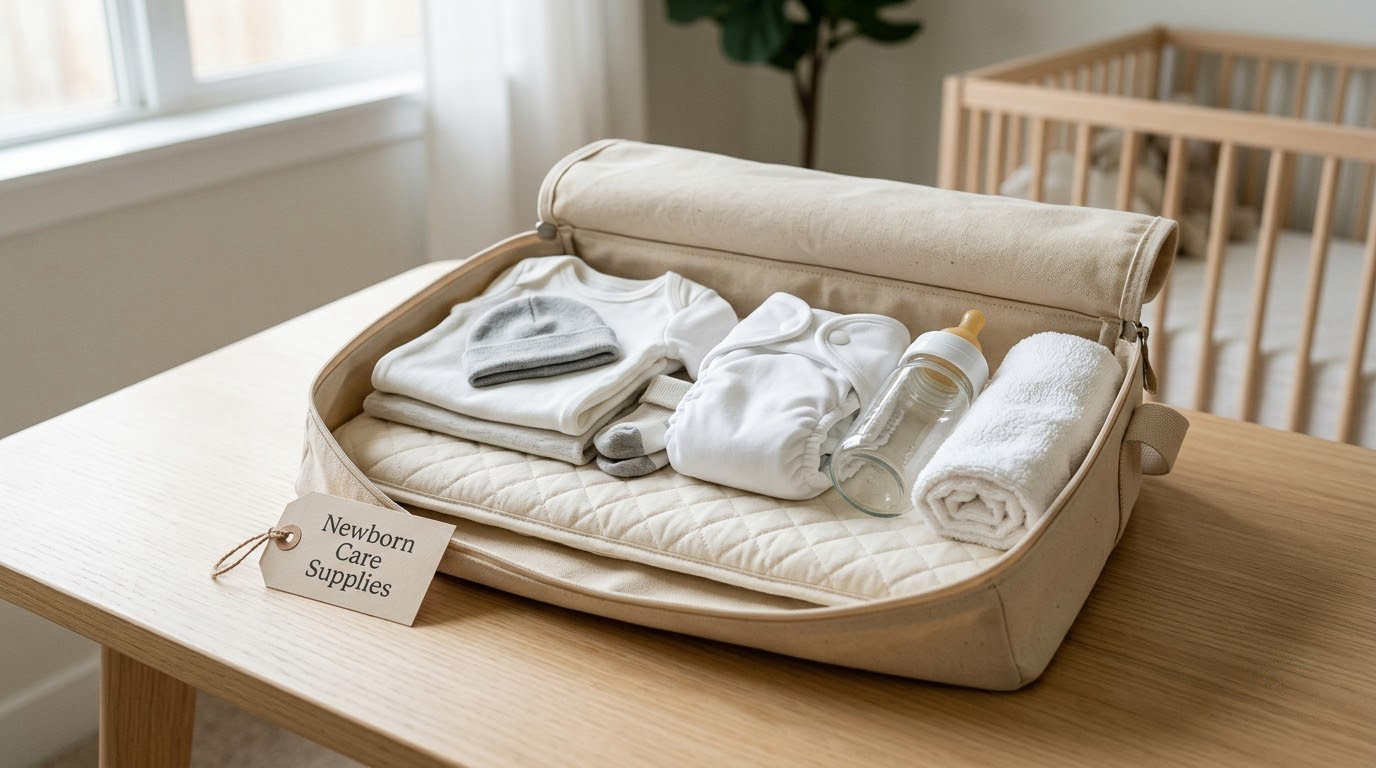
The baby only needs a small set of things, and most of them are consumables rather than equipment. Set up a separate station so the person in labor does not have to reach across the room for anything after the birth.
- A flat, firm sleep surface on its own level, in the room where the family will be, with a fitted sheet and nothing else in it
- Three or four cotton receiving blankets and at least two hats, since a newborn head loses heat quickly
- An undershirt, a sleeper, and a going-home outfit sized for six to nine months rather than newborn size
- Diapers, a small stack of cloths or cotton muslin, a changing mat, and a nappy bucket or bin
- A soft towel, a washcloth, a plain bar of mild soap, and a bowl for sponge bathing in the first weeks
- Whatever feeding supplies you have chosen, plus the items your clinician asked you to have ready for the first feed
- Identification bands or a hat of your choosing if your hospital or clinician requires it for a transfer
One r/homebirth essentials post lists a water thermometer, sterile hose for filling a birth tub, and six to eight old receiving blankets, which matches what most practice checklists ask for. Follow the quantities your own clinician gives you, and add more blankets than the list specifies.
The first 72 hours at home are a separate supply question. A peri bottle, large overnight pads, ice packs, witch hazel pads, and a spray-style reliever your clinician has already discussed are the items parents most often say they used more of than expected. Have them open and within reach before labor starts rather than in a closet.
Comfort Items Worth Considering
Everything in this section is optional, and every item needs your clinician’s sign-off before it enters the room. The difference between a clinical necessity and a comfort item is the difference between something that keeps the birth safe and something that helps you feel more at ease in it.
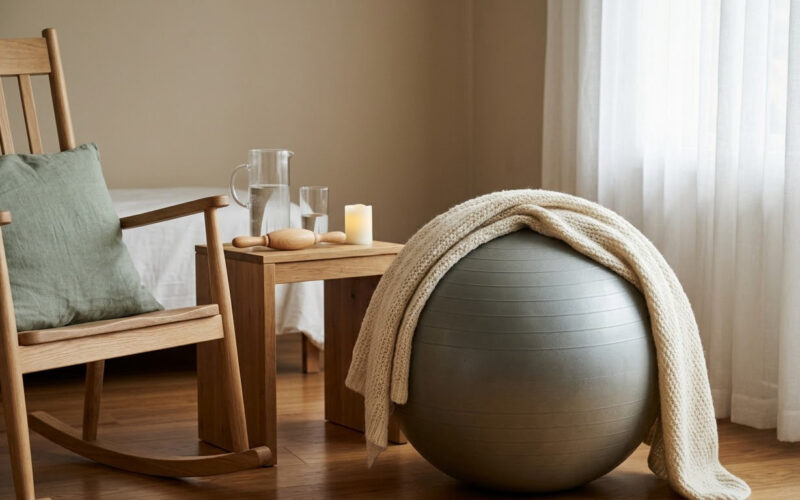
- Birth ball: useful for upright positions and resting between contractions; inflate it ahead and keep a pump handy
- Warm towels: heat in a dryer or with warm water and have someone ready to bring them
- Aromatherapy: only with your clinician’s approval, only with a diffuser rather than an open flame or reed diffuser, and never once labor has stalled
- Music: a speaker and a playlist decided in advance, since choosing music mid-labor is one more decision you will not want to make
- Heating pad or hot water bottle: wrapped in a towel, on low, and never directly against skin
- Food and drink for supporters: someone attending will forget to eat, and an empty room of people makes labor harder to manage
How to check what supplies you need for your birth plan
Take any generic list, including this one, and turn it into your list in four passes. First, walk it with your maternity-care professional and mark off everything their kit already covers. Second, check your local home-birth requirements, since registration, screening, and who may attend vary by state and can affect what you must have on hand.
Third, look at the actual space you will be birthing in and the likely birth environment, then add for what a room like yours specifically needs. Fourth, assign one person on the birth team to own the supplies: to keep them accessible, to keep them stocked, and to keep the restocked after any laundry run. A checklist nobody owns is the one that fails at hour two of labor.
Step-by-Step
Confirm your clinical and emergency plan
Before you shop for anything, settle who attends, when to call, and what happens if you need to move. Know the name of the hospital that would receive you and how your midwife arranges the transfer, whether by calling ahead or accompanying you. The supply list never replaces this arrangement, and no list in any article can tell you whether your local rules permit a home birth at all.
Prepare the birth space
Choose a room on the ground floor with a clear path to an exit and close to a bathroom. You need a stable surface at a workable height, a waterproof layer and clean sheets, access to water, adjustable lighting, privacy, enough floor space to move around, and room for the attending clinician to work. You do not need a particular layout, and you do not need to turn a bedroom into a clinic.
Wash, label, and divide the supplies
Follow your clinician’s guidance on what to wash and how. Keep unopened items in clean packaging, and divide supplies by stage: labor, birth, newborn, and postpartum. Label containers so the person holding your newborn knows where the clean blankets live without asking. Protect anything fragile, and keep a running restock list so the second laundry run does not become the thing you forgot.
Pack a small newborn and early-labor kit
Keep one compact bag reachable from the door with feeding items, a few newborn garments, diapering basics, identification, and anything your clinician specifically requires for early labor or a transfer. The point of this kit is that it can be grabbed in under a minute by someone who is not you. The r/homebirth and r/NewParents complaint about scrambling for a car seat and clothes at three in the morning is entirely avoidable.
Review the checklist before labor
In the days before your due date, check dates and storage, confirm any device you plan to use is charged or has fresh batteries, charge the phones, confirm the transport arrangements, and read the contact numbers aloud to everyone on the birth team. Leave the checklist somewhere everyone can see it, not inside a drawer with the paperwork. Then stop buying things and rest, which is genuinely the last preparation step.
Common Mistakes
- Treating a shopping list as a care plan. Fix: the clinician, the transfer plan, and the room come first. Supplies are the last layer.
- Buying a pre-made kit without reading what is inside. Fix: compare any packaged kit line by line against your own list. Many duplicate what the midwife brings and skip the towels and blankets.
- Over-buying comfort products early. Fix: buy essentials by around 32 to 36 weeks, and add optional items only if your clinician approves them and you would genuinely use them.
- Using expired, damp, or damaged items. Fix: check dates and condition as you pack, and replace anything questionable. This matters most for bedding and newborn textiles.
- Not labeling anything. Fix: label every container and bag by stage. One label costs nothing and prevents searching mid-labor.
- Storing linens in a closed closet. Fix: keep unopened items clean, dry, and accessible, and skip scented dryer sheets and fabric softener on newborn textiles.
- Leaving the transfer plan as a vague intention. Fix: the bag stays packed, the car seat stays installed, the route is known, and a second driver is named.
- Assuming comfort tools replace professional care. Fix: a birth ball and warm towels are additions to a supported birth, never a substitute for a qualified attendant and a transfer plan.
When a Home Birth May Not Be Appropriate
Local regulations matter here, and so does clinician judgment. Some pregnancy histories, health conditions, environmental limitations, and expected complications may make a hospital birth the safer choice, and a qualified obstetric clinician, nurse-midwife, or other maternity professional needs to assess your individual situation rather than any checklist online.
Ask directly about screening results, blood pressure, fetal position and size, previous birth or pregnancy complications, gestational age at delivery, and how quickly your home can reach a delivery room. If the answer to any of those is uncertain, book the consultation before you buy a single towel. A home birth that ends in a planned transfer is a well-run system, not a failure, and a well-prepared transfer plan is part of the plan rather than an exception to it.
Frequently Asked Questions
Who should help make the supply list for a planned home birth?
Your midwife or nurse-midwife should. Every practice has its own protocol for what the attending clinician carries, what the family must provide, and what must be ready for a transfer. Ask for their written list early in pregnancy, then use a general checklist only to fill the gaps. If your list and theirs disagree, theirs is the one that applies to your birth.
Are all home-birth supplies necessary, or can families choose only the essentials?
Families can and usually should choose the essentials. The clinical equipment, monitoring, and newborn resuscitation gear come with your clinician. Your household list reduces to food and drink, clean linens, bed and floor protection, lighting, newborn clothing, and a packed transfer bag. Comfort items such as a birth ball, aromatherapy, or music are optional and should be cleared with your clinician first.
What should be ready if a hospital transfer becomes necessary during labor?
A bag that can be carried out in under a minute, with your records, identification, insurance card, and birth plan. Keep an infant car seat installed in the car from well before your due date, name a second driver, and know the route and the receiving hospital. Decide who calls whom first, and keep phone chargers and a power bank charged. Your midwife handles the clinical side of the call.
What supplies should stay accessible after the baby is born?
Warm receiving blankets and a hat, diapering basics, the feeding supplies you chose, a peri bottle, large overnight pads, ice packs, and a spray-style reliever your clinician has already approved. Open them and keep them within reach before labor starts rather than stored away. Parents consistently report using more pads and ice than they expected in the first 72 hours at home.
Who decides whether a planned home birth is safe for a particular family?
A qualified maternity-care professional does, together with local regulations. An obstetric clinician, nurse-midwife, or certified midwife assesses your history, health conditions, screening results, and environment, and that decision cannot be made from a supply list. Book that consultation early. If the assessment is uncertain or your home is far from a delivery room, a hospital birth is the safer plan.
Conclusion
Start with the appointment, not the shopping cart. Book a consultation with a qualified maternity-care professional, get your clinician’s list and your local home-birth rules, agree the emergency-transfer plan with the hospital that would receive you, and only then customize and organize the supplies for a planned home birth. The list is the easy part. The plan is what makes the list work.
Updated for 2026. General information only; nothing here replaces the individualized advice of your obstetric clinician, nurse-midwife, or other maternity professional.