A blocked duct most often clears with three low-risk habits: empty the breast often and thoroughly, apply gentle warmth before you feed or pump, and use light pressure toward the nipple rather than squeezing hard. Clogged milk duct relief that actually helps is usually boring and repetitive — the same feed, pump and express cycle repeated at regular intervals — not a gadget or a supplement.
Most blocks resolve within a day or two of that routine, and the tender lump often lingers a little longer after milk starts flowing again. This article covers what you can safely do at home, what tends to backfire, and the signs that mean you should stop reading and call a doctor, midwife or lactation consultant.
This is general information about comfort measures, not a diagnosis. Anything that suggests infection needs a clinician, not a home remedy.
Table of Contents
- What You Need
- Step-by-Step: Clogged Milk Duct Relief That Actually Helps
- How to Check That Your Latch or Pump Fit Is Right
- How Often to Feed or Express While a Duct Feels Clogged
- Common Mistakes
- Frequently Asked Questions
- How long should I try clogged milk duct relief that actually helps before contacting a doctor?
- Is a hard lump in the breast always a clogged milk duct?
- Should I keep breastfeeding or pumping if I think a duct is clogged?
- When does a clogged milk duct need medical attention?
- Can I use supplements or topical products for a clogged milk duct?
- Start With Gentle, Consistent Care and Watch for Warning Signs
What You Need
Very little, honestly. Most people who clear a duct have a cupboard, a feed and ten minutes.
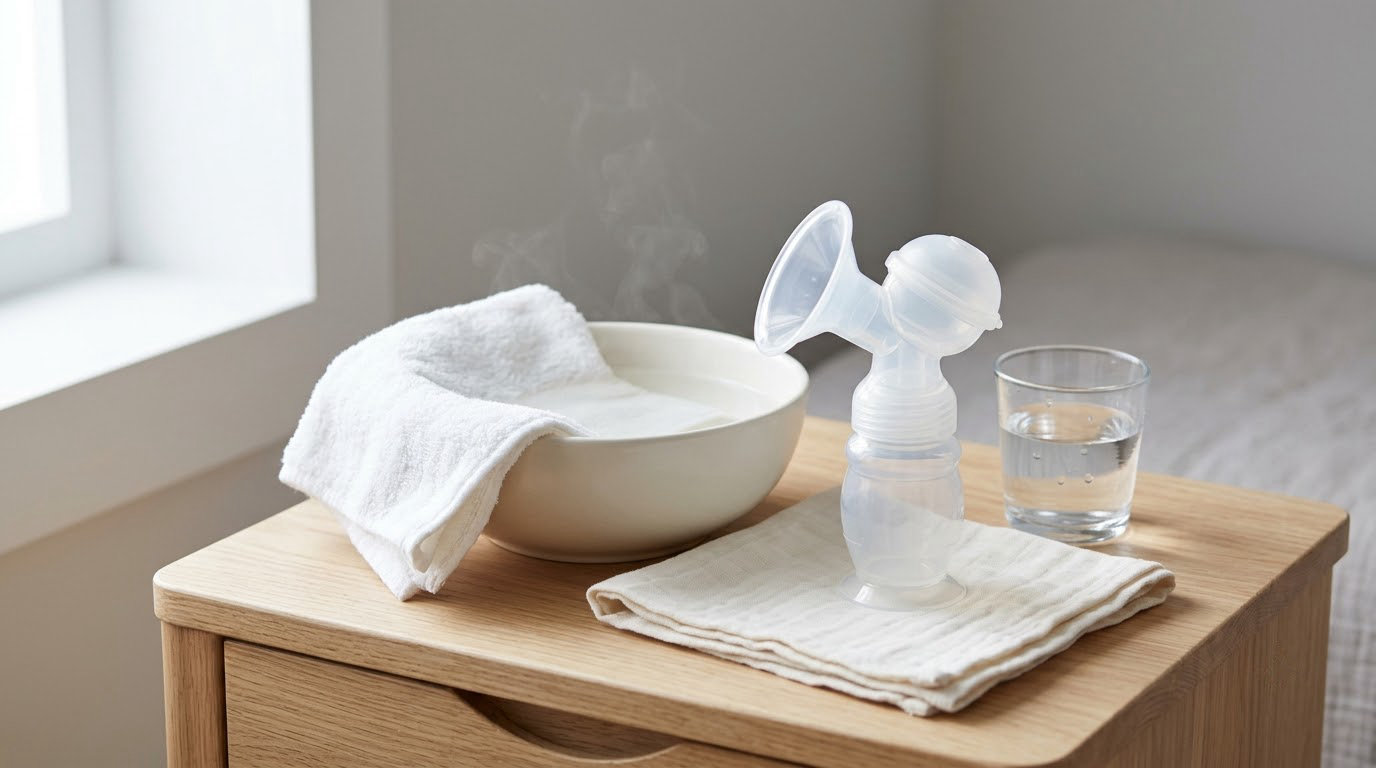
Clean water and a way to warm it. A warm damp washcloth, a warm shower or a warm bath all work. Check any heat source on the inside of your wrist first, because breast skin is sensitive and easily burned.
A comfortable place to feed or pump. Somewhere you can sit or lie down with pillows, and with no deadline. Position matters more than any product when milk needs to move.
A breast pump, only if you already own one. If you are pumping regularly, a pump you know how to use is the fastest way to empty a side on schedule. There is no need to buy anything specifically for this.
A way to track symptoms. A note on your phone with the time you started, which side it is, how the lump feels, and any temperature change gives you something to compare and something useful to tell a clinician.
Specialised devices, herbal products and supplements are not needed for everyone. If you are considering one — including sunflower lecithin, anything applied to the breast, or anything taken by mouth — raise it with a qualified clinician first, especially while you are breastfeeding.
Step-by-Step: Clogged Milk Duct Relief That Actually Helps
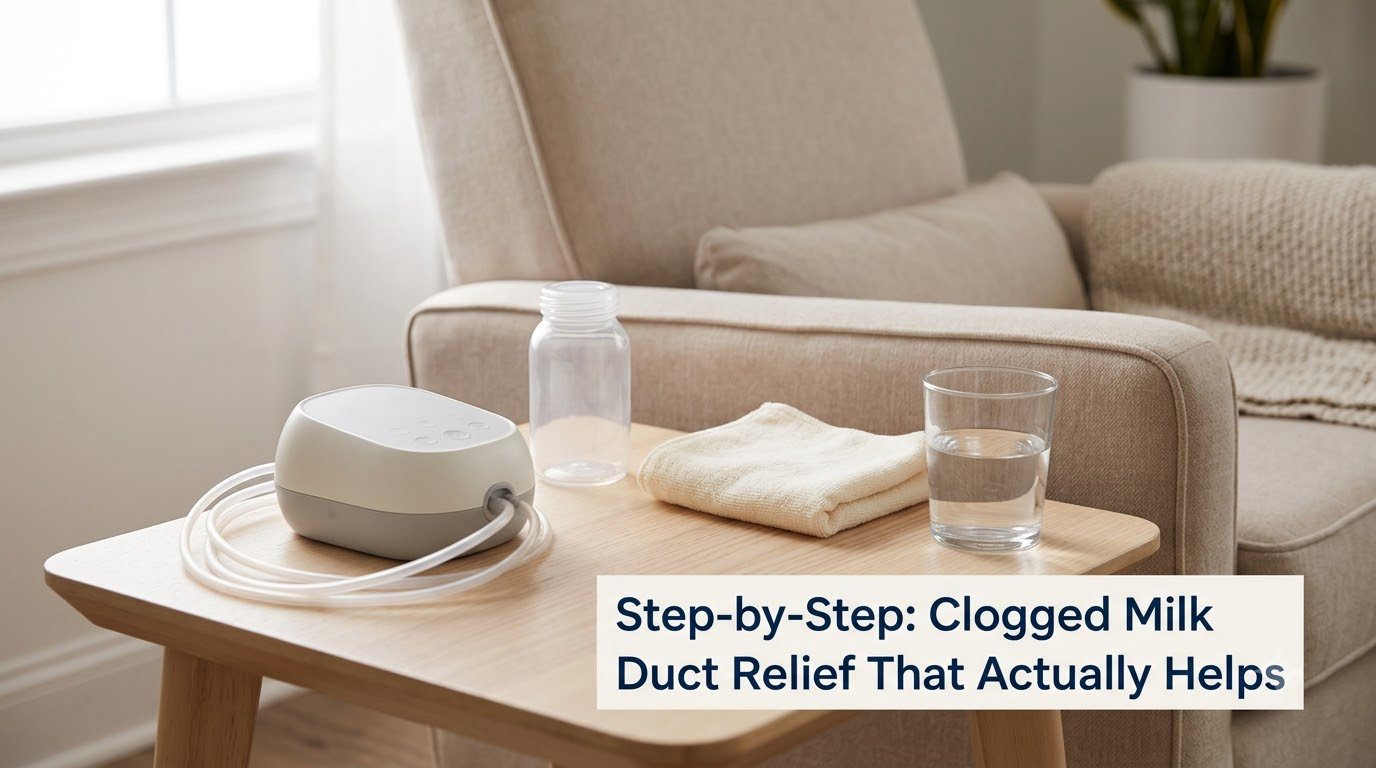
Feed or express the affected side first. Positioning the baby or the pump flange on the sore side at the start of a session gives that side priority before the other breast fills and settles.
Warmth loosens thickened milk. Apply a warm damp cloth for a few minutes before the feed, or step into a warm shower and let water run over the breast. Stop if the heat increases pain rather than easing it.
Use light pressure toward the nipple. Cup your hand a few inches back from the lump and press gently, repeatedly, in the direction of the nipple, as though you are moving milk forward. It should feel mild. Anything that makes you flinch is too much.
Combine warmth with expression. In the shower or over the sink, place your thumb and finger behind the areola, press back towards the chest wall and roll the areola between them. Warm water plus hand expression is reported more often than anything else as the step that finally shifted a stubborn block.
Empty the breast at regular intervals, night included. Long gaps let milk sit and thicken. A baby sleeping through a stretch, a missed pump, or an abrupt reduction in feeding are common reasons blockages appear in the first place.
Settle the breast after the feed. Once milk is flowing, a cool compress for a short while can reduce swelling so the breast feels less full for the next feed. You do not need to nurse to an empty breast every time; you need the side emptied often enough that nothing sits.
Rest, drink and eat normally. Threads on breastfeeding forums repeat one pattern more than any other: blockages cluster in run-down weeks with broken sleep, and they ease when sleep and food improve. Dehydration and fatigue make every other measure harder.
How to Check That Your Latch or Pump Fit Is Right
A good latch should not hurt, and the baby should be taking milk rather than air. You can usually check by feel: the mouth should cover more of the areola below than above, cheeks rounded rather than drawn in, and the chin pressed into the breast.
For pumping, the nipple should sit centred in the flange and drawn in slightly, with no white ring of swollen areola at the base afterwards. If a mark stays, the flange is likely the wrong size and no amount of suction will fix it.
Positioning changes what you can do about a blockage. Lying on your side, or leaning forward so the breast hangs, uses gravity rather than force. If feeding hurts persistently, or your baby seems to be transferring little milk, a lactation consultant or IBCLC is worth booking — that is exactly the kind of thing they are trained to assess.
How Often to Feed or Express While a Duct Feels Clogged
Keep your normal feeding or pumping rhythm rather than adding a punishing extra session. Most guidance is to empty the breast at the same intervals you already use, and to feed the affected side first each time.
Aim for the effective feed roughly every two to three hours while awake, and continue expressing at night if you already do. Do not deliberately skip a feed to give the breast a rest; leaving milk in place is what created the blockage.
Watch for progress rather than effort. Within about 24 hours the lump should feel smaller, softer, or start moving under your fingers at the nipple. If nothing changes and the pain is climbing after a day, that is the point to contact someone rather than push harder.
Common Mistakes
Massaging aggressively. Pressing hard, pushing the lump around or using a comb or other object across the skin is a common thread online and a bad idea. Forceful pressure bruises tissue and increases swelling. Safer alternative: gentle strokes toward the nipple with a flat hand.
Compressing tightly. Binding the breast, wrapping it firmly or wearing a hard compression garment to hold pressure on a spot can trap milk. Safer alternative: a snug bra for support, never a tourniquet.
Ignoring it and hoping. “It will clear itself” is true for many small blocks, but a blockage that sits for days can become mastitis. Safer alternative: keep feeding and expressing on schedule and set yourself a 24-hour check-in.
Starting supplements without advice. Sunflower lecithin, herbal remedies and topical balms are widely shared and poorly studied. Safer alternative: talk to a doctor, pharmacist or IBCLC before starting any of them.
Taking medication that is not prescribed. Antibiotics do not clear a simple blockage, because most blocks are not infections, and taking them unprescribed delays the correct assessment. Safer alternative: get advice before treating anything.
Piercing a milk bleb at home. A small white spot on the nipple can be a bleb, and it sometimes opens on its own with warm soaking and gentle pressure. Poking it with a needle, in any setting, risks infection. Safer alternative: warm water and time, and ask a clinician to look if it persists.
None of this can tell you what is going on in your breast. A hard lump can have causes beyond a duct blockage, and only an examination can sort those out.
Frequently Asked Questions
How long should I try clogged milk duct relief that actually helps before contacting a doctor?
Give gentle relief a fair overnight trial, then reassess. Keep feeding or expressing on your normal rhythm, add warmth before each session and gentle pressure toward the nipple, and check at the 24-hour mark whether the lump is smaller or softer. If it is unchanged after 24 to 48 hours, or the pain is rising, contact your doctor, midwife or lactation consultant rather than escalating the pressure you apply.
Is a hard lump in the breast always a clogged milk duct?
No. A blocked duct is one of the more common reasons for a tender lump while breastfeeding, but engorgement, a milk bleb and early mastitis can all feel similar. A lump that is painless, hard-edged, does not soften after a feed or pump, or persists for weeks needs examination by a clinician, even while you are nursing.
Should I keep breastfeeding or pumping if I think a duct is clogged?
Yes, in most cases. Continuing to empty the breast frequently is the main thing that clears a blockage, and there is no reason to stop feeding because of a clogged duct. Feed or pump the affected side first, keep your usual rhythm, and use warm water or a warm compress beforehand. Staying on schedule matters more than any extra session.
When does a clogged milk duct need medical attention?
Same-day advice is warranted for a fever, chills or flu-like feelings, red streaks or spreading redness, a hot hard area, worsening rather than improving pain, pus or an unpleasant smell from the nipple, or feeling generally very unwell. Call the same day if nothing has improved after 24 to 48 hours of frequent emptying and warmth, or if the same spot keeps blocking.
Can I use supplements or topical products for a clogged milk duct?
Bring it to your doctor, pharmacist or lactation consultant first. Sunflower lecithin, herbal preparations and anything applied to the breast have limited evidence, and products on the skin surface may reach your baby. Warm water, regular feeding or pumping and gentle hand expression carry far stronger support. Nothing applied or taken while breastfeeding should start without that conversation.
Start With Gentle, Consistent Care and Watch for Warning Signs
Do the simple version first: feed or pump the sore side at the start of every session, warm it briefly beforehand, press gently toward the nipple, and keep your normal rhythm through the night. Check at 24 hours whether the lump is smaller, softer or starting to move.
Leave out anything forceful. No hard massaging, no tight wrapping, no objects dragged across the skin, no home-pierced blebs, and no supplements or medication you have not discussed with a clinician.
Contact a healthcare professional the same day for fever, chills or flu-like feelings, red streaks or spreading redness, a hot hard area, pain that is worsening, pus or an unpleasant smell from the nipple, or if you simply feel very unwell. Also call if the lump has not improved after 24 to 48 hours of frequent emptying and warmth, or if the same place keeps blocking — repeated blockages in one spot deserve a proper review of latch, flange fit and supply rather than another round of home remedies.