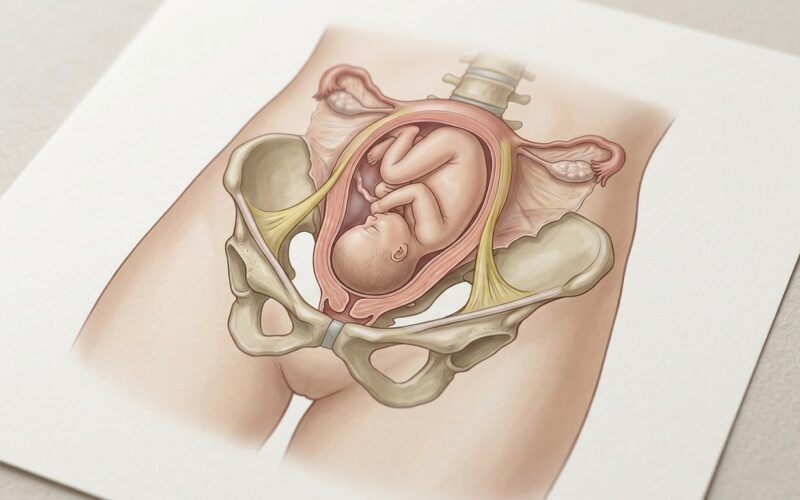
To prepare your body for labor in the last month, focus on steady daily habits rather than anything dramatic: gentle movement, real rest, regular meals, and a clear birth plan you have actually talked through with your provider. Nothing you do at home controls the timing of labor, and no home remedy can prevent complications, so the decisions that matter most — induction, medication, procedures — belong with your midwife or obstetrician.
This plan covers roughly weeks 37 to 40 and beyond. It is general information, not personal medical advice. Your provider’s instructions always come first, especially if you have a chronic condition, a previous difficult birth, or a VBAC plan.
Table of Contents
- What You Need
- Step-by-Step: How to Prepare Your Body for Labor in the Last Month
- Build a gentle movement routine
- Prioritize sleep, rest, and upright time
- Eat regularly and keep easy foods available
- Practice the practical and emotional parts of labor
- Finish the practical checklist
- Know when to contact the maternity care team
- What not to try in the last month
- Common Mistakes
- Frequently Asked Questions
- How do I know if I’m in early labor or having Braxton Hicks contractions?
- Is it too late to prepare for labor at 39 weeks?
- Should I be doing Kegels before labor, or releasing my pelvic floor?
- Can resting too much delay labor?
- What are the 3/2/1 and 5-5-5 rules for labor?
- Do dates or raspberry leaf tea actually start labor?
- What to Do First This Week
What You Need

You need seven things, and most of them you can assemble in an afternoon. The first is a prenatal provider or midwife you can actually reach, with an out-of-hours number and a clear instruction for when to call.
The second is a completed birth-preference document. Preferences are useful, but they are not guarantees, and the more rigidly you write it the more likely you are to be disappointed when a clinician meets a complication you did not plan for. If you want to understand how a doula fits into that document, what a doula does during labor and delivery is worth reading before you finalize yours.
Then come the practical items: clothing that fits now and will fit in three weeks, shoes with grip, a water bottle that is easy to carry, and food you can eat one-handed. You also need somewhere to move — a hallway, a living room, a pool, or a path that is flat and safe.
A support person matters more than most people expect. Choose someone who can stay calm, follow your lead, and keep track of time. And pick one reliable source for medical questions, because a spiral of contradictory internet advice is its own kind of exhausting at 39 weeks.
One thing worth saying plainly: no tea, supplement, massage, or home technique starts labor on a schedule. Some may soften tissues slightly. None of them guarantee a timing, and several carry real risks.
Step-by-Step: How to Prepare Your Body for Labor in the Last Month

Build a gentle movement routine
Movement in the last month is about circulation, comfort, and keeping your hips and ankles mobile, not about performance. Walking is the simplest reliable option — most people manage 20 to 30 minutes at a conversational pace, and splitting it into two shorter walks is fine.
Swimming or a gentle water-based class takes the weight off a pelvis that is already uncomfortable. Prenatal yoga, pelvic tilts, and hip openers address the stiffness that builds up from standing all day. Bouncing on a birth ball and hip circles are often the first thing people say helped their baby settle lower, and they are easy to do for ten minutes while watching something.
On the pelvic floor, aim for coordination rather than brute strength. There is a real risk of over-training in the final weeks, and the muscles need to be able to let go as much as they need to hold. Release work — long exhales, gentle pelvic tilts, side-lying rest — is as useful now as strengthening was earlier.
Slow down when you need to, drink water, and avoid anything that leaves you breathless or off-balance. Falls are a genuine hazard at this stage because of both the shifted centre of gravity and the softening ligaments. If you have pelvic girdle pain or symphysis pubis pain, ask your provider or a pelvic health physiotherapist for modifications before pushing through it. Stop and call if you feel pain that is sharp, one-sided, or not settling after you rest.
Prioritize sleep, rest, and upright time
Rest is recovery, not a labor tactic. Nobody stays in labor because they took a nap, and days of poor sleep leave you less able to handle contractions, so protect sleep like any other health task in this period.
Side-lying with a pillow between your knees and one under your belly takes the most pressure off the lower back and pelvis. If you cannot get comfortable on your side, a firm pillow angled at a semi-recline often works. Change position at least every hour or two while you are awake — lying still for long stretches makes the pelvic pressure worse, and upright time like standing, kneeling, or hands-and-knees often relieves it.
Ask for help with the household jobs that pull hardest on a tired body. Laundry, groceries, and lifting are not tests of your strength. On the r/pregnant and r/BabyBumps threads, the recurring complaint was not that people rested too much but that they felt guilty about it, and that guilt cost more energy than the rest did.
Eat regularly and keep easy foods available
Meals matter here because you may be eating less, moving less, and recovering from a lot of physical work. Regular meals with protein, fiber, and fluids are a sensible general pattern, and the foods you already tolerate are the right foods.
Have something you can eat in the middle of the night and something you can eat in a car. Labor can start at 2 a.m. and no amount of preparation makes a full meal at that hour realistic. If you have gestational diabetes, a food allergy, an intolerance, or a restricted diet under your care, get your specific plan from a clinician or registered dietitian rather than adjusting a general guideline yourself.
Practice the practical and emotional parts of labor
Rehearsal is what makes the practical parts usable when you are tired and in pain. Practice a slow breathing pattern — a longer exhale than inhale — until it is automatic, and then practice it while walking, since labor is not a stationary activity.
Rehearse position changes with your support person: hands-and-knees, side-lying, upright on a ball, one foot up on a chair. Rehearse the practical conversation too — what you want to know when you arrive, how you want pain management discussed, and how you want to be spoken to. People who took a class consistently reported on forums that the breathing practice was the part they actually used, not the birth plan.
Then plan for change. Induction, assisted birth, and caesarean are not failures to have prepared for; they are variations that a prepared person handles better. If you want to know how to hold your ground in a clinical conversation, your rights to refuse a medical procedure during labor covers the practical side of that.
Finish the practical checklist
Work through the logistics that get missed in the panic: the bag, transport, phone numbers, time-sensitive documents, medications, home setup, childcare, and work coverage. Include a backup communication plan for when your phone dies or your main contact is driving.
Take your facility’s own packing and admission instructions over any generic list you find online. Policies on food during labor, showering, and when to arrive differ between units and between countries, and a list written for a different hospital will send you in with the wrong expectations.
If you have a chronic condition, your preparation has an extra layer — medication timing around labor, thresholds for when to call, and coordination between your obstetric and medical teams. How to prepare for birth with a chronic illness covers that in more detail.
Know when to contact the maternity care team
Some symptoms in the last month are routine, and some are not. When in doubt, call — your provider would rather hear from you at 3 a.m. than not.
Contact your maternity care team for reduced or changed fetal movement, vaginal bleeding that is not a small show of mucus and blood, leaking fluid, a fever, severe or persistent pain, regular painful contractions before 37 weeks, a headache with vision changes, or anything that simply feels unusual to you. Follow your local instructions, and use emergency services for anything urgent.
You do not need to diagnose which category a symptom falls into. That is the clinician’s job, and describing what you noticed is more useful to them than trying to name it.
What not to try in the last month
Skip home induction attempts with herbs or supplements. This is the clearest line in the whole topic: induction methods, supplements, and medications are decisions for your maternity care team, not a weekend project. People report being asked at their next appointment about what they took, and the answer is often the provider’s.
Also drop the rigid timeline. Nesting at 36 weeks is not a failure. Watching the calendar and reading every day as a deadline makes the last month harder without making the outcome different.
Stop treating movement as a signal. Walking, stretching, and pelvic work are for how you feel and how you move, not for predicting anything about when labor starts. And stop copying one person’s birth story as a rule — it was their body, their provider, their baby.
Common Mistakes
Trying to start labor yourself. Herbal preparations, castor oil, and similar attempts carry real risk and no reliable timeline. The realistic alternative is to call your provider and ask what evidence-based options exist at your gestational age.
Over-training the pelvic floor. Doing heavy Kegel programs right up to delivery leaves muscles that struggle to release when they need to. Balance the strengthening with release work, or ask a pelvic health physiotherapist where you actually stand.
Treating rest as laziness. Fatigue in the last month is physiological, not a character flaw. Rest is what lets you keep doing the one or two things that genuinely help.
Relying on generic checklists. Popular lists ignore your facility’s actual policy and your provider’s advice. Replace them with a conversation and the written instructions you were given.
Skipping the mental preparation. First-time mothers on forums kept saying the mental preparation mattered more than the physical prep. Budget time for the breathing practice and the honest conversation about preferences and changes of plan.
Believing the nesting timeline. Energy and motivation swing in the last month for no reason you control. Let the messy parts be messy.
Frequently Asked Questions
How do I know if I’m in early labor or having Braxton Hicks contractions?
Braxton Hicks feel irregular, tighten without a clear pattern, and usually ease with rest, hydration, or a change of position. Early labor tends to come in waves that get stronger, closer, and longer over time, and does not settle when you change position. Track the start and end times for an hour and call your provider if you are unsure. They have heard every description you can give them.
Is it too late to prepare for labor at 39 weeks?
No. Fetal position, pelvic mobility, and stamina all still respond to work in the final weeks, and plenty of people start at 39 weeks and find it useful. What is genuinely too late is unsupervised induction with herbs or supplements. Keep the habits simple: daily gentle movement, regular meals, rest when you are tired, and a birth-preference conversation with your provider.
Should I be doing Kegels before labor, or releasing my pelvic floor?
Usually both, in the right balance. Your pelvic floor needs to hold and to let go, and many people over-train the hold in the final weeks without realizing it. Coordinate your breathing with gentle pelvic tilts and sustained releases alongside any strengthening you are already doing. If you have pelvic girdle pain, a pelvic health physiotherapist can tell you exactly where you stand.
Can resting too much delay labor?
No. Resting does not delay labor, and labor timing is not something your behavior controls in any direct way. What poor rest does is leave you depleted, which makes contractions harder to work through. Rest is simply the recovery that lets you keep doing the gentle movement and daily tasks that support how you feel. If resting leaves you feeling guilty, that is worth talking about with your provider.
What are the 3/2/1 and 5-5-5 rules for labor?
They are informal tracking heuristics that people use to describe early labor patterns, and they are not clinical guidance or instructions from your hospital. They vary between communities, so follow the version your own provider uses if they gave you one. Your provider’s written instructions and your facility’s admission policy always take priority over any rule you read online.
Do dates or raspberry leaf tea actually start labor?
The evidence for both is limited, and neither reliably starts labor on a schedule. Studies on dates suggest at most a modest effect on cervical ripening in some groups, and the research on raspberry leaf is small and inconsistent. Providers vary widely in what they are comfortable with, so tell yours what you have taken rather than guessing what is allowed.
What to Do First This Week
Pick three things and put them on the calendar: a daily walk, a daily breathing practice, and one conversation with your provider about your birth preferences and when to call. Everything else on this list is a bonus, and the bonus items are not worth an induction attempt or a lost night of sleep.