Constipation during pregnancy is common, and the usual fix is boring and unglamorous: eat regular meals, drink steadily through the day, add fiber gradually, move in whatever way feels comfortable, and give yourself unhurried time on the toilet. Pregnancy constipation relief usually comes from those five habits working together over a week or two, not from a single product.
Up to 40 percent of pregnant people deal with constipation at some point. If you are searching for how to deal with constipation during pregnancy, this guide walks through the everyday steps first, then the point where a conversation with your doctor, midwife, or pharmacist belongs. It is general information, not personal medical advice.
Table of Contents
- What You Need
- Step-by-Step: How to Deal With Constipation During Pregnancy
- Step 1: Check What May Be Contributing
- Step 2: Build a Regular Food and Fluid Routine
- Step 3: Add Gentle Movement and a Toilet Routine
- Common Mistakes
- Adding a lot of fiber all at once
- Cutting out most food groups
- Sitting still for long stretches
- Straining and pushing on the toilet
- Starting remedies without asking anyone
- Frequently Asked Questions
- When does pregnancy constipation stop?
- Is Miralax safe to use during pregnancy?
- Which stool softeners are considered safer options in pregnancy?
- How much water and fiber do I need to relieve constipation while pregnant?
- When should I call my doctor or midwife about constipation?
- Conclusion
What You Need
Nothing special. No gadgets, no meal plan, no expensive powders. What you need is a starting point and a few habits you can keep for weeks, because constipation tends to come back when routines slip.
The basics of the approach:
- Regular meals. Skipping breakfast then eating a large late meal is a common pattern that leaves digestion without a steady rhythm.
- Fluids through the day. Steady beats a large amount once, and fluids should be spread across meals and snacks rather than chased.
- A gradual fiber increase. Most adults land around 25 to 30 g of fiber a day, and jumping there in three days tends to produce gas and bloating instead of relief.
- Movement within your limits. Walking, swimming, or prenatal-safe exercise, adjusted for anything your provider has told you to avoid.
- An unhurried toilet routine. Go when the urge appears, and give yourself enough time that you are not racing the clock.
One more thing worth saying up front: any supplement, over-the-counter product, or remedy should be checked with your prenatal clinician or pharmacist first. Pregnancy changes what is safe, and the advice you find online was not written about your history, your trimester, or your medications.
Step-by-Step: How to Deal With Constipation During Pregnancy
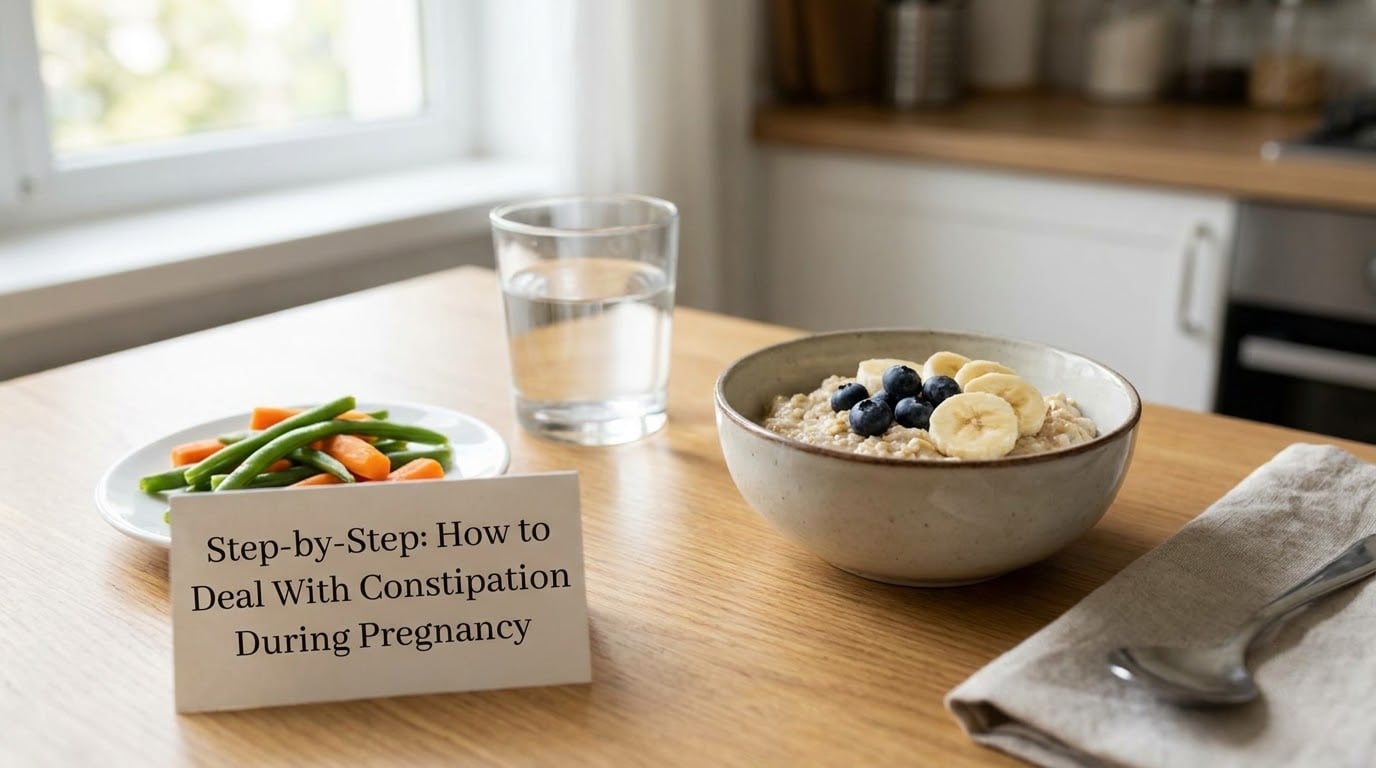
Three steps, in order, because they build on each other. Changing all of them at once makes it hard to tell what actually helped.
Step 1: Check What May Be Contributing
Start with two honest weeks. Look at what changed in food, fluids, activity, medicines, supplements, and bathroom habits. Most constipation during pregnancy has a traceable cause, and finding it is faster than trying random fixes.
Several things are working against you at once:
- Progesterone. This hormone relaxes smooth muscle all through the body, including the intestinal tract. Slower transit means more water gets pulled out of the stool, so it hardens.
- A growing uterus. It presses on the bowel, and the pressure builds as the pregnancy advances.
- Iron. Iron supplements and most prenatal vitamins contain iron, and iron is a common reason constipation appears suddenly in the first trimester.
- Nausea and vomiting. When you cannot keep much down, both your fluid and fiber intake drop at the same time.
- Less movement. Fatigue, pelvic discomfort, and sitting at a desk all reduce the physical activity that keeps the bowel moving.
While you are reviewing, note whether you have been straining, whether you are going fewer than three times a week, and whether you feel bloated or simply uncomfortable. That detail is useful at your next appointment, and it is worth knowing what happens at the 20-week anatomy scan so you do not save up questions for a rushed visit.
Step 2: Build a Regular Food and Fluid Routine
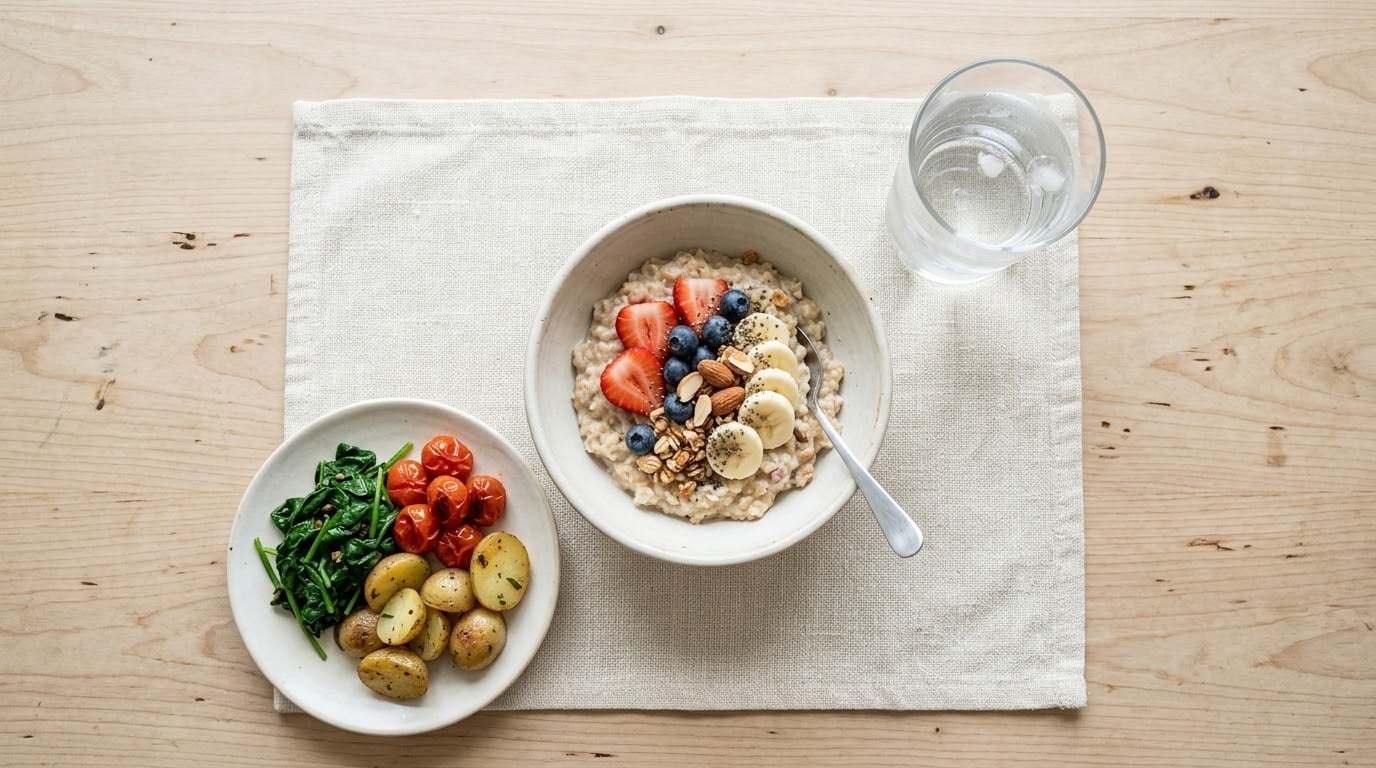
The strongest dietary lever for pregnancy constipation relief is fiber that arrives steadily, paired with fluid. Two habits do most of the work: fiber at every meal, and water spread across the day.
Most adults do well around 25 to 30 g of fiber daily, and general guidance for fluids in pregnancy often lands somewhere in the 8 to 12 cup range across all drinks and foods. Treat those as starting points, not quotas, and check with your provider if you have been told to limit fluids for any reason.
Foods that carry fiber and are easy to fold into a normal day:
- Oats, whole grain bread, brown rice, barley
- Beans, lentils, chickpeas, and peas
- Pears, kiwifruit, plums, prunes, berries, and apples with the skin
- Leafy greens, broccoli, carrots, and sweet potatoes
- Chia, flaxseed, and nuts as add-ons rather than the main event
Adding a couple of these at each meal does more than a large serving once. Prune or plum juice is a common addition because it brings both fluid and sorbitol, a naturally occurring sugar alcohol that draws water into the bowel.
Two food habits quietly work against you. The first is a big jump in raw bran or raw fiber, which often makes cramping and gas worse. The second is a very restrictive diet, especially one that cuts out grains, legumes, and fruit at the same time. If you follow a restrictive diet for nausea, diabetes, or a preference, ask your clinician how to keep fiber up without adding foods you cannot tolerate.
If iron is part of the picture, timing matters more than most people expect. Some providers suggest taking iron with food if it upsets your stomach, and spacing it away from calcium, coffee, and tea, which can reduce how much you absorb. Do not stop or change your prenatal vitamin on your own; ask which change fits your prescription.
Step 3: Add Gentle Movement and a Toilet Routine
Fiber without fluid and without movement tends to sit there. Gentle daily activity is what pushes things along, and during pregnancy the goal is circulation and comfort, not a workout.
Options that work well:
- Walking, often 20 to 30 minutes at an easy pace
- Swimming or water exercise, which also takes pressure off the pelvis
- Prenatal yoga, especially gentle classes focused on breathing and mobility
- Pelvic floor awareness work, which helps you recognize the difference between holding and straining
If you have been placed on modified rest or advised to limit activity, skip the general guidance and ask your provider what movement is appropriate for you. Slow walking indoors, ankle circles, and changing position often are usually fine, but your own clinician decides that.
The toilet routine matters just as much as the walking. When the urge comes, go. Do not postpone it all morning because you are at work or do not want to use a public restroom. A footstool that raises your knees above your hips changes the angle of the rectum and makes passing easier, and breathing out slowly is far more productive than holding your breath and pushing.
Two things that help some people during an uncomfortable episode: a warm bath, and gentle circular massage on the lower abdomen. Skip the abdominal massage in the first trimester and ask your provider before starting, particularly if you have been told to avoid abdominal massage for any reason.
Stress deserves a mention too. Constipation and anxiety feed each other, and a nervous gut is a slow gut. Slow breathing, a short walk, or having your partner take over the shopping list can do more than it sounds like. If you are planning a birth with support people, what a doula does during labor and delivery is a useful read on how much a good support person actually carries.
Common Mistakes
Most frustrated readers are not failing at constipation care. They are following advice that works badly in pregnancy. Here is what goes wrong, and what to do instead.
Adding a lot of fiber all at once
A sudden jump in fiber, especially raw bran, produces bloating, cramping, and gas, and people conclude that fiber does not work. Increase it over a couple of weeks and pair every increase with fluid.
Cutting out most food groups
Very restrictive diets remove the exact foods that help. A plan that allows only a handful of items often leaves you worse off. Preparing for birth with a chronic illness covers the same principle in a different context: a written plan for your own body beats improvising under pressure.
Sitting still for long stretches
Long seated stretches, desk days, and car travel slow the bowel. Short walks, standing during phone calls, and changing position help more than one long workout at the end of the week.
Straining and pushing on the toilet
Straining is what leads to hemorrhoids and anal fissures, which then make the original problem worse. A footstool, breathing out instead of down, and waiting for a comfortable moment fix more cases than readers expect.
Starting remedies without asking anyone
Laxatives, suppositories, magnesium products, castor oil, and herbal blends are all things to run past your prenatal clinician or pharmacist first. Herbal products in particular are poorly studied in pregnancy, and what is fine in general is not automatically fine while pregnant. This is general information, and a medication decision needs your own provider.
A few things that work quietly: keep a glass of water where you sit, keep fruit in the house so fiber is not a shopping decision, and treat the first urge of the morning as the best appointment of the day.
Frequently Asked Questions
When does pregnancy constipation stop?
Constipation often improves in the second trimester, when nausea settles and you can eat and drink more regularly, then returns in the third trimester as the uterus presses on the bowel. Many people find it eases within a few weeks of delivery, though some need support for a while. If you are managing it with habits and it is not shifting, talk to your clinician rather than waiting for a specific week.
Is Miralax safe to use during pregnancy?
Polyethylene glycol, sold as Miralax or Restoralax, is used by many pregnant people, and providers often consider it among the milder options because it is not absorbed much into the body. Safety is not the same as suitability for you. Check with your doctor, midwife, or pharmacist first, and mention any other medicines or conditions before starting it.
Which stool softeners are considered safer options in pregnancy?
Docusate sodium, sold as Colace, is a stool softener that is used during pregnancy and does not stimulate the bowel directly. Bulk-forming fiber products such as psyllium, which appear in brands like Metamucil, are also commonly discussed, though they need plenty of fluid. Magnesium and herbal products deserve more caution. Ask your prenatal clinician which option fits your situation.
How much water and fiber do I need to relieve constipation while pregnant?
Most adults do well with roughly 25 to 30 g of fiber a day, and general fluid guidance during pregnancy often falls in the 8 to 12 cup range across all drinks and foods. Increase fiber gradually and spread fluid across the day instead of drinking it all at once. If you have been told to limit fluids, follow that advice and ask how to adjust your fiber instead.
When should I call my doctor or midwife about constipation?
Call if constipation lasts more than a week despite steady food, fluid, and movement changes, or if you have severe abdominal pain, vomiting, blood in the stool, or an inability to pass gas. Sooner is better if you are passing very little stool, have hemorrhoids that bleed or hurt, or feel something rectal. These can point to something that needs assessment rather than a routine tweak.
Conclusion
To deal with constipation during pregnancy, start with the five basics: regular meals, steady fluids, fiber added gradually, comfortable daily movement, and a toilet routine where you raise your knees, breathe out, and do not push. Change one lever at a time for a week or two so you learn what your body responds to.
Then contact your doctor, midwife, or pharmacist if constipation persists despite those changes, or right away for severe pain, vomiting, blood in the stool, or an inability to pass gas. And expect to talk about it again after delivery, because postpartum constipation is common and nobody warns you about it.