
The second trimester of pregnancy runs from about week 13 to week 27, and by week 28 some clinicians call it done. It is the stretch where early nausea usually eases, your bump becomes visible, and the busy medical calendar arrives: a mid-pregnancy visit, a detailed scan of your baby’s anatomy, and screening for gestational diabetes. This second trimester checklist for expecting parents covers what is time-critical, what can wait, and what a partner can take off your plate.
Most checklists on this topic bury the urgent items in a wall of bullets, so people end up doing the fun things first and discovering at week 26 that a form had a deadline. The list below is ordered roughly by what has the narrowest window first.
A note before you start: everything here is general information for planning purposes, not medical advice. Your midwife, OB-GYN or nurse practitioner knows your history, and their instructions override anything you read online, including this page.
Table of Contents
- Second Trimester Checklist for Expecting Parents at a Glance
- How to use this checklist without treating it as medical advice
- 1. Confirm Your Prenatal Care Schedule
- Questions worth writing down before the anatomy scan
- 2. Track Symptoms and Changes to Mention
- 3. Notice Patterns in Fetal Movement
- What a movement log is actually for
- 4. Review Nutrition, Hydration, and Supplementation
- 5. Build a Comfortable Daily Routine
- 6. Plan Questions About Tests and Birth Care
- 7. Start Lightweight Birth and Postpartum Planning
- 8. Check Emotional, Social, and Practical Support
- 9. Protect Sleep, Rest, and Movement
- 10. Make a Plan for What Comes Next
- Frequently Asked Questions
- When does the second trimester start and end?
- When will I feel my baby move?
- Do most people feel better in the second trimester?
- Which is the hardest month of pregnancy?
- What should I avoid in the second trimester?
- How do I know when to call my maternity team?
- Where to Start This Week
Second Trimester Checklist for Expecting Parents at a Glance

| Checklist item | What to review | Most useful |
|---|---|---|
| 1. Prenatal care schedule | Upcoming visits, referrals, tests due this trimester | Weeks 13-16 |
| 2. Symptoms and changes | Energy, sleep, back, appetite, mood, new or worsening signs | Ongoing |
| 3. Fetal movement | Quickening, daily pattern, unusual quiet periods | Weeks 17-27 |
| 4. Nutrition and hydration | Meals, fluids, prenatal supplement, dietary needs | Ongoing |
| 5. Daily routine | Work, posture, chores, rest breaks | Weeks 14-20 |
| 6. Questions about tests and birth care | Screening options, development, labor preferences | Before each visit |
| 7. Birth and postpartum planning | Where you will give birth, who to call, first essentials | Weeks 20-27 |
| 8. Support system | Meals, transport, childcare, emotional support | Weeks 16-24 |
| 9. Sleep, rest, movement | Sleep position, breaks, comfortable activity | Ongoing |
| 10. Plan for what comes next | Records, reminders, what can safely wait | Weeks 24-27 |
How to use this checklist without treating it as medical advice
Read it as a set of prompts, not a set of instructions. If an item on this list conflicts with something your care team told you, follow them.
Two columns work better than one long list. Put anything with a deadline in one column (forms with cut-off dates, waiting lists for childcare or classes, decisions you need to make before a certain week) and everything else in a second column. Parents on forums like r/BabyBumps describe the panic that comes from not knowing which items are urgent, so decide that once and stop re-reading the whole list.
1. Confirm Your Prenatal Care Schedule
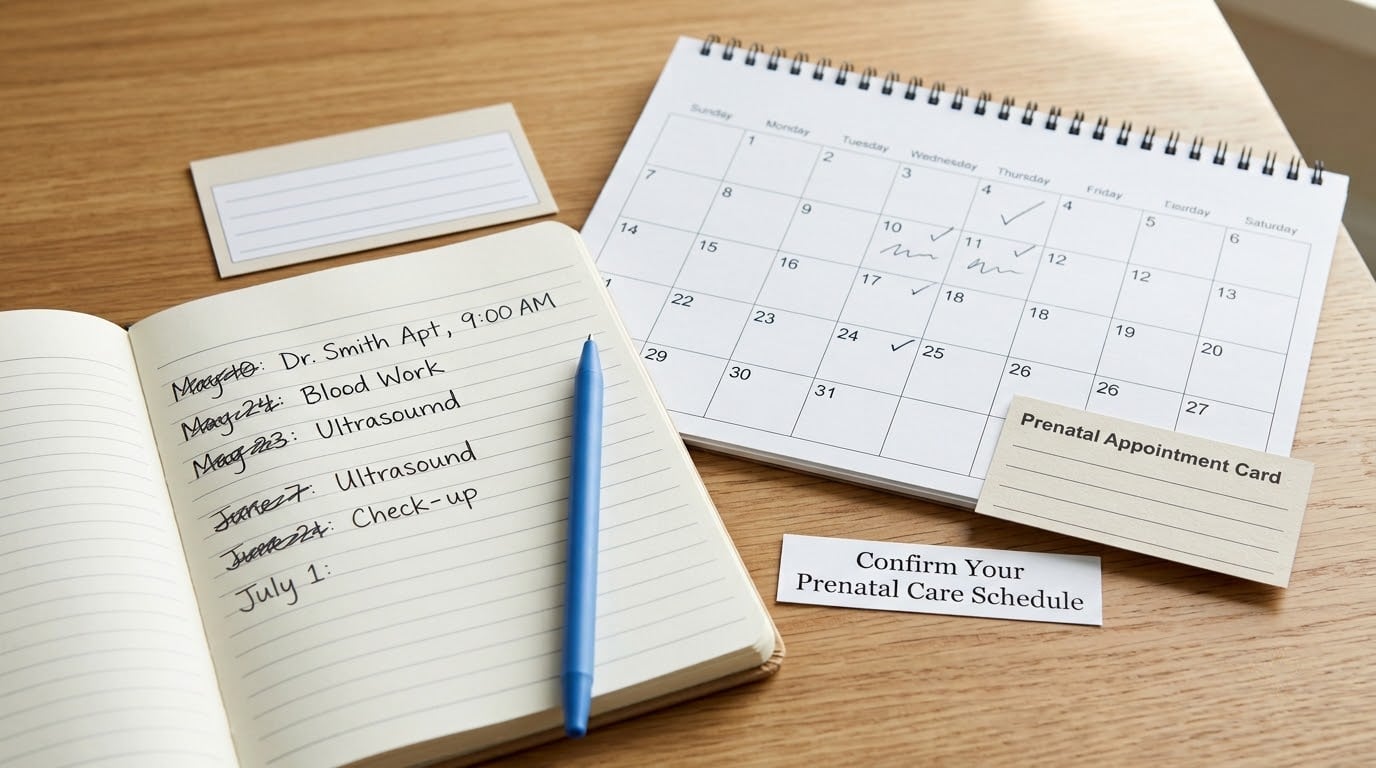
Put every remaining appointment for this trimester in one place, and check that your clinic’s phone number, after-hours line and portal details are current. A mid-pregnancy visit around 16 weeks often reviews blood pressure, urine, weight and, depending on where you live, a screening blood test. The anatomy scan is commonly booked between 18 and 22 weeks.
Ask the office two questions in one email or call: which tests are planned before week 28, and whether anything needs fasting. The glucose screening offered between 24 and 28 weeks often does, and finding that out a week beforehand is much easier than guessing on the morning of.
Questions worth writing down before the anatomy scan
Bring a list, not a memory. Typical items: what the scan can and cannot detect, when results arrive, who contacts you if a measurement needs a follow-up, and whether you want to know the baby’s sex. Naming the last one in advance removes an awkward moment in the scanning room.
Also ask about your estimated due date calculation, whether the office screens for gestational diabetes, and when they would like to review your medications and supplements. If you are Rh-negative, ask when anti-D immune globulin is given.
2. Track Symptoms and Changes to Mention
Keep a short weekly note rather than a daily log. A line such as “slept badly two nights, lower back sore in the evening, ate well” gives your clinician something concrete at the next visit, and it takes two minutes on a Sunday.
What to record: energy, sleep quality, appetite, bowel changes, headaches, swelling in hands and feet, leg cramps, round ligament pain, heartburn, and your mood. What not to do is interpret it. Notes are observations; a diagnosis comes from a clinician who can examine you.
Some ordinary second-trimester changes include tiredness returning around weeks 26 to 28, more visible veins, skin darkening along the linea nigra, and mild swelling in the feet at the end of the day. Parents often feel pressure to enjoy a “honeymoon trimester,” and plenty of people feel anything but wonderful through it. If you are still nauseated at 20 weeks, that is worth mentioning at your next visit rather than explaining away.
3. Notice Patterns in Fetal Movement
The first movements, called quickening, are often noticed between weeks 17 and 20, though the range is wide and earlier is possible. First sensations are commonly described as bubbles, taps or a flutter. Movement typically becomes easier to feel as the pregnancy progresses, and many people notice a distinct pattern by the early third trimester.
There is no universal number of movements that counts as normal. What your midwife or OB-GYN asks you to look for is a change from your own usual pattern.
What a movement log is actually for
A log is not a test. Its only job is to show you your own baseline and give you something concrete to describe on the phone. Note the time of day your baby is usually active and roughly what that looks like, then flag anything that feels meaningfully different.
If you are worried about reduced or changed movement, contact your maternity care team the same day rather than waiting for the next appointment. They would far rather take a call that turns out to be nothing. If you have vaginal bleeding, severe abdominal pain, a gush of fluid, or regular tightening, treat it as urgent and contact your care team or maternity unit immediately.
4. Review Nutrition, Hydration, and Supplementation
The middle of pregnancy is a reasonable time to look at meals rather than at restrictions. Regular protein, iron-rich foods, calcium sources, and omega-3 fats are the general themes most clinicians raise. Many people continue a prenatal vitamin through pregnancy; confirm yours with your provider, including folic acid and iron content.
Hydration is the item people skip and then wonder why they feel headachy by 3pm. Keep a filled glass where you sit, and count roughly eight glasses of fluid across the day unless your clinician has told you something different, which they may have for specific conditions.
Ask your clinician or a registered dietitian about alcohol, caffeine limits, food safety, and any dietary needs such as vegetarian, vegan or gluten-free eating. Treat online nutrition plans for pregnancy with suspicion. Nothing here is a prescription, and supplement doses in particular should come from your provider.
5. Build a Comfortable Daily Routine
Energy is often the reason this trimester feels manageable, and it is finite. Structure the day so the demanding tasks fall where you feel strongest rather than wherever they happen to land.
A realistic pattern for a desk job might look like this: two focused seated blocks in the morning, a 20-minute walk at midday, meetings after lunch when concentration dips, and an honest end of day. Standing all morning at work and then cooking dinner is a common way to hit week 24 sore and annoyed.
Small adjustments add up. Sit with a cushion behind your lower back, keep feet supported, and change position every 30 to 45 minutes. If you have standing duties at work, ask about breaks. If household tasks are draining you, this is a good week to hand one to a partner, a friend or a paid cleaner.
6. Plan Questions About Tests and Birth Care
Use this trimester to build your question list, because appointments move fast once the third trimester starts. Keep it somewhere you will actually see it: a notes app, the back of a shopping list, a phone photo of the clinic’s whiteboard.
Organize it in four piles. Medical screening: which tests, what they screen for, what happens if a result is unusual. Development: what the anatomy scan shows, what happens next week to week. Labor: when to arrive, what pain management looks like, who can be in the room. Postpartum: how long you stay, what recovery involves, when you would see your own provider again.
Write down your preferences before you feel labor pain, because preferences tend to shift once you are in it. A birth plan is a document for your care team, not a contract, and you can revise it as many times as you need. Your care team should know your wishes even if the document gets left at home, so talk through the important ones out loud too.
7. Start Lightweight Birth and Postpartum Planning
Keep this trimester’s version small. Book a tour of the place you plan to give birth, if tours run. Ask about visiting hours, what you can bring, and where the parking is, because those are the questions nobody remembers to ask and everybody wants answered on an actual labor day.
Decide who gets the first phone call at 3am, and write the name down where a tired person could find it. Make a beginning essentials list rather than a complete one: a few outfits, sleep basics, a car seat, and the paperwork you will want at the hospital. Nursery gear can be researched now and bought later, and second-hand is fine for most items if you check condition and recall.
Talk about feeding early enough that the decision is yours rather than the moment. If you know you want to breastfeed, ask about hospital lactation support. If you know you do not, that is fine too. If you are unsure, that is also fine. Same for postpartum support: a doula, a night nurse for a stretch, family help, or simply knowing the name of a newborn care class.
8. Check Emotional, Social, and Practical Support
Name the people who will show up, and the specific thing each one will do. “We will help” fades; “Priya is doing a grocery run on Sundays and you are booking the pediatrician” survives. Parents on forums describe the second trimester as when they finally had the energy to ask for help, which is exactly when to ask.
Cover the practical categories: meals, transportation to appointments, childcare for existing children, someone to call when you need to vent, and someone who can take a shift so you can sleep. Working out who covers the week you give birth is more useful than a general promise of help.
On mood: it is common to feel more emotional than expected, and to feel great and awful in the same week. Standard prenatal care in the US includes screening for depression and anxiety around this stage, and it is worth taking part rather than skipping it. If low mood, anxiety or difficulty coping continues for more than two weeks, or if you ever feel unsafe or have thoughts of harming yourself, contact your provider urgently rather than waiting for a routine visit.
9. Protect Sleep, Rest, and Movement
Sleep gets harder around this point because of the bump, leg cramps, heartburn and the general business of planning. A few habits pay back quickly: a consistent bedtime, a cool dark room, and screens off earlier. Many people find side sleeping with pillows supporting the bump, the knees and the ankles more comfortable than lying flat, and some providers recommend side sleeping in later pregnancy.
Movement helps most people sleep better and feel less stiff. Walking, swimming or water aerobics, and prenatal yoga are the activities most often recommended. Clear a path, wear something supportive, and take breaks even when you feel fine.
Skip anything that feels risky or exhausting, and stop if you get pain, bleeding, dizziness, breathlessness, or leaking fluid. Check with your prenatal care team before starting something new, particularly if you have not been active recently. There is no prize for exercising through a warning sign.
10. Make a Plan for What Comes Next
In the last stretch of the second trimester, look forward rather than sideways. Week 27 to 28 is often where providers discuss the third trimester’s visit schedule and any additional screening, so ask what is on the horizon and when you will review it together.
Make your records findable: one folder on your phone or laptop with scan results, referral letters, insurance details, and your questions list. Decide who else needs copies, and which of them should get them now.
Then deliberately retire some tasks. Registry items, a birth plan you keep rewriting, a nursery you cannot finish for months yet, a name shortlist you are not ready to finalize. If you have been treating the second trimester as a chance to finish everything, drop the worst half of the list. A calm, organized week 27 beats an exhausted one.
Frequently Asked Questions
When does the second trimester start and end?
Most clinicians measure the second trimester from week 13 to week 27, so it is 14 weeks long. Some count to week 28 and call it 15, and some use 14 weeks as the start, which makes 13 weeks. None of this changes your care. What matters is that your appointments and scans are scheduled by weeks, not by trimester labels, so ask your provider for dates rather than trying to work out which counting system they use.
When will I feel my baby move?
First fetal movement, called quickening, is commonly noticed between weeks 17 and 20, though some people feel it earlier and others later. It often starts as bubbles, taps or a flutter. There is no fixed count of movements that counts as normal for everyone. Get to know your own usual pattern and contact your maternity care team the same day if movement seems reduced or different from normal, without waiting for your next appointment.
Do most people feel better in the second trimester?
Many do, as early nausea eases and energy returns, which is why this stretch is often called the honeymoon trimester. Plenty of people feel exhausted, nauseated or uncomfortable straight through, and that is worth mentioning at a routine visit rather than explaining away. Fatigue returning late in the second trimester is also common. If low mood, anxiety or difficulty coping lasts more than two weeks, tell your care team, since depression and anxiety screening is routinely part of prenatal visits.
Which is the hardest month of pregnancy?
There is no single answer, and anyone who tells you there is probably describing their own experience. First trimester is often the hardest because of nausea and the uncertainty, the third trimester because everything gets physically heavy, and the second trimester because appointments, decisions and planning pile up while you are trying to work. If someone describes a golden window where you must enjoy everything, hold that loosely and pace yourself instead.
What should I avoid in the second trimester?
The short version is that alcohol, smoking, recreational drugs and unprescribed medication are the firm noes, and raw or undercooked animal products and unpasteurized dairy carry food safety risk. Skip activities with a real fall risk, and avoid lying flat for long stretches on a hot day once your provider has advised it. Do not start a new supplement or medication, including herbal ones, without checking first. Your clinician can give you a specific list for your situation.
How do I know when to call my maternity team?
Call the same day for reduced or changed fetal movement, bleeding, fluid leaking, persistent vomiting, a headache that will not settle, sudden swelling in your face or hands, or pain when you urinate. Contact them immediately, or go to your maternity unit, for vaginal bleeding, severe abdominal pain, a gush of fluid, regular painful contractions, chest pain, or breathlessness at rest. When in doubt, call, because triage questions exist for exactly this.
Where to Start This Week
Pick three things and ignore the rest until they are done. First, the next appointment on your calendar, with the questions written down before you put the phone away. Second, one symptom or care question you have been holding onto, which usually belongs in an email to the clinic rather than in a search bar. Third, one practical task that would make the next month easier, such as confirming who covers the grocery run or booking the birth place tour.
Update this checklist as you go rather than starting over next week. When you reach the end of the second trimester, the thing worth having is not a finished list, it is a set of decisions already made and a care team you know how to reach.
This second trimester checklist for expecting parents is general information to help you organize your time and your questions. It is not medical advice, and it does not replace the care of your midwife, OB-GYN or other maternity professional.