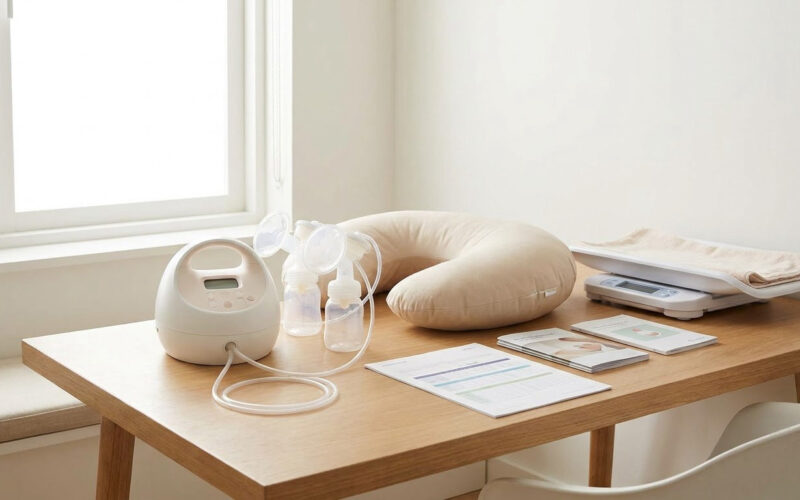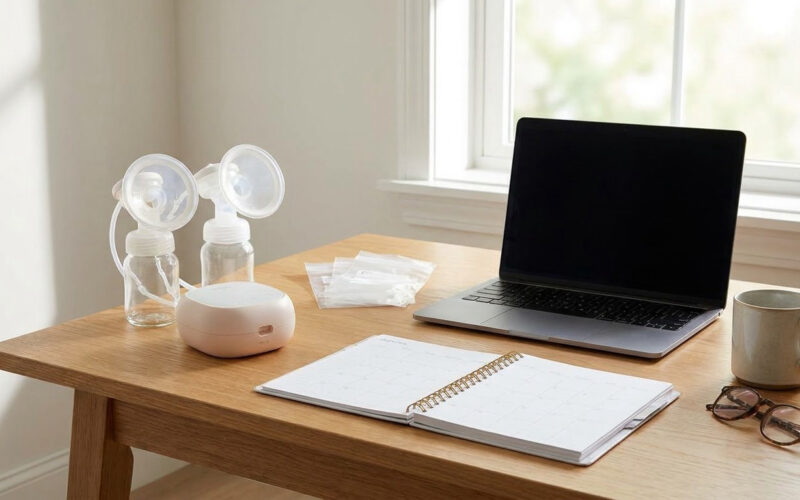
Learning how to store and thaw breast milk safely takes about ten minutes, and it saves the single most precious thing in your freezer. The short version: refrigerate expressed milk within four hours, freeze it in clean labelled containers, and thaw it in the refrigerator overnight or in cool-to-lukewarm water. Never use a microwave.
This guide follows CDC and WHO guidance, with the same numbers in Celsius and Fahrenheit. It covers the everyday questions parents actually ask me, including leftover milk, partially frozen bags, travel and soapy-smelling milk. For a premature, sick or hospitalized baby, follow the specific instructions from your baby’s medical team instead.
What is the safest way to thaw frozen breast milk? Move the sealed container from the freezer to the refrigerator overnight and let it thaw slowly at about 4 degrees Celsius. If you need it faster, place the sealed container in a bowl of cool-to-lukewarm water, then swirl rather than shake. Never microwave breast milk, and use thawed milk within 24 hours of thawing.
Table of Contents
- What You Need
- Step-by-Step: How to Store Breast Milk Safely
- How to Store Breast Milk at Room Temperature
- How Long Can Breast Milk Stay in the Fridge or Freezer?
- How to Thaw Breast Milk Safely
- Can You Refreeze Breast Milk That Has Partially Thawed?
- Why Does My Frozen Breast Milk Taste Soapy? High Lipase Explained
- How to Store Breast Milk When You Are Travelling or Commuting
- Step-by-Step: Warming and Feeding Thawed Breast Milk
- What About the Milk Your Baby Did Not Finish?
- Common Mistakes
- How to Tell When Stored Breast Milk May Be Unsafe
- Frequently Asked Questions
- What is the safest way to thaw frozen breast milk?
- How long can breast milk stay in the fridge?
- Can I refreeze breast milk that has partially thawed?
- Can you put half-drank breast milk back in the fridge?
- How do I know if my stored breast milk has gone bad?
- What are the 3-3-3 and 4-4-4 rules for breast milk?
- Conclusion
What You Need
None of this is expensive, and most parents already own most of it. What matters is that the containers are food-grade, airtight and clean, because breast milk is not pasteurised and stays live.
- Clean food-safe containers or breast milk storage bags. BPA-free hard plastic, glass or polycarbonate bottles all work. Use purpose-made storage bags rather than sandwich bags, and skip any bag not labelled food-safe.
- A permanent marker and masking tape for date and time labels. A pen alone rubs off in the freezer.
- Refrigerator and freezer space, with the coldest part of each identified. Leave room for containers to stand upright, not crushed.
- A bowl, tub or wide dish deep enough to hold a container under water for a water-bath thaw.
- An insulated cooler bag and at least two frozen gel ice packs if you commute, travel or hand milk off to a caregiver.
- Soap, hot water and a clean towel, plus your pump parts cleaned according to the manufacturer and the sterilising guidance you were given.
Step-by-Step: How to Store Breast Milk Safely
Most wasted milk is wasted by accident: an unlabelled bag nobody claims, a container frozen solid shut, a carton left in the fridge door for a week. The routine below prevents almost all of it.
- Wash your hands with soap and water before you touch the pump, the container or the milk. Twenty seconds, no shortcuts.
- Pour into a clean container. If you are combining milk from both breasts in one session, use a clean container each time rather than topping up.
- Label it before it goes anywhere. Write the date and the time with a permanent marker, or stick on masking tape. If you will not use it within about four days, mark the date you intend to thaw it.
- Portion it into amounts you will actually use. Small portions of roughly 2 to 4 fluid ounces (60 to 120 millilitres) mean no waste. A bottle sized for a full feed is hard to finish before the clock runs out.
- Leave headspace. Milk expands as it freezes, so a container filled to the brim will split. Keep roughly an inch of space at the top.
- Seal it properly. Screw lids down until they click, or press the double zipper on storage bags closed from the middle outward to push out air.
- Get it cold fast. Move the container to the back of the refrigerator or into the freezer straight away. Do not leave it sitting on the counter.
- Store bags flat. Freeze storage bags lying flat in a single layer so they freeze solid quickly and can be stacked later without crushing. Stand hard containers upright with a little space between them.
How you know the handling was right: the container is labelled, the date is legible, nothing is bulging or leaking, and the milk went from pump to cold storage in one move. Those four checks catch nearly every storage mistake.
How to Store Breast Milk at Room Temperature
Freshly expressed breast milk stays at room temperature, at or below 25 degrees Celsius (77 degrees Fahrenheit), for up to four hours. That window is generous, but it is not storage, it is a buffer.
Treat warm rooms, a heated car and a sunny kitchen as the same category. If you know the milk has been out for more than four hours without chilling, the guidance is to discard it. Chill first, decide later.
How Long Can Breast Milk Stay in the Fridge or Freezer?
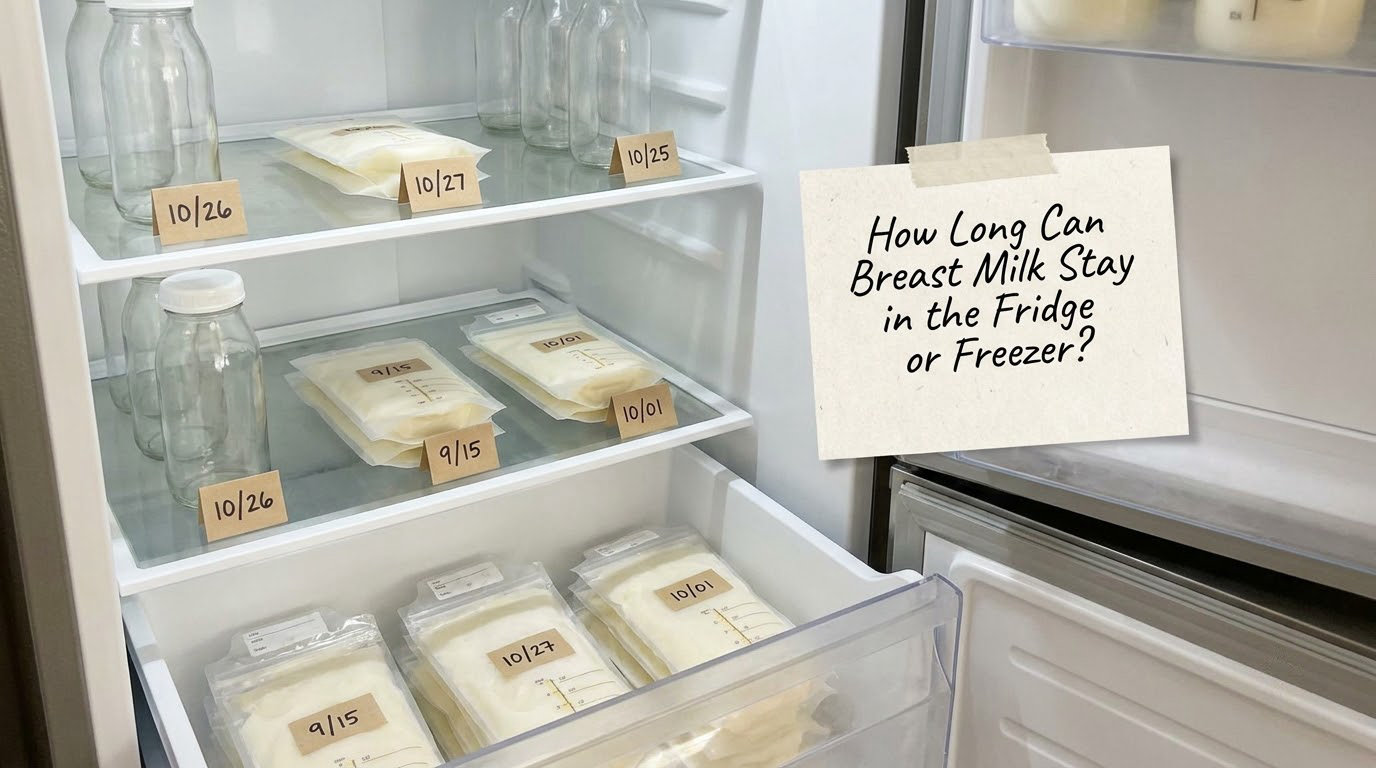
This is the table I keep taped inside the freezer door. Times are best-quality guidance from the CDC, with cooler storage times following WHO recommendations for expressed milk in a portable cold chain.
| Location | Temperature | Best quality | Maximum with good nutrition | Notes |
|---|---|---|---|---|
| Freshly expressed, room temperature | 25 degrees C / 77 degrees F or cooler | 4 hours | 4 hours | Refrigerate or freeze as soon as possible |
| Insulated cooler with ice packs | 4 degrees C / 40 degrees F | 24 hours | 24 hours | Keep ice packs in contact with the containers and open the bag as little as possible |
| Refrigerator | 4 degrees C / 40 degrees F | 4 days | Up to 5 days | Store at the back, never in the door |
| Freezer compartment, refrigerator freezer | -18 degrees C / 0 degrees F | 6 months | 6 months | Keep a full, unopened freezer; a half-full one holds temperature less reliably |
| Separate-door freezer | -18 degrees C / 0 degrees F | 12 months | 12 months | Do not pack bags against the walls where they can freeze solid |
| Thawed in the refrigerator | 4 degrees C / 40 degrees F | 24 hours from thaw | 24 hours from thaw | The 24-hour clock starts when the milk begins thawing, not when it leaves the freezer |
| Thawed in warm water or warmed | Room temperature or above | Use immediately | Within 2 hours | Never refreeze |
| Leftover in a bottle after a feed | Any | Do not save | Within 1 hour, then discard | Saliva-contaminated milk is discarded |
Two things drive the whole table: temperature and time. Warm temperature shortens the safe window sharply, and every freeze-thaw cycle costs you a little of what makes milk worth storing. Vitamin C declines the longer milk sits, and long storage can soften the antibacterial properties and fat quality that make breast milk distinctive.
The clock starts at the moment of expression, not at the moment you get round to the freezer. A bag that sat on the counter for two hours has already spent half its room-temperature window.
How to Thaw Breast Milk Safely
Thawing raises the milk into the temperature range where bacteria multiply fastest, so slower is safer. Seal the container first, every time. Then pick one of three methods.
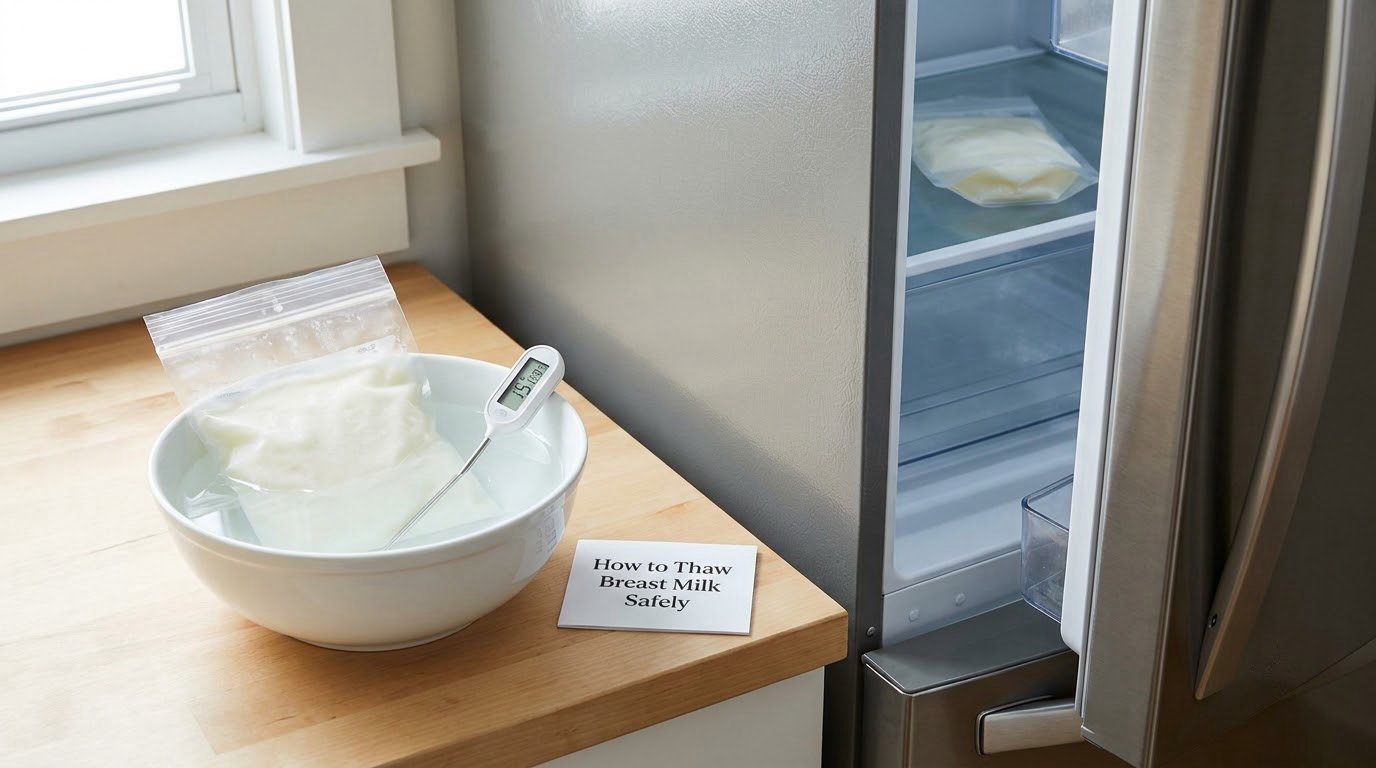
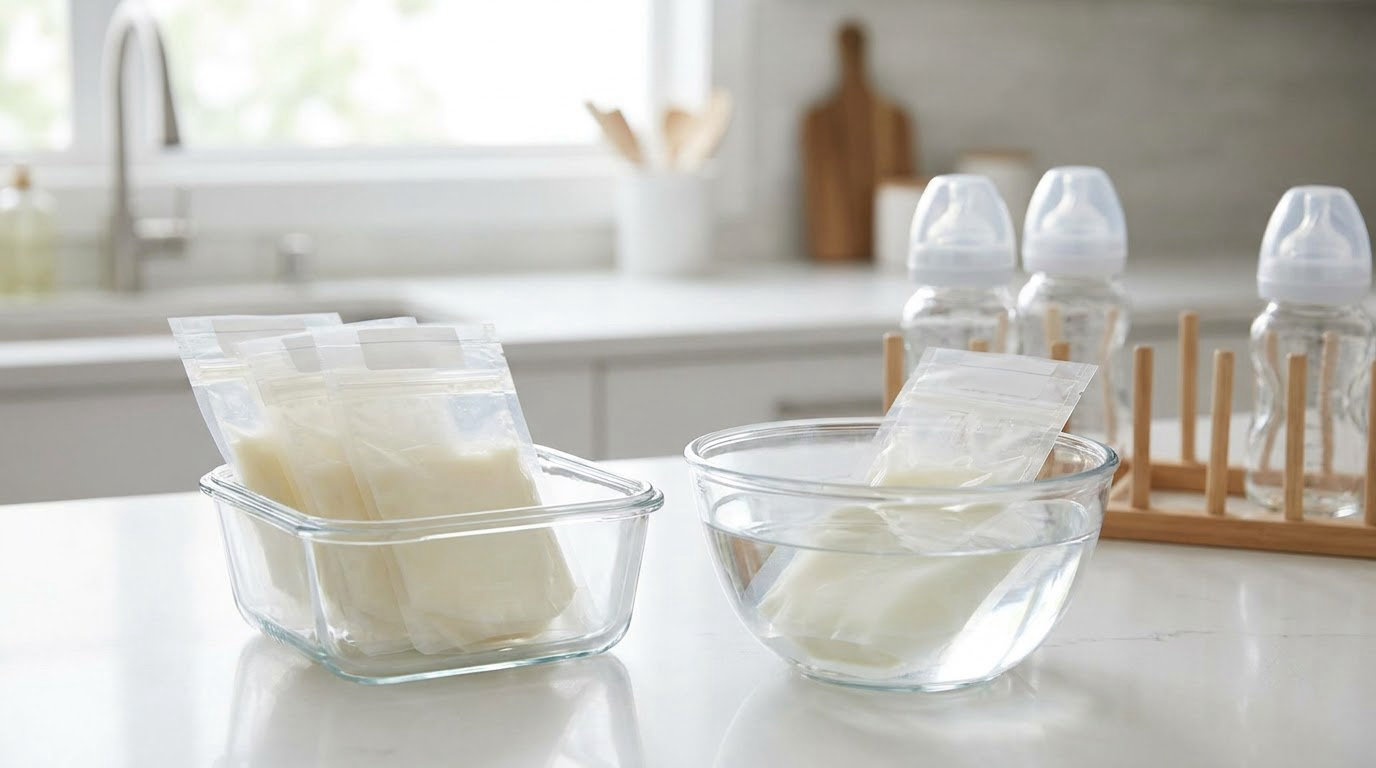
Method 1: refrigerator thaw (safest). Put the sealed container in the back of the refrigerator the night before. It thaws slowly at about 4 degrees Celsius and keeps the longest safe window. It is also the only method where the 24-hour refrigerated clock is comfortable rather than tight.
Method 2: water bath (faster). Put the sealed container in a bowl of cool-to-lukewarm water and swirl the water around it for a few minutes until the milk is just melted or still has an ice crystal. Change the water if it turns cold. Then dry the container and refrigerate or feed immediately.
Method 3: warm running water (fastest). Hold the sealed container under warm running water for a few minutes, testing on your wrist as you go. Same rule as the bath: warm, never hot.
How you know it is ready: no ice crystals remain, a thin film of fat on the surface is normal, and the container feels cool to lukewarm rather than warm. Cream separation is not a sign the milk has gone off.
Never microwave it. Microwaves heat in patches, so one part of the bottle can scald while another stays cold, and the hotter pockets can damage some of the milk’s protective qualities. Many parents whose milk warmers will not fit a full bag simply skip the appliance and use a water bath, which does the same job.
Can You Refreeze Breast Milk That Has Partially Thawed?
Partially thawed means softened or slushy with ice crystals still in it. CDC guidance allows refreezing that milk, though repeated freeze-thaw cycles reduce its quality and eventually its nutrient content. It is safe, and it is worth less than milk that thawed once.
What is different is milk that has fully thawed. Once fully thawed in the refrigerator, use it within 24 hours and do not refreeze. Milk thawed in warm water is used right away and never refrozen.
Moving a stash from a refrigerator freezer compartment to a separate-door freezer does not reset the clock, and it does not extend the life of the bags already in there. The date on the label is the date that counts. What does improve is temperature consistency, so a stash moved to a fuller freezer stays in the recommended window more reliably.
Why Does My Frozen Breast Milk Taste Soapy? High Lipase Explained
High lipase is a normal variation. Lipase is an enzyme that breaks down fat, and in some milk it stays active through freezing and thawing, leaving a soapy or metallic taste that babies often refuse. The milk is not spoiled and it is not unsafe.
Parents sometimes discover it only after thawing a large stash, then throw away perfectly good milk. If fresh milk tastes fine and frozen milk does not, that is the usual explanation. It does not get meaningfully worse the longer the milk is frozen.
The fix is scalding, which deactivates the lipase. Heat the milk to just below boiling, around 82 degrees Celsius (180 degrees Fahrenheit), for a few minutes, then cool it quickly and freeze it. It is extra work for every bottle, which is why many parents test a few bags first or simply accept that their baby prefers the older frozen milk.
How to Store Breast Milk When You Are Travelling or Commuting
For a workday commute, an insulated cooler bag with frozen gel packs keeps milk at 4 degrees Celsius (40 degrees Fahrenheit) for up to 24 hours. Put the ice packs in contact with the containers and open the bag as little as you can.
For flights, frozen milk goes in the cabin rather than checked baggage, either as a frozen solid pack or in a cooler with dry ice, following the airline’s dry ice limits. Check your carrier’s rules and the security rules at every airport on the route before you pack. If you are shipping milk, use an overnight service with dry ice and a container rated for it, and tell the carrier what is inside.
When you land, put the milk straight into the coldest storage you have. Count the hours out of controlled cooling, and follow the two-hour room temperature and 24-hour refrigerator rules from then on.
Step-by-Step: Warming and Feeding Thawed Breast Milk
Warming is for comfort, not for making milk safer. You do not need hot milk, and there is no benefit to heating milk above body temperature. Most babies are perfectly happy with milk that is room temperature or cool.
- Warm it in a water bath. Put the container in a bowl of warm water for a few minutes, or run warm water over the outside of the bottle. Skip the microwave.
- Swirl, don’t shake. Gentle swirling mixes the fat back in. Shaking breaks down the proteins and can damage some of the milk’s antimicrobial properties.
- Test on your wrist. Dip a few drops on the inside of your wrist. It should feel lukewarm, never hot. Many parents overestimate how warm is too warm.
- Feed it. Let the baby set the pace. There is no benefit to finishing a bottle.
- Use it within two hours. Anything warmed to room temperature or above and not used in that window gets discarded.
Before feeding a premature, sick or medically fragile baby, ask the pediatric clinician or neonatologist what temperature that baby should receive. Hospitals often have their own protocols, and warmed milk is not always appropriate for them.
What About the Milk Your Baby Did Not Finish?
Use the container within one hour of the start of the feed, then discard what is left. Saliva-contaminated milk grows bacteria quickly, and the general advice is that once the baby’s mouth has touched the bottle, that milk is finished.
If you want to waste less, offer smaller amounts more often, or pause mid-feed to switch to a clean bottle. The safer fix is preventing the leftover, not rescuing it.
Common Mistakes
Every one of these comes up repeatedly, and every one of them is fixable.
- Microwaving. Uneven heating creates dangerous hot spots and can damage some protective properties. Fix: warm water bath or warm running water, then test on your wrist.
- Hot water on frozen milk. Water above roughly 40 degrees Celsius (104 degrees Fahrenheit) starts the bacterial clock early and can make the fat turn rancid. Fix: cool-to-lukewarm water, change it as it cools.
- Refreezing fully thawed milk. Once thawed completely, it stays refrigerated for 24 hours and is not refrozen. Fix: freeze earlier, in smaller portions you will use in one or two feeds.
- Saving milk from a finished feed. Fix: use within an hour of the feed starting, or offer smaller volumes.
- Unlabelled containers. Milk nobody can date is milk nobody dares use. Fix: permanent marker on tape or directly on the container, dated at expression.
- Keeping milk in the fridge door. The temperature swings every time the door opens, which shortens the safe window. Fix: back shelf, or the crisper if your fridge is stable there.
- Filling containers to the top before freezing. Expansion splits the lid and lets air in. Fix: leave an inch of headspace.
- Mixing fresh milk into a partly frozen bag. It thaws unevenly and you lose track of how long the older part has been out. Fix: keep separate bags and use a portion from each.
- Thawing in the microwave and refreezing the rest. Fix: thaw only what you need tonight, one bottle at a time.
Two habits solve most of this list. Label everything, and move milk from pump to cold storage in a single trip.
How to Tell When Stored Breast Milk May Be Unsafe
Smell is the most reliable home check, done before you ever put milk near a baby. Smell the container when you open it, and again after thawing.
Signs that raise concern:
- A distinctly sour or rancid smell that smells nothing like your usual milk
- Unexpected discolouration, such as a yellowish or greenish tint
- Clumping that does not resolve when you swirl the container
- Cloudiness or thickening that persists after warming
Compare that with high lipase milk, which is not a spoilage sign. The difference matters, because parents throw away good milk when they assume the two are the same.
| What you notice | Spoiled milk | High lipase milk |
|---|---|---|
| Smell | Sour, rotten, vinegary | Soapy or metallic |
| Taste | Off and unpleasant | Soapy, sometimes bitter |
| Baby’s reaction | Usually refuses | Often refuses once thawed, accepts it fresh |
| Is it safe? | Do not use | Safe to use |
Appearance alone cannot prove safety. Milk can look and smell fine and still carry bacteria, and it can look separated or discoloured from freezing and be perfectly good. When in doubt, throw it out.
Call your baby’s pediatric clinician or a local health professional if your baby vomits repeatedly after a feed, has watery or bloody stools, develops a fever, seems unusually sleepy or refuses several feeds in a row, or you are simply not confident about a container. For a premature, hospitalized or medically fragile baby, ask before you feed anything at all, because those infants often need fresh or specially handled milk rather than stored milk.
Frequently Asked Questions
What is the safest way to thaw frozen breast milk?
Move the sealed container from the freezer to the refrigerator overnight and let it thaw slowly at about 4 degrees Celsius (40 degrees Fahrenheit). For a faster thaw, place the sealed container in a bowl of cool-to-lukewarm water or hold it under warm running water. Never microwave breast milk. Use milk thawed in the refrigerator within 24 hours, and milk thawed in warm water within 2 hours.
How long can breast milk stay in the fridge?
Freshly expressed breast milk stays good in the refrigerator at 4 degrees Celsius (40 degrees Fahrenheit) for about 4 days, with some newer CDC guidance allowing up to 5 days. Store it at the back of the fridge rather than in the door, where the temperature swings each time the door opens. Label every container with the date it was expressed so you know exactly where it sits in that window.
Can I refreeze breast milk that has partially thawed?
Yes. If the milk is still slushy or has ice crystals in it, CDC guidance allows you to refreeze it, though each freeze-thaw cycle slowly reduces its nutrient content. Milk that has thawed completely is different: use it within 24 hours of thawing in the refrigerator, and do not refreeze it. Milk thawed in warm water is used immediately and never refrozen.
Can you put half-drank breast milk back in the fridge?
The general guidance is no. Once your baby’s mouth has touched the bottle, saliva-contaminated milk should be used within one hour of the start of the feed and then discarded, because bacteria from saliva multiply quickly at feeding temperature. Refrigerating the leftovers does not remove them. Offer smaller amounts and offer to switch to a clean bottle instead, which is the only real way to avoid waste.
How do I know if my stored breast milk has gone bad?
A sour, rotten or vinegary smell is the most useful sign, along with unexpected yellowing or green discolouration, clumping that does not settle when you swirl, or cloudiness that persists after warming. A soapy or metallic smell is usually high lipase rather than spoilage, and that milk is safe even though babies may refuse the taste. Appearance alone cannot confirm safety, so discard anything you are unsure about.
What are the 3-3-3 and 4-4-4 rules for breast milk?
Neither is an official guideline. They are community shorthand for easy-to-remember limits, roughly three hours at room temperature and three months in the freezer for 3-3-3, and four days in the fridge and four months in the freezer for 4-4-4. The CDC numbers are more precise and a little more generous: four hours at room temperature, four days in the refrigerator, and six months in a freezer compartment.
Conclusion
If you take four things from this guide, take these. Label every container with the date it was expressed, and portion milk into 2 to 4 ounce amounts. Move it from pump to cold storage in one trip, and keep it at the back of the refrigerator or flat in the freezer. Thaw in the refrigerator overnight or in cool-to-lukewarm water, never in a microwave, and use thawed milk within 24 hours. Swirl rather than shake, test on your wrist, and discard anything left from a finished feed.
Storage rules are not one-size-fits-all, and milk for a premature, sick or hospitalized baby follows different hospital protocols. Your baby’s pediatric clinician or a local lactation consultant can adjust any of the timings above for your situation. This guide covers general guidance only and does not replace advice for your individual baby.