Pregnancy food aversions and how to eat enough is mostly a problem of volume and timing, not of willpower. When food repels you, the practical answer is to shrink the meals, shorten the cooking, lean on the handful of foods you still tolerate and keep fluids steady between them.
Early nausea and aversion usually peak around weeks 8 to 10, when human chorionic gonadotropin is at its peak, and they often ease into the second trimester as levels fall. Plenty of people feel a shift somewhere around week 14 to 16. A food you cannot face at nine weeks may turn back into a craving by eighteen.
That does not make the hard weeks less real. Losing weight, passing urine less often, or being unable to keep anything down are reasons to call your prenatal provider rather than something to push through at home. This guide is general information for search readers, and your own doctor or a registered dietitian can turn it into advice that fits you.
Table of Contents
- What You Need
- Step-by-Step: Building Enough Food Into the Day
- How to Make a No-Fuss Meal When Nothing Sounds Good
- Choose Small Meals and Snacks Instead of Large Portions
- Keep Easy Foods Ready for Low-Energy Days
- Add Foods Gradually Instead of Forcing One Big Meal
- Common Mistakes
- Frequently Asked Questions
- How many calories do I need to eat during pregnancy if I have food aversions?
- What should I eat when almost every food sounds unappealing?
- Are food aversions during pregnancy always harmful?
- Can I take a prenatal vitamin if I cannot tolerate the foods I used to eat?
- When should pregnancy nausea or food aversion prompt a call to my doctor?
- What can I do if vomiting makes it difficult to keep food or fluids down?
- What to Do First
What You Need
You need very little to make this work. Most of it is already in a kitchen drawer, and none of it requires planning a week of meals while you feel ill.
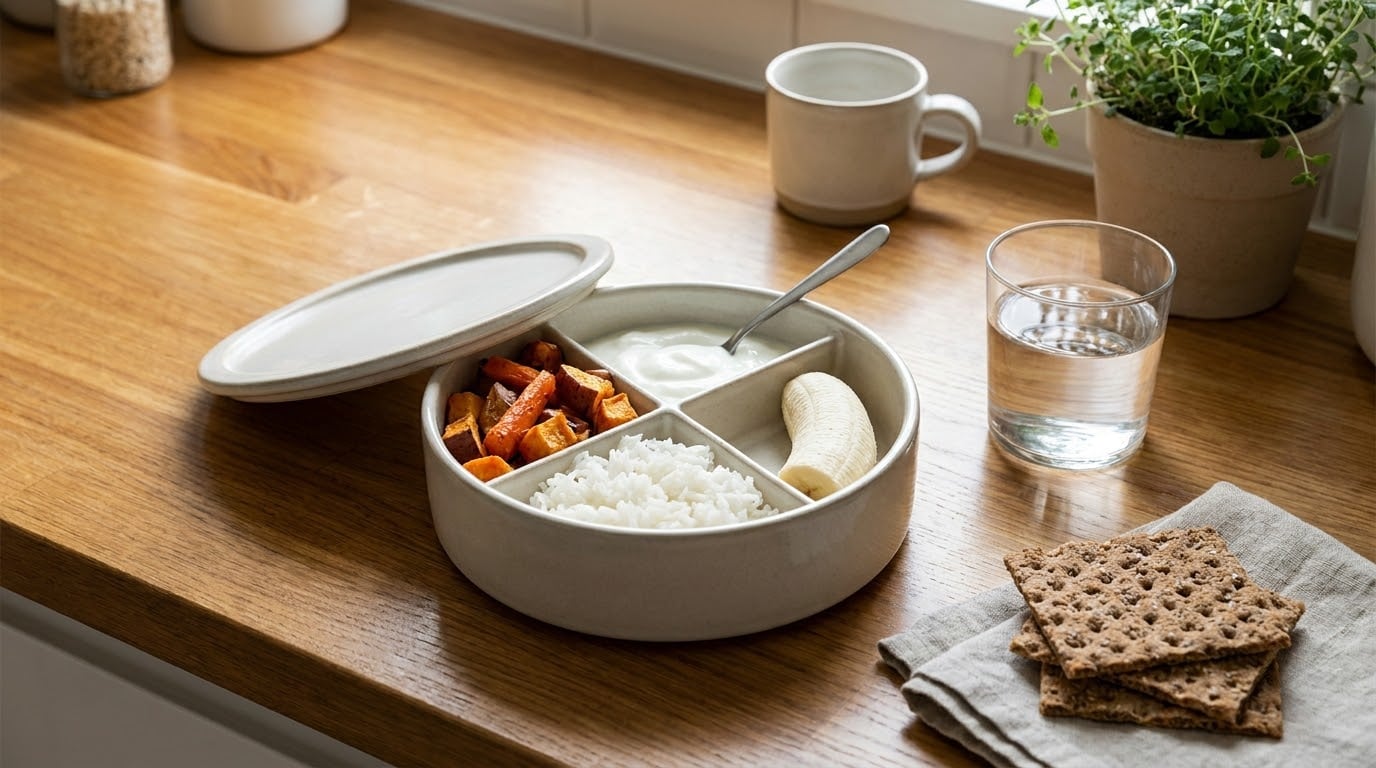
- A short list of tolerated foods. Not an ideal list, the real one. Plain toast, rice, potatoes, bananas, yogurt, cold cereal, plain pasta, ice chips, whatever genuinely stays down.
- Bland stand-ins for the foods you cannot face. Plain rice and mashed potatoes instead of a roast. Cold yogurt instead of a warm casserole. Unsweetened cereal instead of eggs at breakfast.
- Small containers. Single-serving boxes, deli tubs, frozen portions and a lunch bag that holds four snacks rather than one dinner.
- Drinks that go down easily. Water, sparkling water, diluted juice, milk, clear broth or an oral rehydration solution from the pharmacy. Fluids matter more than solids on the worst days.
- A flexible meal plan. Not a diet. A pattern of when you eat and drink, loose enough to move when a bad day lands.
- Someone who can cook for you, if that is available. A partner, parent, friend or delivery service removing the smell from the house does more than any tip on this page.
Keep each item on that list near where you spend your time. A bag of crackers by the bed, a yogurt in the fridge at eye level and a water bottle that follows you around the house quietly solve the version of this problem that happens at 6 a.m.
If you are also managing prenatal care visits, how ultrasound dating works in early pregnancy is worth reading before your first appointment so the timeline makes sense to you.
Step-by-Step: Building Enough Food Into the Day
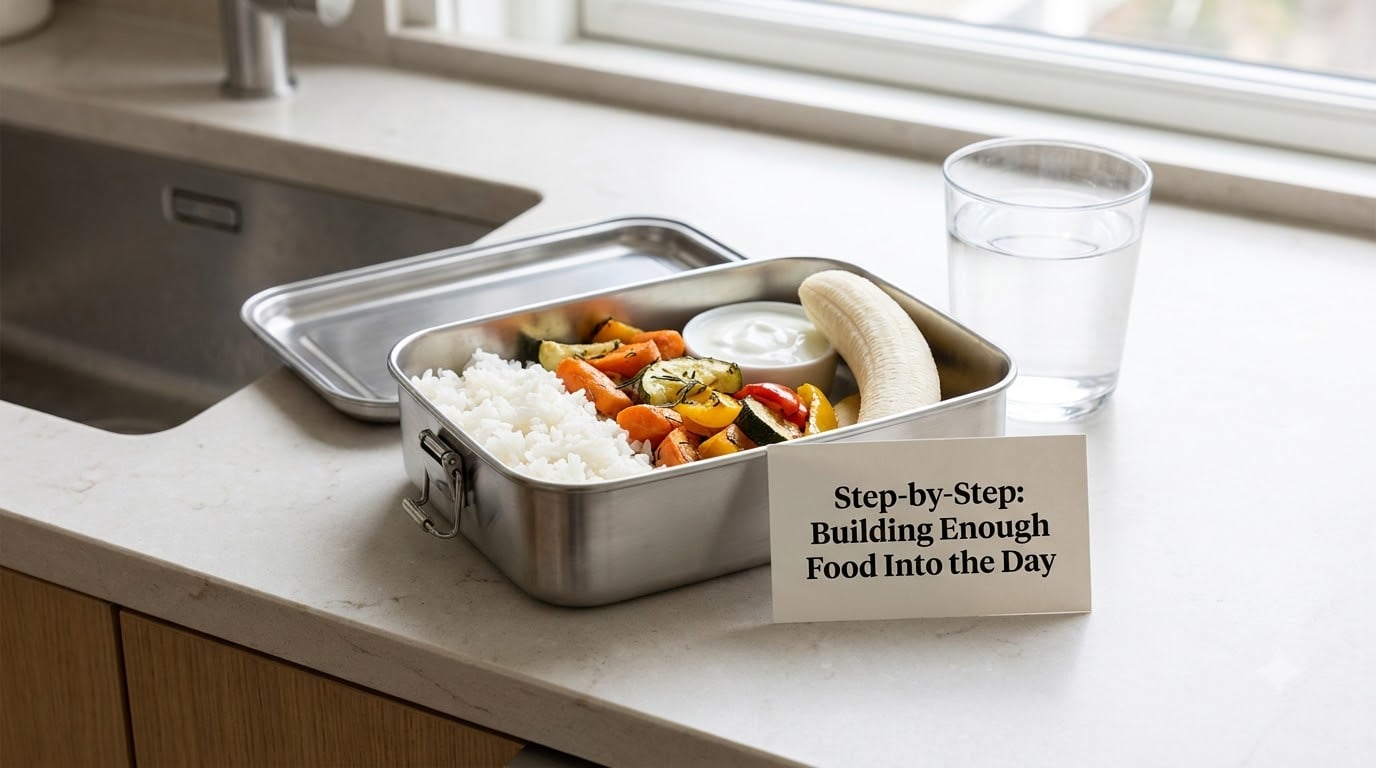
The order matters. Take the pressure off first, pick what you can eat second, and only then look at variety, because variety is the part that can wait a few weeks.
How to Make a No-Fuss Meal When Nothing Sounds Good
Build from a carbohydrate, a protein source and one fruit or vegetable you can tolerate. Rice with beans and butter, or toast with peanut butter and a banana, or plain pasta with jarred sauce and shredded cheese, all count without much smell or effort.
Match the food to how you feel that day, not to a recipe. Bland, dry and room temperature suits plenty of people; cold and crunchy suits others. If a food smells wrong, it is wrong, even if you used to love it.
Limit cooking yourself where you can. Deli salads, frozen pizza, canned soup and leftovers from someone else’s kitchen remove the frying pan and the smell that goes with it.
Choose Small Meals and Snacks Instead of Large Portions
A full plate can turn a tolerable food into a nauseating one. Smaller amounts, eaten more often, tend to land better, and grazing every hour or two works well for many people when three sit-down meals do not.
Eat before you get hungry, too. Waiting until you feel hollow often comes with nausea attached, and a small snack at the point of mild hunger is easier than a meal at the point of real hunger.
Keep a stash where you are: bedside, desk, car, bathroom. People who survive the first weeks on toast, crackers, cereal and fruit are not doing it wrong. They are doing it with the foods available to them.
Keep Easy Foods Ready for Low-Energy Days
Shelf-stable, ready-to-eat food matters more than cooking skill here. Think nut butters, canned tuna or salmon, roasted chickpeas, trail mixes, crackers, canned beans, shelf-stable milk, boxed soups and frozen dumplings you can cook in six minutes.
Takeout and delivered meals solve the worst days because someone else does the smell. Choose dishes that arrive cool or room temperature when heat and aroma are the problem.
Food safety still applies even when you are barely cooking. Cook poultry to 165°F, ground meat to 160°F, and whole cuts and fish to 145°F, refrigerate leftovers within two hours, and skip raw fish, raw eggs and unpasteurized dairy. If the thought of preparing anything raw is what stops you, buy the precooked version instead.
Liquid food can help on days when chewing feels like too much. Smoothies, milk, yogurt drinks and blended soups count as a meal when a plate does not.
Add Foods Gradually Instead of Forcing One Big Meal
Try a few bites of something tolerated beside something familiar, and see how it goes. Small repeated exposures are easier than a full serving, and repeating a food that went fine last week is how variety slowly returns.
You are not on a deadline. Pregnancy food aversions and how to eat enough does not require trying the food that repels you, and forcing it can add distress to an already hard day.
Put the same handful of staples in the cart every grocery run and treat anything new as an experiment rather than a requirement.
Common Mistakes
Relying on the one food that stays down. Toast and rice for weeks gets you calories and some protein, but not the iron, calcium, choline and iodine that matter in pregnancy. After a week or two of single-food eating, add one more tolerated item per day rather than changing everything at once.
Skipping meals because nothing is appealing. An empty stomach makes nausea worse, so grazing on small amounts usually helps more than waiting for hunger. Keeping a carbohydrate within reach of the bed for the first fifteen minutes of the day is an old trick with a reasonable logic behind it.
Eating only ultra-processed foods. These are genuinely useful during a bad stretch and nobody needs shame for them. Just do not let them become the entire diet for weeks, since they tend to be heavy in sodium and light in protein, iron and vitamins.
Assuming an aversion means a deficiency. Not eating a food does not automatically mean you are short of what it contains. Most of the concern that people feel is about the whole picture over time, and a prenatal vitamin plus your regular visits covers the part that matters most.
Tracking everything. Counting every bite on top of nausea is its own strain. Keep it rough: a few feeds across the day, fluids through the day, and occasional weight checks at appointments is enough for most people.
Call your provider if you are losing weight rather than gaining, if you cannot keep fluids down for more than a day, if your urine is dark or infrequent, if you feel faint or dizzy, or if nausea is severe enough that nothing stays down. Those are the signs of hyperemesis gravidarum, which is treatable.
Tell your provider about any history of disordered eating, too. Food during pregnancy can be emotionally loaded in ways a standard nutrition plan does not anticipate, and a registered dietitian who knows your history can adjust the approach. If you are planning ahead or already pregnant and want to understand the screening side of things, carrier screening before pregnancy is a reasonable companion read.
Frequently Asked Questions
How many calories do I need to eat during pregnancy if I have food aversions?
Most guidance suggests roughly 340 extra calories a day in the second trimester and about 450 in the third, on top of what you needed before. During the first trimester, added calories are not required, and many people eat less without any harm. Meeting the extra needs matters more in the later trimesters, so keeping the basics steady early on is a reasonable way to spend your energy.
What should I eat when almost every food sounds unappealing?
Go with what you tolerate today rather than what is nutritionally ideal. A carbohydrate such as toast, rice or crackers, a protein source such as yogurt, milk, eggs or nut butter, and any fruit or vegetable you can manage makes a workable meal. Add a drink, because fluids often go down more easily than food on those days.
Are food aversions during pregnancy always harmful?
Usually not. Most aversions are a normal part of the first trimester and resolve as hormone levels fall, and the body has reserves built up from before conception. They become a concern when they persist past the second trimester or come with weight loss, dehydration or an inability to keep anything down. Persistent nausea is worth discussing at your next appointment.
Can I take a prenatal vitamin if I cannot tolerate the foods I used to eat?
Most people tolerate prenatal vitamins better than the foods they were relying on, because the dose is small and taken once a day. If yours triggers nausea, ask your provider about taking it later in the day, with food, in a chewable or capsule form, or switching to a formula with a different iron type or a lower iron dose. Do not stop or change the dose without asking first.
When should pregnancy nausea or food aversion prompt a call to my doctor?
Call promptly if you are losing weight, passing urine infrequently or with dark color, feeling faint, unable to keep fluids down, or vomiting repeatedly enough to avoid food entirely. Call the same day if you cannot keep a prenatal vitamin down at all for more than a day. These are the points at which nausea moves beyond a normal first-trimester complaint.
What can I do if vomiting makes it difficult to keep food or fluids down?
Take small sips of fluid between meals rather than with them, and try a pharmacy oral rehydration solution rather than plain water, since it replaces the salts you lose. Rest between attempts, let someone else handle cooking, and keep bland foods within reach. If you cannot keep fluids down at all, contact your provider the same day rather than waiting it out.
What to Do First
Write down the five foods you can reliably eat right now and keep two of them stocked at all times. Then pick the next step from pregnancy food aversions and how to eat enough that fits today: smaller portions, shorter cooking, more fluids, one added food.
If you are losing weight or cannot keep fluids down, that is a phone call, not a meal-planning problem. Otherwise, expect a couple of hard weeks and then a gradual return of appetite.