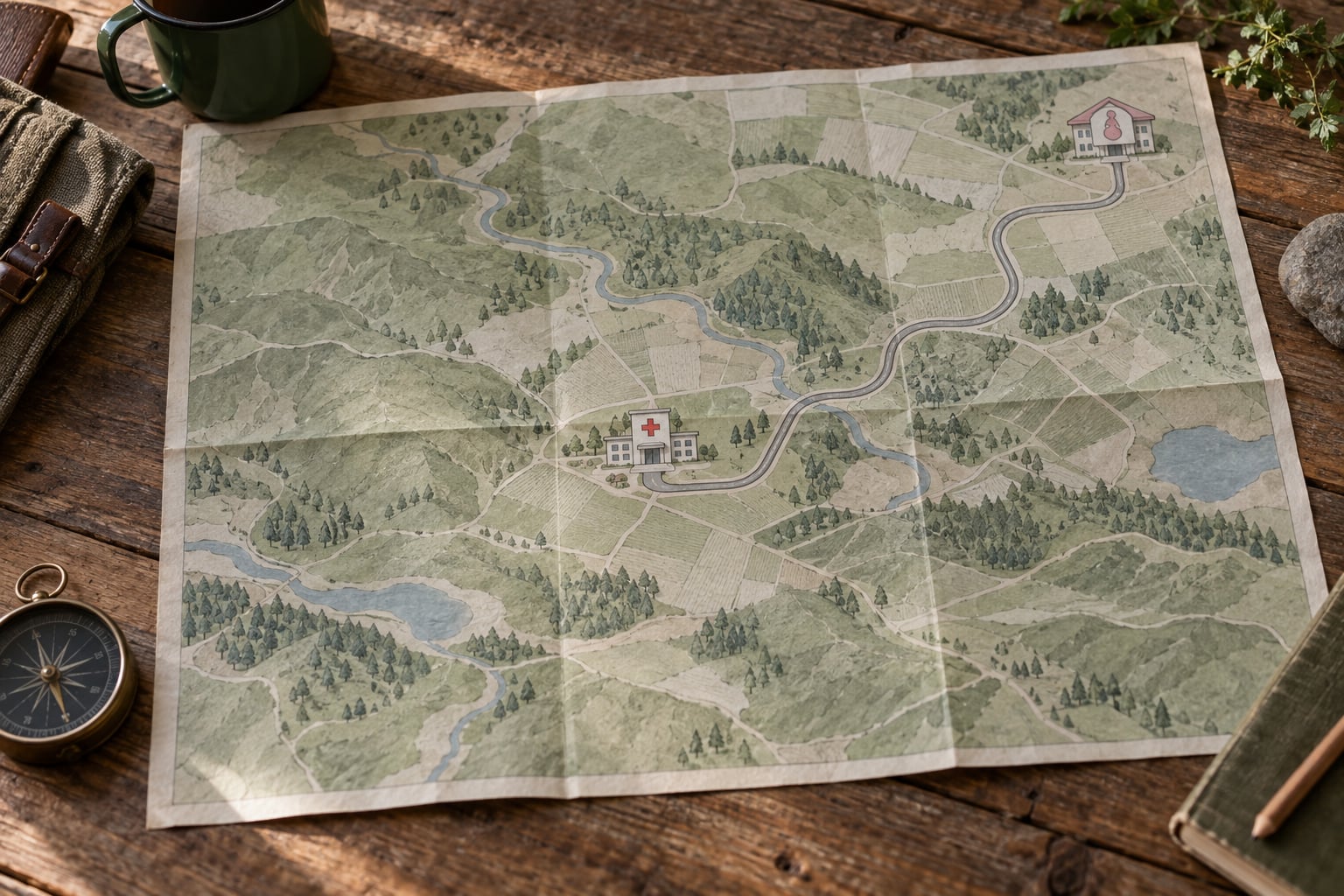
A maternity care desert is a county with no hospital offering deliveries, no birth center, and no obstetric provider. Roughly 36% of US counties qualify, which means how maternity care deserts affect rural families is not a shortage of appointments but a shortage of places to actually go: the nearest labor and delivery service may be 45 minutes away, or three hours on a mountain road in February.
That distance reshapes an entire pregnancy. It decides how many prenatal visits you keep, whether you can afford to go, who watches your other kids, what happens if something goes wrong at 2 a.m., and whether your newborn ends up in a neonatal intensive care unit hundreds of miles from you.
As of 2026, nearly 100 labor and delivery departments have closed in just the last two years, according to reporting from KFF Health News, and rural hospitals are about twice as likely as urban ones to have no obstetric services at all.
Table of Contents
- What Is a Maternity Care Desert?
- Why Are Rural Maternity Services Hard to Access?
- The obstetric workforce is thin before geography even enters the picture
- Low birth rates make a delivery department expensive to keep open
- Medicaid reimbursement rarely covers the real cost
- Closures are decisions, not geography
- How Do Maternity Care Deserts Affect Rural Families During Pregnancy?
- Visits get missed, and gaps matter
- High-risk pregnancies get a referral chain
- The mental load is part of prenatal care now
- What Happens During Childbirth and the Newborn Period?
- What Are the Financial, Physical, and Emotional Costs?
- The travel math
- The physical cost
- The emotional cost
- How Do Maternity Care Deserts Affect Rural Communities?
- The mortality gap is wide
- The workforce keeps thinning
- Disparities layer on top of geography
- The local economy feels it
- What Can Rural Families and Communities Do?
- Frequently Asked Questions
- What is the definition of a maternity care desert?
- How many US counties are maternity care deserts?
- How far do rural families have to drive to give birth?
- Can telehealth replace in-person prenatal care in rural areas?
- What happens when a rural hospital closes its labor and delivery unit?
- What are the major maternal health disparities in rural areas?
- Conclusion
What Is a Maternity Care Desert?
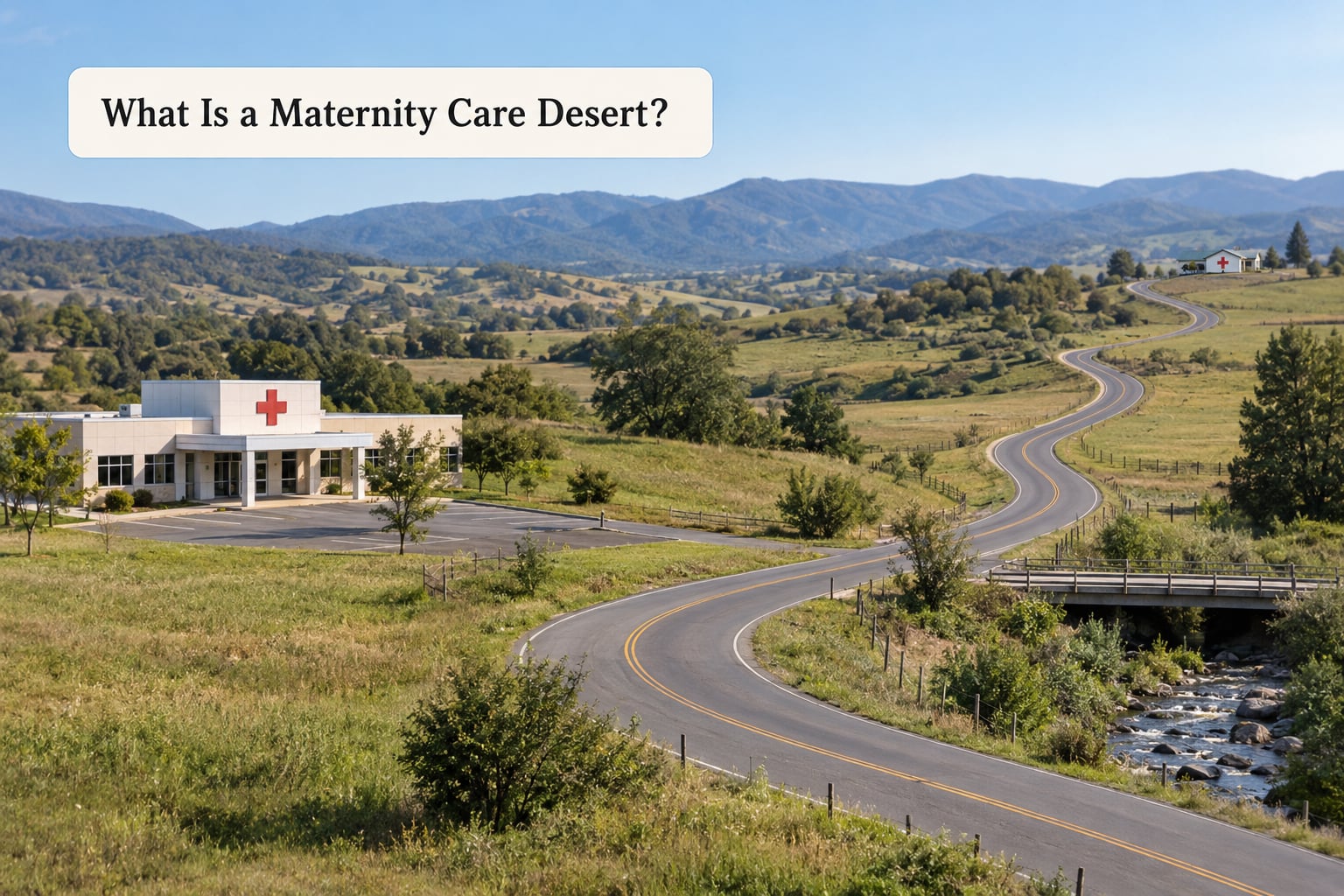
The March of Dimes defines a maternity care desert as a county with no birthing hospital, no birth center, and no obstetric provider. In those counties, women of reproductive age have no local access to prenatal, delivery, or postpartum care.
The label is about access to a whole arc of services, not one building. Pregnancy care starts weeks before a baby arrives and runs through the first year after birth, and a desert can break at any point along that arc.
| What the area has | What that means for a family |
|---|---|
| No delivery service, no obstetric provider, no birth center | A full maternity care desert: every prenatal visit, delivery, and postpartum check requires travel |
| A birth center or midwife-led program but no hospital delivery service | A low-access county: routine care is close, but complications mean a transfer |
| Labor and delivery but no maternal-fetal medicine specialists on site | Routine births are handled nearby, high-risk pregnancies are referred elsewhere |
| Free-standing birth center only | A planned out-of-hospital birth with a short transfer route to a hospital, on paper at least |
Rural communities are not affected identically. A county 30 minutes from a level II hospital and a county three hours from the nearest delivery service both show up in national statistics, and the second one is in far more trouble.
One more wrinkle: deserts are not exclusively rural. Low-income neighborhoods in dense cities can have the same absence of obstetric care. The difference is that rural deserts usually add distance to the shortage.
Why Are Rural Maternity Services Hard to Access?
Short answer: it is almost never a single cause. Staffing, money, birth rates, and geography reinforce each other until a small hospital decides the math no longer works.
The obstetric workforce is thin before geography even enters the picture
Obstetrics is a 24-hour job with a 12-hour workday built in. A unit that delivers a baby at 3 a.m. needs a nurse, a provider, and a scrubbed operating room ready at 3 a.m., every day, for a few births a month. Rural hospitals compete for the same obstetricians, maternal-fetal medicine specialists, and labor and delivery nurses as metropolitan hospitals, which usually pay more and offer more backup.
Low birth rates make a delivery department expensive to keep open
A county hospital with 30 beds might see a handful of births a month. Fixed costs do not shrink to match: monitoring equipment, infection control, staffing minimums, and newborn screening all cost the same whether there is one delivery or forty.
A JAMA analysis of 4,964 hospitals, including 1,982 rural ones, covering 2010 through 2022, found that 52% of rural hospitals had no obstetric services compared with 36% of urban hospitals. Very few rural hospitals added delivery services over that period.
Medicaid reimbursement rarely covers the real cost
Rural hospitals carry a high share of Medicaid and uninsured patients. Delivery care is expensive to keep available around the clock, and Medicaid pays below the cost of providing it. The Center for Health Care Financing at Georgetown has warned that Medicaid cuts make rural maternity access worse before any other financial pressure does.
For families, this translates into narrow networks and turned-away plans: a provider who does not accept your insurance is not really local access.
Closures are decisions, not geography
Researcher Katy Kozhimannil, quoted by The Daily Yonder, has pushed back on the word desert, and the critique lands. A unit closes because a board weighs numbers and decides to redeploy resources, or because a state legislature does not fund a program, or because a retiring delivering physician leaves and nobody is recruited to replace them. Nothing about the terrain itself chose this.
The distinction matters for anyone trying to change it. If the desert is a decision, it can be argued with at a public meeting, a county commission, or a statehouse.
How Do Maternity Care Deserts Affect Rural Families During Pregnancy?
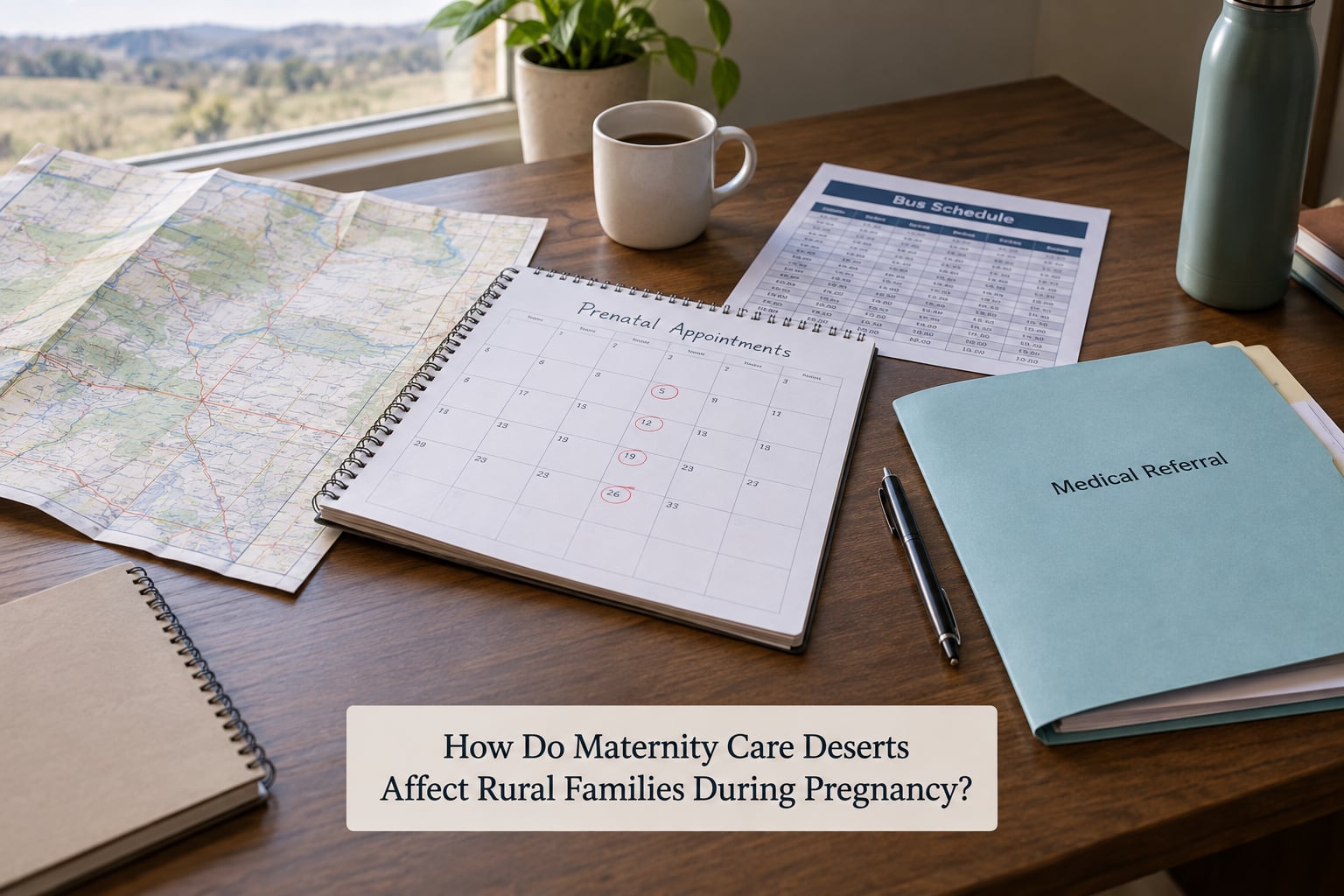
The first effect is that prenatal care becomes a logistics problem instead of a routine. The appointment itself takes an hour. Getting there and back takes half a day.
| Care situation | What it looks like with local access | What it looks like in a desert |
|---|---|---|
| Prenatal visits | Scheduled at regular intervals close to home | Grouped into fewer trips, with longer gaps between visits |
| Finding a provider | Several choices within a short drive | One option, hours away, sometimes not accepting your insurance |
| Ultrasound and lab work | Done at the same site as the visit | Separate trip, possibly to a different facility |
| High-risk concerns | Referral to a nearby specialist | Referral out of county or out of state, plus travel planning |
| Transport | Your own car, short trip | Long drive, unreliable cell coverage, or paid transport |
| Postpartum visits | Same clinic, familiar staff | Same distance problem, weeks after delivery when you have a newborn |
Visits get missed, and gaps matter
People in desert counties report pushing off or delaying their first prenatal visit and combining appointments to cut trips. That is an understandable response to a real constraint, and prenatal care is scheduled in part to catch problems early, such as blood pressure changes or poor fetal growth.
Someone on Reddit’s r/BabyBumps described driving an hour and a half to a maternity urgent care after feeling off at night, following an earlier urgent-care visit that had dismissed her concerns. The trip was part of the problem, not just the response to it.
High-risk pregnancies get a referral chain
If a pregnancy needs maternal-fetal medicine, the referral structure changes. A rural clinician may consult a specialist in the next state over, which means records moved by fax or portal, appointments scheduled around two calendars, and more time spent in a waiting room that is not near home.
Families report one more fear in desert counties: showing up at a hospital that cannot deliver. People describe dreading being told to go somewhere else when they are in labor.
The mental load is part of prenatal care now
There is a planning burden that does not show up on a chart. Who drives at 5 a.m.? Which appointment do we take off work for? What do we do with the toddler when the appointment runs an hour late? Repeat that a dozen times and it becomes the background condition of the pregnancy.
What Happens During Childbirth and the Newborn Period?
When a local delivery service closes, birth planning becomes an exercise in contingency. Families map out routes, decide in advance who will drive, decide where they will stay if labor starts early, and decide what happens if they need a cesarean and the nearest surgical unit is far away.
Emergency births become the real concern. An emergency department is built for trauma and emergencies, not for deliveries. A rural emergency department may have no obstetrician on shift, no nursery, and no routine C-section capability, so an unexpected delivery there can mean an immediate transfer by helicopter or a long ambulance ride.
Continuity breaks down too. During pregnancy, patients often build trust with a specific nurse, midwife, or family physician. After a closure, that relationship can end, and postpartum care, breastfeeding support, and recovery monitoring may all come from a new system an hour away, during the most sleep-deprived weeks of a person’s life.
The newborn period adds its own geography. Newborn screening follow-up, early jaundice checks, and pediatric visits often happen at the hospital that delivered the baby. If a baby needs a neonatal intensive care unit, distance compounds everything: the infant travels, and the parent may be separated from the infant for days while recovering from their own delivery.
None of this is a reason to avoid care or to plan a home birth without support. Discuss your own situation, including any risk factors and your backup arrangements, with a qualified clinician who knows your local services.
What Are the Financial, Physical, and Emotional Costs?
The costs of a desert rarely appear as one line item. They arrive as a stack of small ones that quietly becomes the largest expense of the year for a family.
The travel math
Start with fuel and mileage over a hundred miles round trip per appointment, repeated eight to twelve times across a pregnancy. Add a hotel room when the visit is far enough that same-day return is unrealistic. Add a second caregiver for the siblings. Add unpaid time off work, or the fear of asking for it. Families on Medicaid, hourly work, or a farm schedule have the least flexibility on every line.
The physical cost
Long drives on poor roads are uncomfortable before pregnancy and harder during it. Add pregnancy fatigue, nausea, and bladder pressure to several hours of travel, and some people skip or shorten appointments. After delivery, the physical toll is worse: a recovering person who has to ride an hour for a postpartum check is being asked for a lot on day three than day 30.
The emotional cost
Fear and anxiety belong in this cost list, not buried under the statistics. People who live far from obstetric care describe higher prenatal anxiety, fear about the birth plan, and a sense of being abandoned by the local medical system. Partners and older kids feel it too. One thread about a proposed labor and delivery closure in Los Alamos drew residents to a council meeting, which is the tell that this is a community grievance, not a private annoyance.
Chronic stress during pregnancy is not a soft concern. It is a well-documented factor in preterm birth and low birth weight risk, which means desert conditions can show up as newborn outcomes as well as maternal ones.
How Do Maternity Care Deserts Affect Rural Communities?
When a delivery department closes, the loss is measured first in drive times and then in what else the hospital can no longer do. Maternity care is frequently the gateway service that pulls in surgery, anesthesia, pediatrics, and newborn care. Losing it thins out everything around it.
The mortality gap is wide
Rural residents are roughly three times as likely to die from pregnancy-related causes as urban residents, per University of Washington population health analysis. The CDC defines maternal mortality as death during pregnancy or within one year of the end of pregnancy, from any cause related to or aggravated by the pregnancy.
Reporting on infant deaths in care deserts points the same direction: babies born to mothers in maternity care deserts had higher infant mortality.
The workforce keeps thinning
A hospital that stops delivering loses the nurse managers, midwives, and family physicians who practiced obstetrics there. Some of that workforce leaves the region entirely. A single closure can therefore reduce local capacity for years, long after the decision is old news.
Disparities layer on top of geography
Being rural is not the only variable. Black and Indigenous mothers face higher baseline maternal mortality rates before distance is added, and Indigenous communities face the added layer of removed and underfunded services on tribal land. In desert counties, these effects compound rather than offset.
Organizations that support rural, Black, and Indigenous maternal health include the March of Dimes, the National Partnership for Maternal and Infant Health, tribal health departments, and rural health clinics operating under the federal Health Resources and Services Administration.
The local economy feels it
A hospital that closes labor and delivery usually keeps other services, but it loses a reason for families, staff, and physicians to be in the building. Several towns have watched a maternity ward become the first step in a longer sequence of reductions.
What Can Rural Families and Communities Do?
Families cannot fix a regional shortage, but they can change how much the shortage costs them. Start early, because every step below gets easier when there is time.
- Identify your nearest delivery services now. Ask your local hospital, your county health department, or your insurer which hospitals within reach have labor and delivery, and how far each one is. Know the second closest, too.
- Start prenatal care earlier than you planned. The first visit establishes records, screens, and referrals. Delay compounds when a high-risk issue needs a specialist.
- Ask specifically about backup and transfer agreements. Find out whether the hospital where you receive prenatal care can transfer you, and which hospital receives those patients.
- Compare telehealth options, with clear eyes. Telehealth can extend prenatal visits, connect you with maternal-fetal medicine specialists, and support remote monitoring such as home blood pressure checks. It cannot deliver a baby, cannot do an ultrasound, and cannot replace hands-on care. Ask which visits can be virtual and which cannot.
- Build the travel plan before labor. Decide who drives, when you leave, where you will stay if you are early, and what you will pack. Save the number of the labor and delivery department directly.
- Set up care close to home where you can. Family physicians, rural health clinics, and certified nurse-midwives can often handle routine prenatal and postpartum care, and a local clinician can coordinate with a distant specialist.
- Know the emergency warning signs. If something worries you during pregnancy or after delivery, contact a qualified clinician or an emergency service right away rather than deciding whether the drive is worth it.
- Show up where decisions get made. Hospital boards, county commissions, and state legislative sessions are where closure decisions and funding get argued. Los Alamos residents did exactly this, and it is the step most families never consider.
Communities and policymakers have levers too: funding programs that keep obstetric readiness at small hospitals, telehealth and tele-mental health reimbursement, regional referral networks that connect rural clinics to tertiary centers, support for family physicians and midwives, rural birth centers with clear transfer protocols, and rural residency training that places clinicians in the towns that need them. Federal proposals such as the Rural Obstetric Readiness Unit program and the Keeping Obstetrics Local Act exist for exactly this gap.
For urgent concerns during pregnancy, labor, or after delivery, contact a qualified clinician or emergency services immediately. Do not use this article to assess your own symptoms or decide on a care plan.
Frequently Asked Questions
What is the definition of a maternity care desert?
A maternity care desert is a county with no hospital offering deliveries, no birth center, and no obstetric provider, so women of reproductive age there have no local access to prenatal, delivery, or postpartum care. About 36% of US counties meet this definition, according to March of Dimes. Distance is the part families feel most: the nearest labor and delivery service can be an hour or more away.
How many US counties are maternity care deserts?
Roughly 36% of US counties qualify as maternity care deserts, which works out to more than two million women of reproductive age. A JAMA analysis of 4,964 hospitals covering 2010 through 2022 found 52% of rural hospitals had no obstetric services, compared with 36% of urban hospitals. Nearly 100 labor and delivery departments have closed in just the last two years.
How far do rural families have to drive to give birth?
It varies enormously by county, which is why national averages hide more than they explain. Families in desert counties report hour-plus drives for prenatal visits and maternity urgent care, and some face three hours on winding or mountainous roads. Ask your hospital or insurer for the specific drive times to every facility with labor and delivery within reach, not just the closest one.
Can telehealth replace in-person prenatal care in rural areas?
It can meaningfully extend access, but it cannot replace in-person care. Video visits connect patients with maternal-fetal medicine specialists, remote monitoring can support home blood pressure and glucose checks, and virtual follow-ups can reduce some trips. Ultrasounds, laboratory work, physical exams, and delivery all require in-person care. A telehealth program that claims otherwise is selling something.
What happens when a rural hospital closes its labor and delivery unit?
Usually a combination of longer drives, fewer prenatal visits, and more emergency births in emergency departments not set up for deliveries. Rural residents are roughly three times as likely to die from pregnancy-related causes as urban residents, and newborns face added risk when a neonatal intensive care unit is far away. Families should plan backup delivery, transport, and transfer arrangements before labor.
What are the major maternal health disparities in rural areas?
Rural residents are about three times as likely to die from pregnancy-related causes as urban residents, and desert counties report higher infant mortality as well. Black and Indigenous mothers carry higher baseline risk before geography is added, so rural distance layers onto existing disparities rather than replacing them. Chronic stress from travel burden is also linked to preterm birth and low birth weight risk.
Conclusion
How maternity care deserts affect rural families comes down to distance: more missed prenatal visits, a bigger bill, longer labor, and higher risk when something unexpected happens. Closures are choices made by hospital boards, payers, and legislatures, which means they are arguable.
Start this week by finding the nearest qualified prenatal and delivery resources, identifying your backup and transfer arrangements, and calling your local clinic or health department to ask what regional services they coordinate. Do it now rather than in the third trimester, and contact a qualified clinician or emergency service whenever a concern comes up.