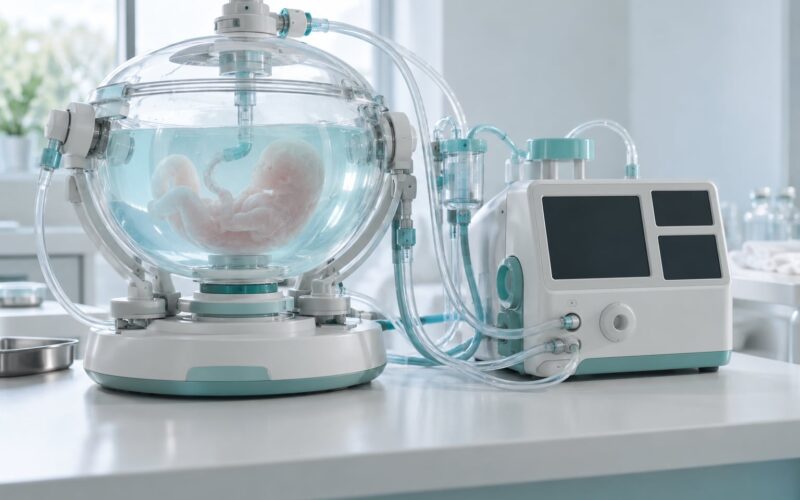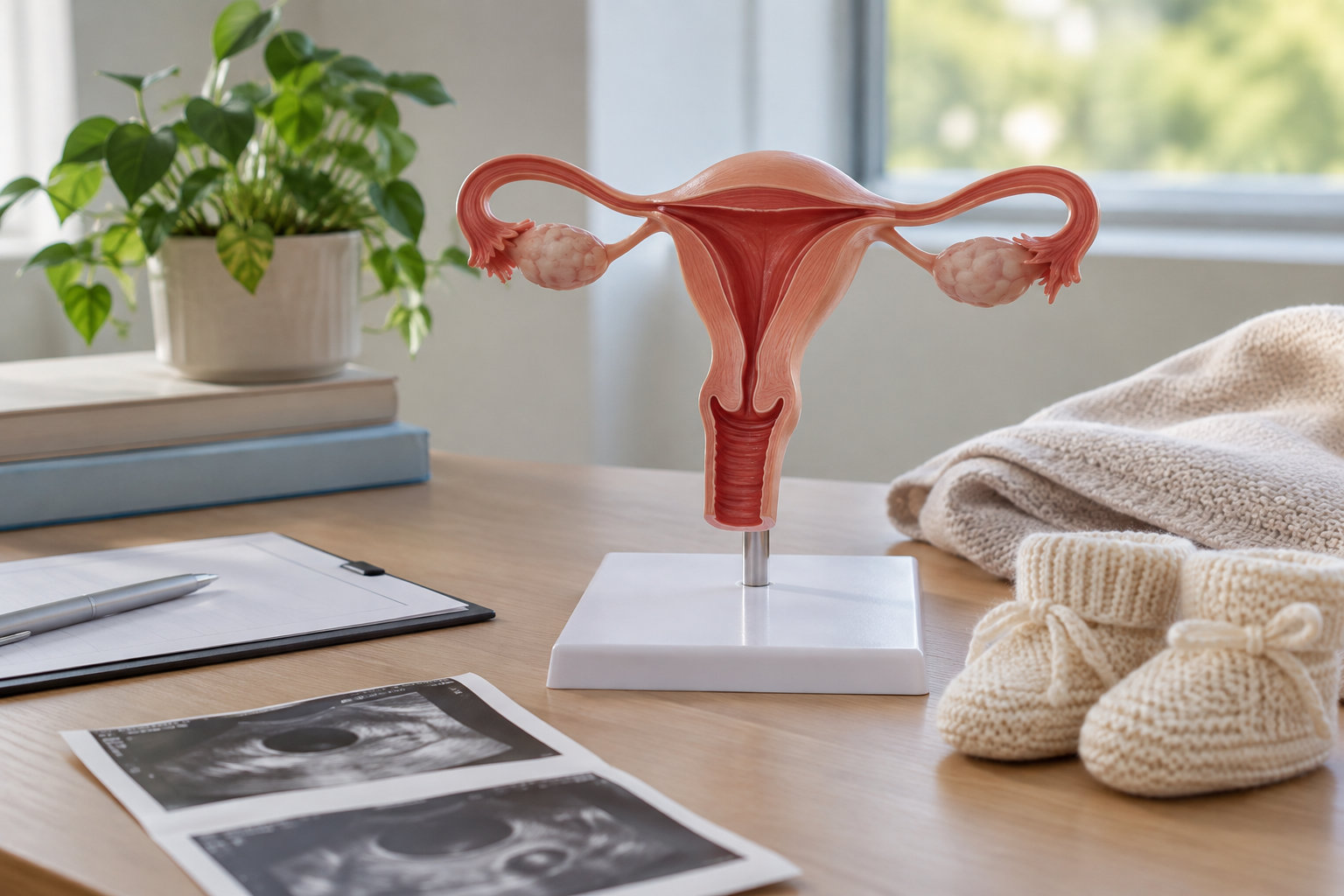
A uterus transplant moves a uterus from a living or deceased donor into someone who has no functioning uterus, so they can carry and deliver a pregnancy. It is not a permanent cure and it is not routine surgery. The donated uterus is temporary, and most protocols plan for it to be removed after one or two births.
Uterus transplantation exists for a specific diagnosis: absolute uterine factor infertility, sometimes shortened to AUFI. That means the uterus is absent or cannot carry a pregnancy, while the ovaries usually work normally. As of 2026, the procedure is offered only through a small number of specialized programs, most of them running it under research protocols.
Below is how the process works, who it is designed to help, what it costs in risk rather than money, and how it compares with surrogacy, adoption and IVF.
Table of Contents
- How Uterus Transplants Work: The Basic Process
- Who Can Benefit From a Uterus Transplant?
- What Are the Main Eligibility Requirements?
- What Happens During Surgery?
- How Is the Donor Uterus Prepared?
- Can a Woman Carry a Pregnancy After a Transplant?
- What Are the Risks and Success Rates?
- How Uterus Transplants Differ From Other Fertility Treatments
- What Does Recovery and Lifelong Follow-Up Look Like?
- Frequently Asked Questions
- Who is uterus transplantation designed to help?
- Is uterus transplant surgery available in the United States?
- How long does a uterus transplant take?
- Can you have more than one child after a uterus transplant?
- Does a uterus transplant guarantee a healthy pregnancy?
- What happens if the transplanted uterus is rejected?
- What to Consider First
How Uterus Transplants Work: The Basic Process
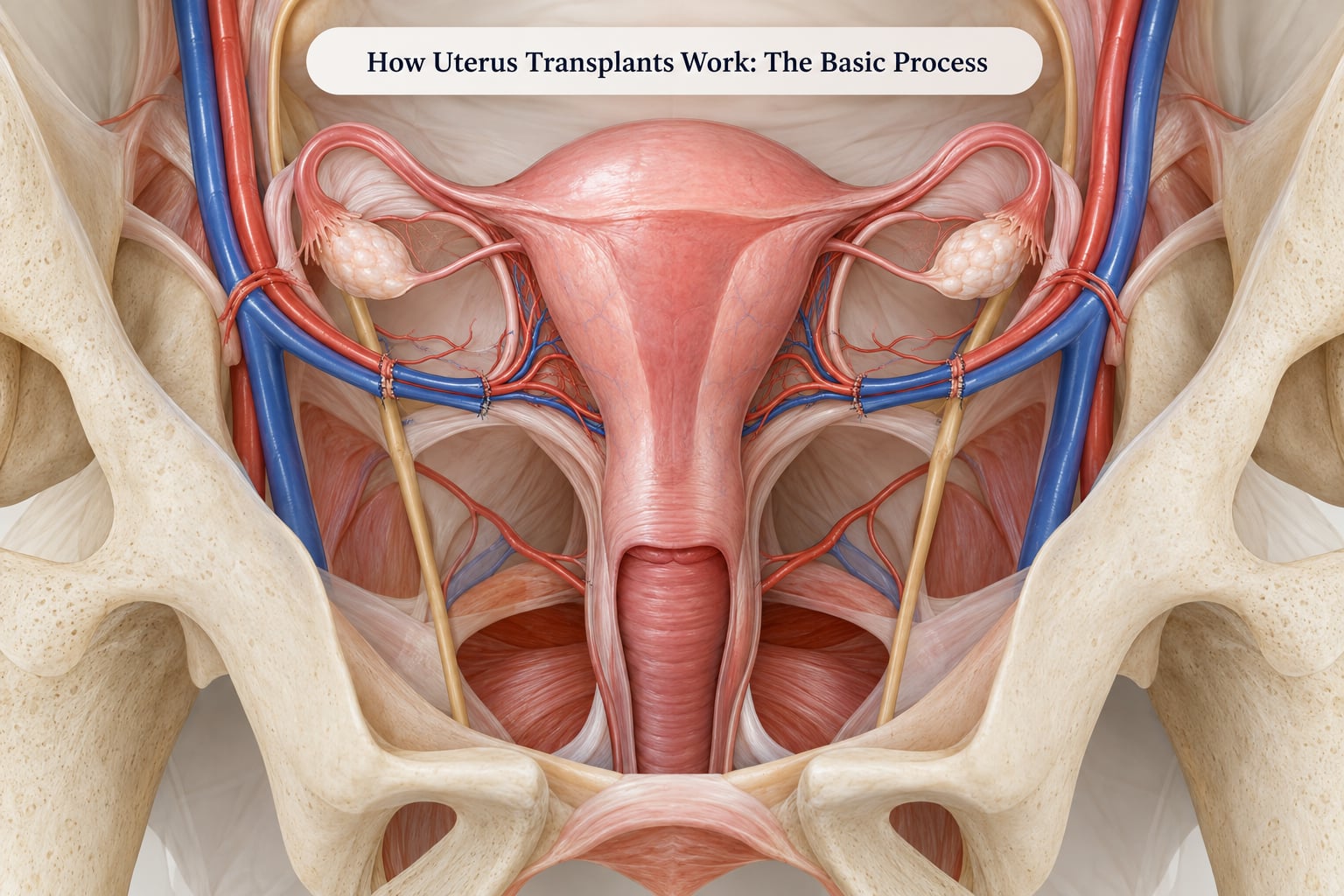
Here is the short version. A recipient is medically screened and goes through IVF to create embryos. The donor uterus is removed with its blood vessels and cervix intact, then those vessels are reconnected inside the recipient’s pelvis along with the top of the vagina. The recipient takes antirejection drugs, waits for the graft to settle, and an embryo is transferred into the transplanted uterus. Pregnancy is then managed by a high-risk obstetric team, and the baby is delivered by C-section.
Eight steps describe the full pathway:
- Referral and screening. Medical history, imaging and blood tests confirm there is no other explanation for the infertility.
- IVF before anything else. Eggs are retrieved from the recipient’s own ovaries and fertilised to make embryos that can be frozen.
- Donor matching. Blood type, tissue matching, age and medical history are reviewed by a selection committee.
- Preparatory surgery if needed. Some recipients have a nonfunctioning uterus removed, or abnormal tissue and adhesions cleared.
- Donor hysterectomy and recipient surgery. Two surgical teams operate, and the operations run concurrently.
- Vessel and vaginal reconnection. The uterine arteries and veins are joined to pelvic vessels so the new uterus perfuses and bleeds.
- Immunosuppression and embryo transfer. Antirejection medication starts right away; a single embryo is transferred roughly six to twelve months later.
- Pregnancy, birth and graft removal. The baby arrives by planned C-section, and the uterus comes out afterwards unless a second birth is planned.
One detail surprises people: the fallopian tubes are not reattached, and the recipient keeps her own ovaries. That means pregnancy always requires IVF. The transplant restores the uterus and cervix, not the tubes.
The uterus is reconnected at three points: the uterine arteries and veins for blood supply, and the vaginal cuff so the cervix has a functioning lower segment. That third connection is what makes menstruation, cervical monitoring and vaginal birth preparation possible at all.
Who Can Benefit From a Uterus Transplant?
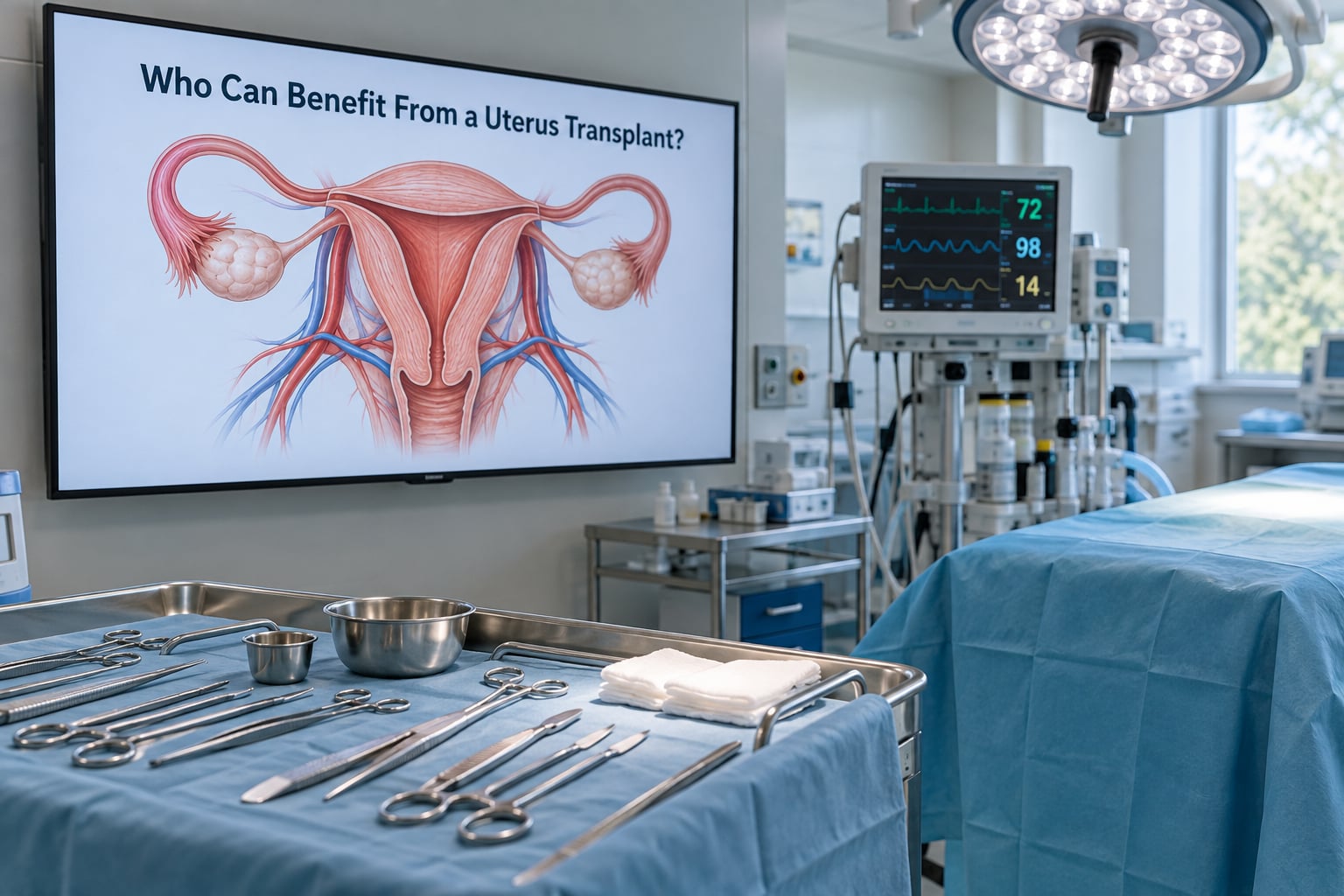
The procedure is designed for people with absolute uterine factor infertility who still have at least one functioning ovary and want to experience pregnancy themselves. There are four main groups.
Born without a uterus or with a nonfunctioning one. Mayer-Rokitansky-Kuster-Hauser syndrome, usually abbreviated MRKH, is the most common reason. In this condition the uterus is absent or underdeveloped while the ovaries and other reproductive structures typically form normally. Puberty and ovarian hormone production usually happen on the usual schedule, so these patients may discover the diagnosis only when they first try to conceive.
Uterus removed for benign disease. Some people have a hysterectomy for fibroids, endometriosis, severe adenomyosis or a uterine rupture. For these patients the pregnancy that follows surgery was never intended to be impossible, and that distinction matters to many of them psychologically.
Uterus removed for cancer. Cervical cancer and some other gynecologic cancers are treated with hysterectomy. Before the operation, fertility-preserving discussion happens where possible; a transplant later reopens the option of carrying a pregnancy, though it requires fully treated cancer and careful oncologic clearance.
Other causes of absolute uterine factor infertility. Severe endometriosis, a damaged or repeatedly failed uterus, and some intersex conditions fall into this group after careful review.
Not everyone is a candidate. Patients with active or recent cancer, untreated serious infection, uncontrolled diabetes, certain liver or kidney disease, or a history of clotting problems that makes transplant unsafe are typically turned away. Anyone who cannot take lifelong immunosuppressants, or who cannot commit to a high-risk pregnancy and years of monitoring, is not a candidate either.
What Are the Main Eligibility Requirements?
Eligibility is decided by a multidisciplinary selection committee, not by one surgeon, and the rules vary between programs. Most committees look at the following.
Confirmed uterine factor infertility. Standard fertility workup results have to point clearly at the uterus. Candidates have usually already tried IVF with their own uterus, if they had one that could carry a pregnancy.
At least one working ovary. Because eggs must still come from the recipient, at least one ovary has to function. Otherwise the procedure cannot produce the embryos it depends on.
Age and overall health. Programs generally favour patients of reproductive age who can tolerate major abdominal surgery and high-risk pregnancy. Active cancer, significant heart or lung disease and uncontrolled conditions rule most people out.
Commitment to antirejection medication. The graft is foreign tissue, so immunosuppression is not optional. Candidates must be willing to take daily drugs for as long as the uterus stays in place, and able to handle the infection risk those drugs create.
Psychological readiness. Counseling is standard and taken seriously. A candidate has to be able to handle the uncertainty, the possibility that the graft fails, and a birth by planned C-section.
A plan for pregnancy and follow-up. Programs want to know how you will be monitored, where you will deliver, and how long you will stay reachable for follow-up.
Living donors face their own criteria. Most programs require a term pregnancy at some point, good obstetric history, no significant uterine fibroids or precancerous changes, compatible blood type, and good general health. Donors are counseled separately from recipients because their medical and emotional interests differ from the recipient’s.
What Happens During Surgery?
Recipient surgery commonly takes six to eight hours, while the donor hysterectomy can run up to ten. In living donation the two procedures happen at the same time in adjacent operating rooms, which keeps the donor uterus out of the body for as short a period as possible.
On the recipient side, the surgeon opens the abdomen through a central incision, separates the pelvic structures and prepares the vessels that will feed the new uterus. Any remaining nonfunctioning uterine tissue is removed, and scar tissue or adhesions from prior surgery is cleared so the graft has space.
The donor uterus is freed from its supporting tissues with the uterine arteries and veins left long enough to reach, and the ureter is dissected carefully to avoid injury. The recipient’s vaginal cuff is opened, the uterus is positioned in the pelvis with its cervix meeting that cuff, and the vessels are joined to the pelvic vasculature. Blood flow is checked before the abdomen is closed.
Menstruation often returns within a few months when the graft is working, and many recipients describe that first period as one of the most meaningful moments of the whole process.
How Is the Donor Uterus Prepared?
The donor uterus is prepared through two different routes. In living donation the uterus is removed surgically, so the donor goes through a hysterectomy with its own recovery, its own pain, and its own long-term effects on pelvic floor function. In deceased donation the uterus is recovered from an organ donor or from a patient undergoing hysterectomy for another medical reason, after the family gives consent.
Before surgery, donors are screened for blood type compatibility, tissue matching, fibroids, gynecologic history and general health. Many programs require the donor to have carried a pregnancy to term, which gives the team some confidence about how the uterus has performed.
Whichever route is used, the uterus is taken with the uterine arteries and veins, the cervix and a cuff of upper vagina, and it is preserved with perfusion solution while it is moved. The surgeon then inspects it before implantation, since a uterus that has been damaged in transit is discarded and the operation stops.
Because a living donor operation is major abdominal surgery with real complication risk, donation requires the same informed consent process a recipient undergoes, plus separate counseling. Donors are not told they are doing it for a specific person unless they have chosen a directed donation, and outcomes for the recipient are not something the donor can guarantee or be held to.
Can a Woman Carry a Pregnancy After a Transplant?
Yes, and this is the reason the operation exists, but the path to pregnancy is specific and tightly supervised. Because the fallopian tubes are not connected, an embryo created through IVF is transferred into the transplanted uterus once the graft is stable, usually somewhere between six and twelve months after surgery. Protocols generally transfer one embryo at a time to reduce risk.
Pregnancy after transplant is a high-risk pregnancy managed by a maternal-fetal medicine team alongside the transplant team. Monitoring includes frequent ultrasound, blood tests and cervical biopsies, because one of the recognized warning signs of uterine rejection is a change in the appearance of the cervix. Rejection can also show up as fever, abdominal pain or a change in bleeding pattern, and it is treatable when caught early.
Birth is by planned cesarean delivery. Laboring with a transplanted uterus is generally avoided, partly because the cervix and uterine tissue have been reconnected in an unusual way and partly because the priority is a controlled delivery before the graft shows signs of trouble.
That the transplanted uterus has carried pregnancies to term is well documented, including a birth reported from Gothenburg in 2014 that used a uterus from a 61-year-old donor, and the first US birth from a transplanted uterus in 2017. Several of the US grafts that produced births did so outside a research trial in 2023, which suggests the procedure is moving from an experiment toward ordinary clinical care. It is not there yet.
What Are the Risks and Success Rates?
Anyone considering this needs honest numbers. Uterus transplantation is not comparable to routine organ transplantation, because the graft is expected to be temporary and the whole point is a pregnancy, which pushes the body in directions organ recipients do not go.
Recipient risks include blood clots and vascular problems at the connection site, infection, hemorrhage, damage to nearby nerves or the ureter during dissection, organ rejection, and the need to remove the graft if it fails. Immunosuppressants carry their own costs: kidney impairment, high blood pressure, elevated cholesterol, tremor, infection risk and a long-term raised cancer risk. Pregnancy adds its own risk profile on top of an already immunosuppressed body.
Living donor risks are the ones families ask about least and should ask about most. A living donor undergoes a major operation with risks of hemorrhage, infection, blood clots and injury to the ureter or pelvic floor, and she lives afterward without a uterus. Some donors describe unexpected long-term effects on pelvic floor function or sexual health.
On outcomes, the clearest published US figures come from a 2024 series reporting on 33 transplants: 25 grafts, or 76%, were viable at 30 days, and 19 recipients, or 58%, went on to have at least one live birth. Those numbers are encouraging and also sobering, because roughly a quarter of grafts did not survive the first month. Most programs cap pregnancies at one or two before removing the uterus, and the graft is then gone.
Success is also defined narrowly. A viable graft is not the same as a birth, and a birth is not the same as an uncomplicated one. When you read a success rate, ask which of those three numbers is being reported.
How Uterus Transplants Differ From Other Fertility Treatments
IVF, egg donation, surrogacy and adoption each solve a different piece of the problem. A transplant is the only one that lets a woman carry and deliver a genetically related child using her own body.
| Option | Genetic link to the child | Carries the pregnancy | Main medical burden | Typical timeline |
|---|---|---|---|---|
| Uterus transplant | Yes | Yes, the recipient | Major abdominal surgery, lifelong immunosuppression, high-risk pregnancy | Screening through years; birth roughly a year after surgery |
| IVF with own uterus | Yes | Yes | Standard IVF treatment and pregnancy risks | Weeks to months |
| Surrogacy | Yes | No, a third party | Finding a surrogate and managing the pregnancy through another clinic | Months to more than a year |
| Egg donation | No | Depends on the patient | Hormonal treatment and IVF | Weeks to months |
| Adoption | No | No | Legal and placement process | Varies widely |
Adoption and surrogacy are often dismissed as easy answers, and for some patients they are exactly right. For a woman with MRKH who has been told for years that she will never carry a child, that preference may not be about biology at all. It is about the experience. Plenty of transplant candidates say plainly that they want to know what pregnancy feels like, including the months of waiting, the nausea and the first movement under their ribs.
Cost and coverage deserve a straight answer. Uterus transplantation is still classified by many insurers as experimental or investigational, so out-of-pocket exposure can be substantial and coverage is uncommon. Most centers can talk through financial assistance and the realities of the full pathway, including IVF, surgery, medication and pregnancy care. Ask early rather than late.
What Does Recovery and Lifelong Follow-Up Look Like?
Recovery from the operation itself takes weeks, and recovery in the wider sense takes months. Most recipients stay in hospital several days after surgery and need several weeks of limited activity, particularly when a living donor was involved and two abdominal operations happened back to back.
Antirejection medication starts immediately and continues for as long as the graft is in place. Regimens vary, but the principle is fixed: a transplanted uterus is foreign tissue, and stopping the drugs means losing it. That medication is also the part of the decision that reaches furthest into the future, since it shapes which future pregnancies are safe.
Monitoring continues for years. Clinics watch blood counts, kidney function, blood pressure and cholesterol on the immunosuppressants, and they use cervical biopsies and ultrasound as routine rejection surveillance during a pregnancy. Most programs limit a graft to one or two births, then remove it under anesthesia and stop the medication, returning the patient to their pre-transplant hormone baseline.
That end point surprises some people who assume a transplant is permanent. It is closer to a long loan than a permanent implant, and anyone weighing it deserves to hear that clearly before the first appointment, not after the first birth.
Frequently Asked Questions
Who is uterus transplantation designed to help?
It is designed for people with absolute uterine factor infertility: a missing or nonfunctioning uterus with at least one working ovary. That includes MRKH syndrome, a uterus removed for fibroids or other benign disease, and a uterus removed during cancer treatment. Candidates must be able to take lifelong immunosuppressants and carry a high-risk pregnancy.
Is uterus transplant surgery available in the United States?
Only at a handful of specialized centers, and usually through a research protocol rather than as routine care. There is no national waiting list. Program availability shifts, and at least one major US program stopped taking new patients in 2022, so confirm current status directly with a center before you plan around it.
How long does a uterus transplant take?
The recipient operation usually runs six to eight hours. When a living donor is involved, the donor hysterectomy can take up to ten hours and the two procedures run at the same time in adjacent operating rooms. Planning the whole pathway takes far longer than the surgery, usually a year or more from first appointment to embryo transfer.
Can you have more than one child after a uterus transplant?
Most protocols allow one or two pregnancies before the donated uterus is removed, and the limit is set by the program rather than by you. After a birth the team assesses whether the graft looks healthy enough for another pregnancy and another planned C-section. Some recipients have delivered twice from the same graft.
Does a uterus transplant guarantee a healthy pregnancy?
No. Transplanted uteri have carried pregnancies to term, but the pregnancy is high risk and monitored closely by a maternal-fetal medicine team with frequent scans and cervical biopsies. Published US data show 25 of 33 grafts, 76%, viable at 30 days and 19 recipients, 58%, with at least one live birth.
What happens if the transplanted uterus is rejected?
Rejection is often caught early through routine biopsies and ultrasound, and it is treated with medication changes. If the graft cannot be saved, it is removed surgically and the immunosuppressants are stopped. Published US figures show about a quarter of grafts were not viable at 30 days, so recipients should be prepared for that possibility.
What to Consider First
The first step is a consultation, and usually more than one. Ask a reproductive endocrinology and transplant team to review your diagnosis, and ask a maternal-fetal medicine specialist what a high-risk pregnancy would mean for you specifically. Bring your full fertility records and imaging.
Before any center puts you on a pathway, get clear written answers on four things: whether the program is a trial or permanent care, whether it is currently accepting candidates, what your own out-of-pocket exposure looks like across the whole pathway, and what happens if the graft fails. If you do not get straight answers, that tells you something useful too.
Then weigh it against surrogacy, adoption and IVF honestly rather than treating the transplant as the only respectable option. Some people decide against it after they understand the immunosuppression and the graft’s temporary nature. Others decide it is worth it. Either answer is fine, as long as it is yours and made with the numbers in front of you.
This article is general information about a medical procedure and is not medical advice. Eligibility, risk and program availability change; a specialist team can give you an answer that fits your own records.